News
Declassified Emails Reveal Pentagon-Anthropic Dispute Over Autonomous Weapons
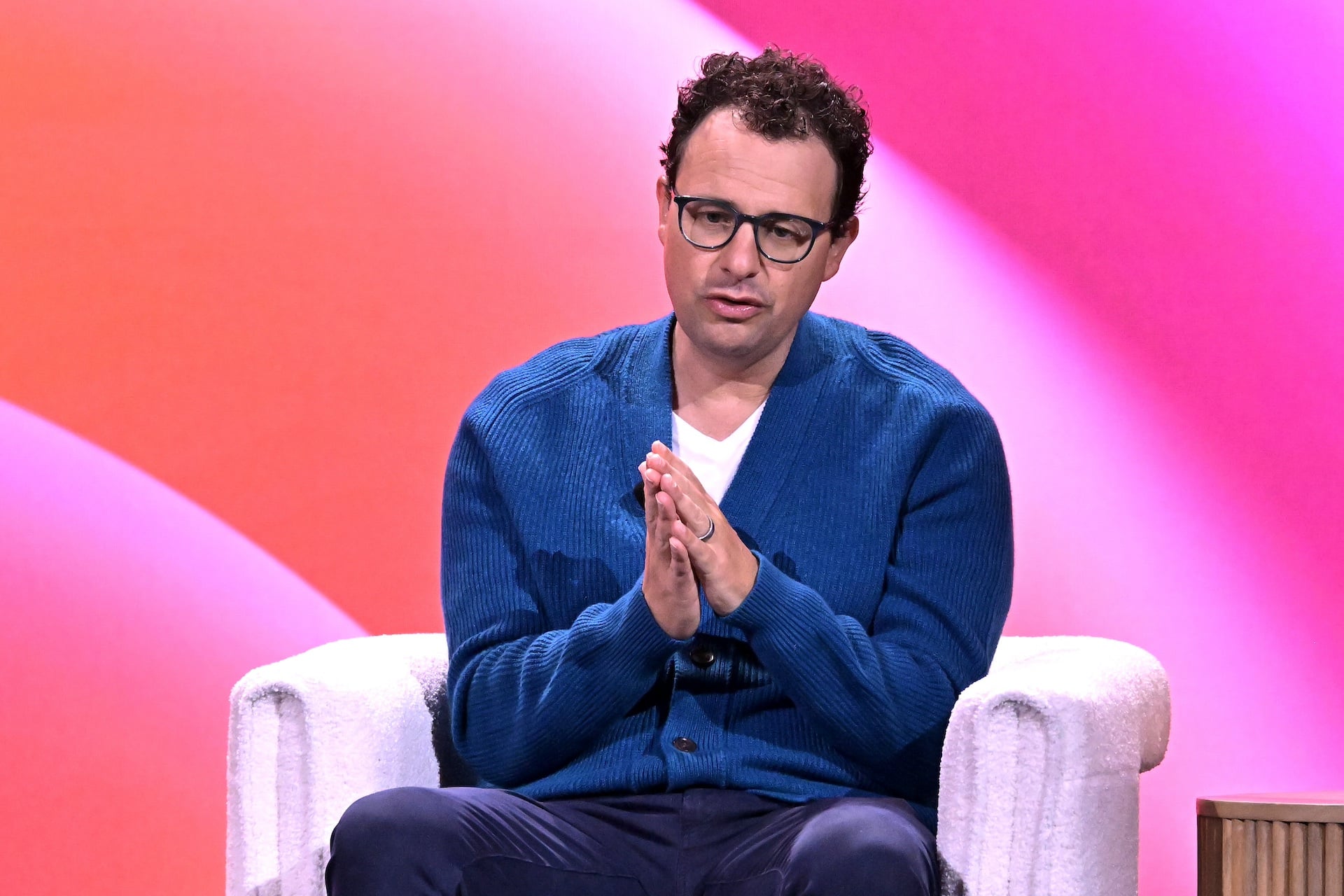
A California court declassified correspondence between Anthropic CEO Dario Amodei and a Pentagon official, revealing that the company's split from the US military came down to its refusal to allow fully autonomous weapons and mass surveillance of US citizens.
Contents
A federal court in California declassified email correspondence on Tuesday between Dario Amodei, Anthropic's chief executive, and Emil Michael, the US undersecretary of defense for research and engineering. The emails, released as part of an ongoing lawsuit, show that the rift between the company and the Pentagon was never really about access to the Claude model itself, but about a dispute over whether the US military could use it for fully autonomous weapons and domestic surveillance.
What the emails say
The declassified documents show that Michael reached out to Amodei in January, after several weeks of Pentagon silence, writing that he hoped the two sides could find common ground. Amodei replied, holding firm on Anthropic's condition that it required safeguards ruling out any use of Claude for fully autonomous weapons without human oversight or for mass surveillance of citizens. Michael called that position unacceptable and warned that the company had one more chance to agree on basic principles before the two sides parted ways.
According to a Wall Street Journal report cited in the declassified documents, Michael also wrote to Amodei that contract negotiations were very close to being finalized, around the same time the Pentagon was finalizing its decision to label Anthropic a supply chain risk. Some commentators have also pointed out that Michael held significant financial stakes in rival AI companies at the time, including xAI, raising questions about a potential conflict of interest on the official's part.
The risk label and the court fight
Talks ultimately collapsed in late February, when Defense Secretary Pete Hegseth designated Anthropic a supply chain risk, a label typically reserved for entities from countries considered adversaries of the United States. Hegseth initially suggested a far broader ban, claiming that no contractor or partner working with the US military could do commercial business with Anthropic, though the company later said the formal decision applied more narrowly, covering only Claude's direct use in military contracts.
Anthropic challenged the decision, and a federal judge in California temporarily blocked the Pentagon's action in March, calling it an attempt to punish the company for pushing back against the government and comparing it to an Orwellian move to brand an American company a potential saboteur. In April, however, an appeals court declined to temporarily block the decision while the appeal was pending, and by May the panel of judges hearing the appeal reportedly appeared split on how to proceed.
Why it matters beyond the United States
The dispute shows how hard it is to reconcile the safety principles AI labs claim to uphold with what governments expect from suppliers of critical military technology. That question is not confined to the US. Investment in combat autonomy is growing in Europe too, as seen in recent funding rounds for German drone makers, and the EU's AI Act carves out separate, lighter-touch treatment for systems used exclusively for defense and national security purposes. The Anthropic case shows what the tension between commercial model makers and state institutions can look like in practice when these two logics collide.
For Polish institutions that have recently begun using commercial models in security applications, including GPT-5.5 Cyber made available to NASK and CERT Polska (Poland's national cybersecurity response teams), the American dispute is a warning sign. It shows that even major AI labs can end up in conflict with their own government over the limits of their technology's use, and that the terms of such agreements are often subject to tough negotiations whose details only surface in court.
The case is still before the appeals court, and the declassified emails are expected to be used as evidence that the Pentagon's decision was retaliatory rather than substantive. Anthropic is seeking to have the supply chain risk label lifted entirely, arguing that it never refused to work with the military as such, only objected to specific applications that conflicted with its stated safety policy.

