News
Polish Armed Forces Launch AI Implementation Center
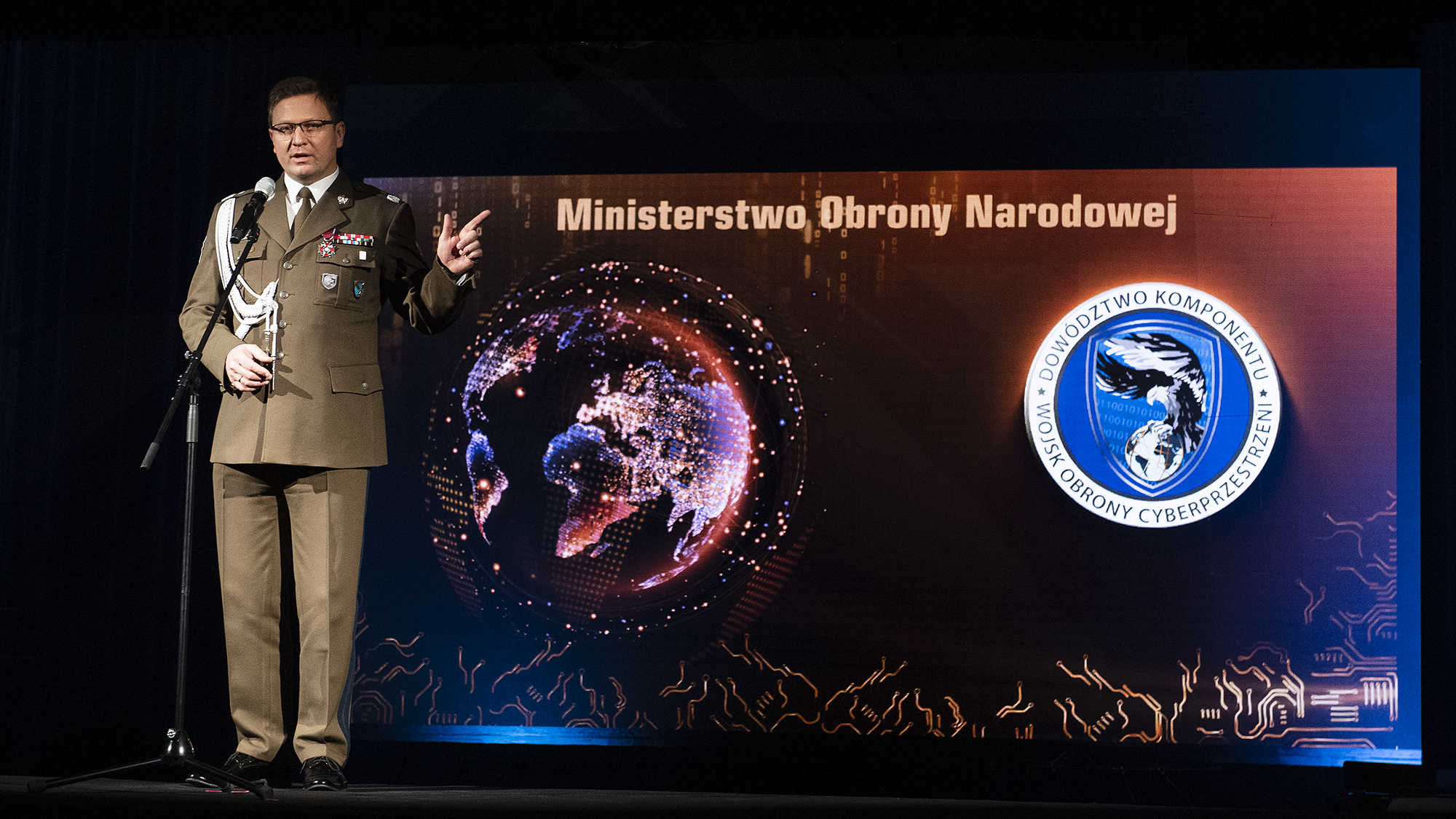
Poland's military has launched a new Centre for the Implementation of Artificial Intelligence under the Cyberspace Defence Forces, tasked with deploying AI for cyber defense, intelligence analysis, and commander decision support. Polish military networks are attacked roughly once every two hours.
Contents
Poland's Ministry of National Defense has formally launched the Centre for the Implementation of Artificial Intelligence, a new unit within the Component Command of the Cyberspace Defence Forces. The centre's task is to deploy AI technology for cyberspace defense, intelligence data analysis, and decision support for commanders on the battlefield.
The Centre for the Implementation of Artificial Intelligence, known as CISI, is a competence-focused unit. It doesn't limit itself to research, its mandate is to actually deploy AI solutions wherever they can give the military an operational edge. The defense ministry lists five main areas of activity: supporting cyberspace defense, analyzing intelligence and reconnaissance data, developing autonomous combat systems, aiding commanders' decision-making processes, and optimizing logistics.
The scale of the online threat
The decision to set up the centre didn't come out of nowhere. According to the defense ministry, Polish military networks are attacked on average once every two hours, which adds up to roughly 5,000 incidents a year. At that pace, human analysts alone can no longer keep up with the volume of traffic and the number of intrusion attempts, phishing campaigns, and probes of critical infrastructure.
In this context, AI is meant to speed up the detection and classification of threats, not replace analysts. The ministry stresses that data processing takes place in independent, supervised environments, meant to guarantee that sensitive military information never leaves controlled infrastructure.
The AIRON platform and code control
The centre's flagship project is the AIRON platform, built for defense ministry staff. It consists of several modules: VL-AIRON for image analysis and real-time threat recognition, CISI Code, which helps developers write secure code, and AIRON CYBER, dedicated to system protection and cyber incident analysis.
A key part of the strategy is keeping full control over the technology. All of the platform's code stays in the hands of the Ministry of National Defense, meant to guarantee technological sovereignty and independence from foreign vendors for systems of strategic importance.
Partnerships with academia and industry
The centre is meant to coordinate the rapid design and scaling of AI projects in cooperation with industry and the scientific community, while also vetting whether commercially available products are fit for military use. Partners named include the IDEAS Research Institute and SpeakLeash, the team behind the development of Bielik, Poland's own language model.
This kind of cooperation fits into a broader trend of building domestic AI competence outside the civilian sector. Like public administration, the military is increasingly turning to locally developed solutions rather than relying solely on models from foreign vendors, especially where national security is at stake.
A fifteen-year outlook
The centre was established as part of the artificial intelligence development strategy drawn up by the Ministry of Defense for 2025-2039, a nearly fifteen-year horizon. It signals that the ministry treats AI not as a one-off technology project but as a permanent building block of defense capability for decades to come.
Artificial intelligence is the future - Władysław Kosiniak-Kamysz, deputy prime minister and minister of national defense
The centre is overseen by Maj. Gen. Karol Molenda, commander of the Cyberspace Defence Forces, along with his deputies. Deputy Prime Minister Władysław Kosiniak-Kamysz noted at the unit's launch that the centre's team is made up of some of Poland's best IT and cybersecurity specialists.
For Poland's AI industry, the new centre means a large fresh buyer for domestic talent, from machine learning engineers to cybersecurity specialists, and potentially further contracts for companies and research institutes able to deliver solutions that meet military security requirements.