News
UK Foreign Secretary Warns of an "AI Hiroshima" Without Global Rules
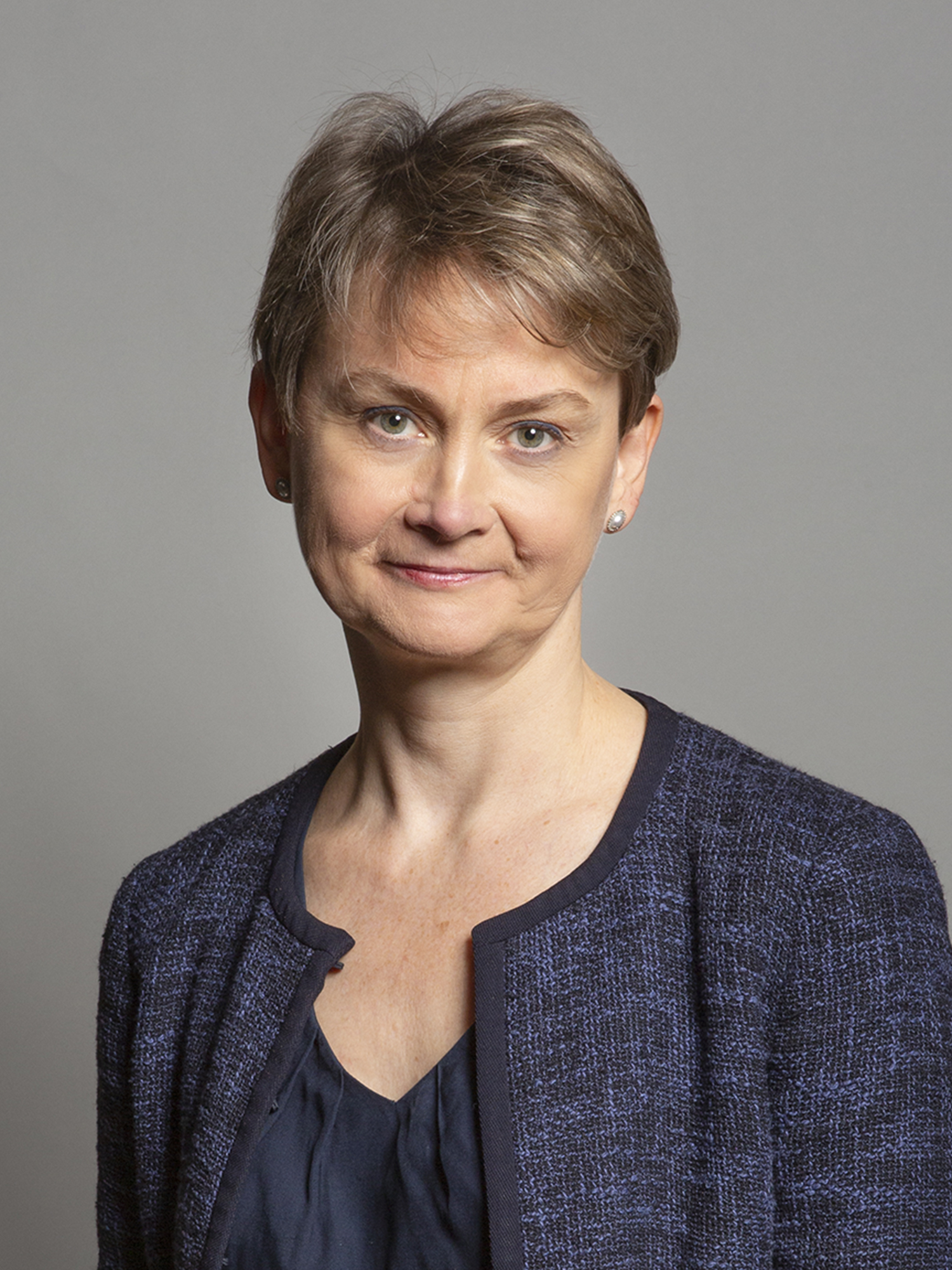
Yvette Cooper, the UK's foreign secretary, is urging the US and China to agree on joint AI safety standards before a Hiroshima-scale catastrophe occurs. The appeal came in an essay for Chatham House published on July 6.
UK Foreign Secretary Yvette Cooper has warned that the world cannot afford to wait for an "AI Hiroshima" before governments start regulating artificial intelligence together. In an essay published Monday for the London-based think tank Chatham House, she compared the current moment to the early atomic age, when international agreements only emerged after the world had witnessed the destructive power of the new technology.
Cooper wrote bluntly that agreement on nuclear weapons only came after the world saw the technology's destructive power at Hiroshima. In her view, that scenario is unacceptable when it comes to artificial intelligence, since the cost of waiting for a first serious incident could be too high, and the technology is advancing faster than any weapon in history.
We cannot afford to wait for an AI Hiroshima moment before we act - Yvette Cooper, UK Foreign Secretary
A catalogue of risks
In her essay, Cooper lists a specific catalogue of risks she says demand an urgent government response. At the top of the list are autonomous weapons systems capable of deciding to use force without human involvement. Alongside that, she points to AI-assisted cyberattacks, which the UK's Five Eyes intelligence partners believe could become a real threat within just a few months.
Other items on the list include chatbots that radicalize users and push them toward extremism or real-world attacks, as well as child sexual abuse material generated by AI models. Cooper stresses that these threats are not theoretical, but are already being observed by security agencies across various countries.
Why now
Cooper's appeal comes as the question of global oversight of AI keeps returning to the diplomatic agenda. UN Secretary-General Antonio Guterres previously called for urgent global rules for artificial intelligence during a dialogue in Geneva, and Cooper's essay cites similar UN backing for a shared safety framework.
The difference between the nuclear era and today is that after Hiroshima and Nagasaki, treaties, oversight agencies and arms-control mechanisms emerged that still bind nuclear powers today. Nothing comparable exists for artificial intelligence among the biggest players, even though models developed in the US and China have a comparable potential to cause large-scale harm.
London's proposal
Cooper doesn't stop at warnings. She proposes that the major powers sit down together to hammer out shared rules and model-testing regimes that could apply across jurisdictional borders. The goal is for companies and governments to operate under the same minimum safety standards, regardless of where a given model was built.
The UK wants to draw on its own experience hosting the first AI Safety Summit in 2023 to once again play the role of mediator between Washington and Beijing. That task is complicated by the growing technological rivalry between the two powers, which treat AI leadership as a matter of strategic competition rather than simply public safety.
What it means for Europe and Poland
For European Union countries, including Poland, Cooper's appeal matters because the EU is the only major bloc to have already implemented a comprehensive law regulating AI. If the UK genuinely manages to bring the US and China to the table over shared standards, the EU's AI Act could become a reference point, or conversely, be pushed to the margins by a separate negotiating track among the major powers.
Polish companies and institutions rolling out AI systems will need to watch whether any global standard for model safety testing emerges, since that would affect the certification and audit requirements already facing entities covered by EU law. For now, though, Cooper's essay is a call for talks, not a concrete treaty, so the outcome of this initiative remains uncertain.

