News
White House Accuses Chinese Moonshot AI of Stealing Anthropic Model, Experts Skeptical
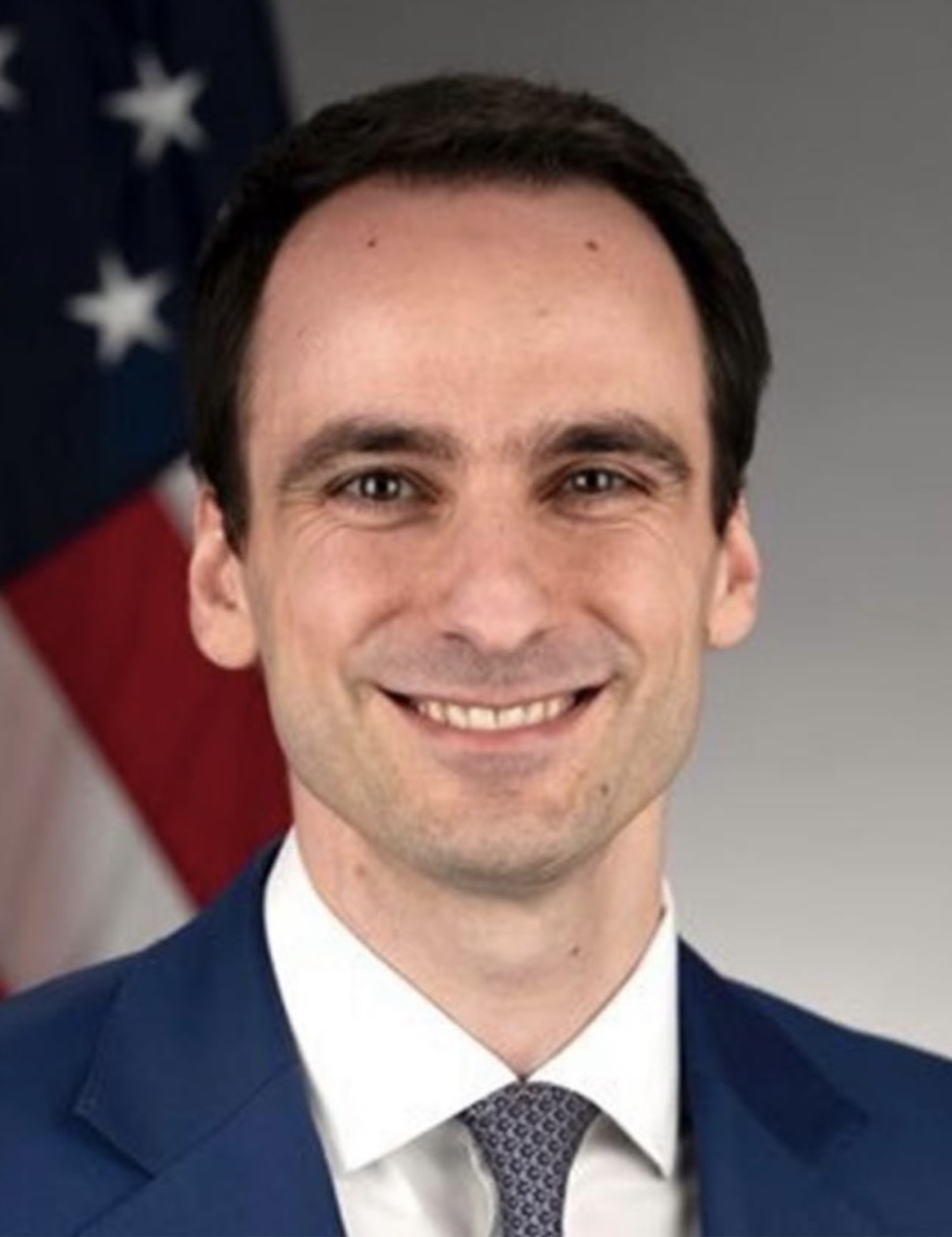
The director of the White House Office of Science and Technology Policy accused Chinese firm Moonshot AI of secretly copying Anthropic's Claude Fable 5 model and using banned Nvidia GB300 chips to build Kimi K3. Independent researchers say the timeline makes the claim technically implausible.
Contents
The Trump administration has for the first time officially named a company it holds responsible for the wave of Chinese AI models that have unsettled Washington in recent weeks. Michael Kratsios, director of the White House Office of Science and Technology Policy, accused Chinese startup Moonshot AI of secretly copying Anthropic's Claude Fable 5 model and illegally obtaining export-banned Nvidia chips allegedly used to build the widely discussed Kimi K3 model.
The accusation
According to Kratsios, Moonshot built an advanced in-house platform for mass-distilling American models, meaning training its own system on the outputs of another company's model, and used multiple access methods to avoid detection. There's also a hardware allegation: the company is said to have obtained servers equipped with Nvidia GB300 chips and used them in Thailand, despite their export to China being subject to a US embargo.
No hard evidence
The White House has not published access logs, training data, or forensic analysis confirming any of the allegations. Instead, the administration pointed to earlier findings from Anthropic, which reported in February 2026 that Moonshot, along with DeepSeek and MiniMax, used roughly 24,000 fake accounts to carry out more than 16 million interactions with Claude, of which Moonshot accounted for about 3.4 million. In April 2026, the US government warned in an internal memorandum about foreign actors distilling American models on an industrial scale.
Sanctions on the table
Treasury Secretary Scott Bessent backed Kratsios's accusations by threatening concrete financial consequences for Chinese companies. His statement explicitly ties open models to the protection of American intellectual property and signals that the Treasury Department is prepared to reach for the harshest trade tools it has against Chinese tech firms.
Open source does not mean open season on American intellectual property. When Chinese companies conduct covert, industrial-scale distillation attacks that cross the line into IP theft, sanctions and Entity List designations will be on the table - Scott Bessent, US Treasury Secretary
Experts question the timeline
A day after Kratsios's remarks, independent AI researchers began publicly challenging the technical credibility of the allegations. Braden Hancock, a researcher at the Laude Institute and co-founder of startup Snorkel AI, told TechCrunch that training a model with Kimi K3's capabilities based on Fable 5's outputs in such a short window would be nearly impossible.
There's simply not enough time for that - Braden Hancock, researcher at the Laude Institute, co-founder of Snorkel AI
The argument rests on the timeline: Claude Fable 5 became publicly available on July 1, 2026, while Kimi K3 launched just two weeks later, on July 15. In Hancock's view, two weeks is far too little time to train a new frontier-class system from scratch based solely on another model's outputs. Similar doubts were raised by Nathan Lambert of the Allen Institute for AI and Dean Ball, head of strategic initiatives at OpenAI, who also pointed to the absence of any publicly available technical evidence.
A divided White House
The Moonshot case exposes a deeper rift within the administration over how to respond to Chinese AI progress. Part of Trump's circle favors tightening export controls and regulation of Chinese models, while the Commerce Department considers such restrictions impractical. The dispute has also turned personal: David Sacks, who served as Trump's AI and crypto adviser until March, described Anthropic's models as intellectually limited and overly cautious, while Emil Michael of the Department of Defense sharply criticized OpenAI's head of strategic initiatives.
Market context
Kimi K3 has caused a stir well beyond Washington. Priced at $3 per million input tokens and $15 per million output tokens, the model reportedly matches the capabilities of paid systems from OpenAI and Anthropic while being available on open terms. Demand proved strong enough that Moonshot had to temporarily suspend new user registrations due to compute infrastructure constraints. It's this combination of low price and high quality that has stoked concerns in Washington about eroding the competitive edge of American AI labs.
What's next
The key test of the allegations' credibility comes on July 27, 2026, when Moonshot is due to publish Kimi K3's full model weights along with a technical report, allowing independent researchers to verify whether the model actually bears traces of distillation from Claude Fable 5. For Polish companies using open-source models, the dispute carries practical stakes: an Entity List designation for Moonshot could limit Kimi K3's availability through US-linked cloud services and complicate the legal position of companies that have already begun testing the model because of its low price.