News
AI-Generated Faces Seem More Trustworthy to People Than Real Ones
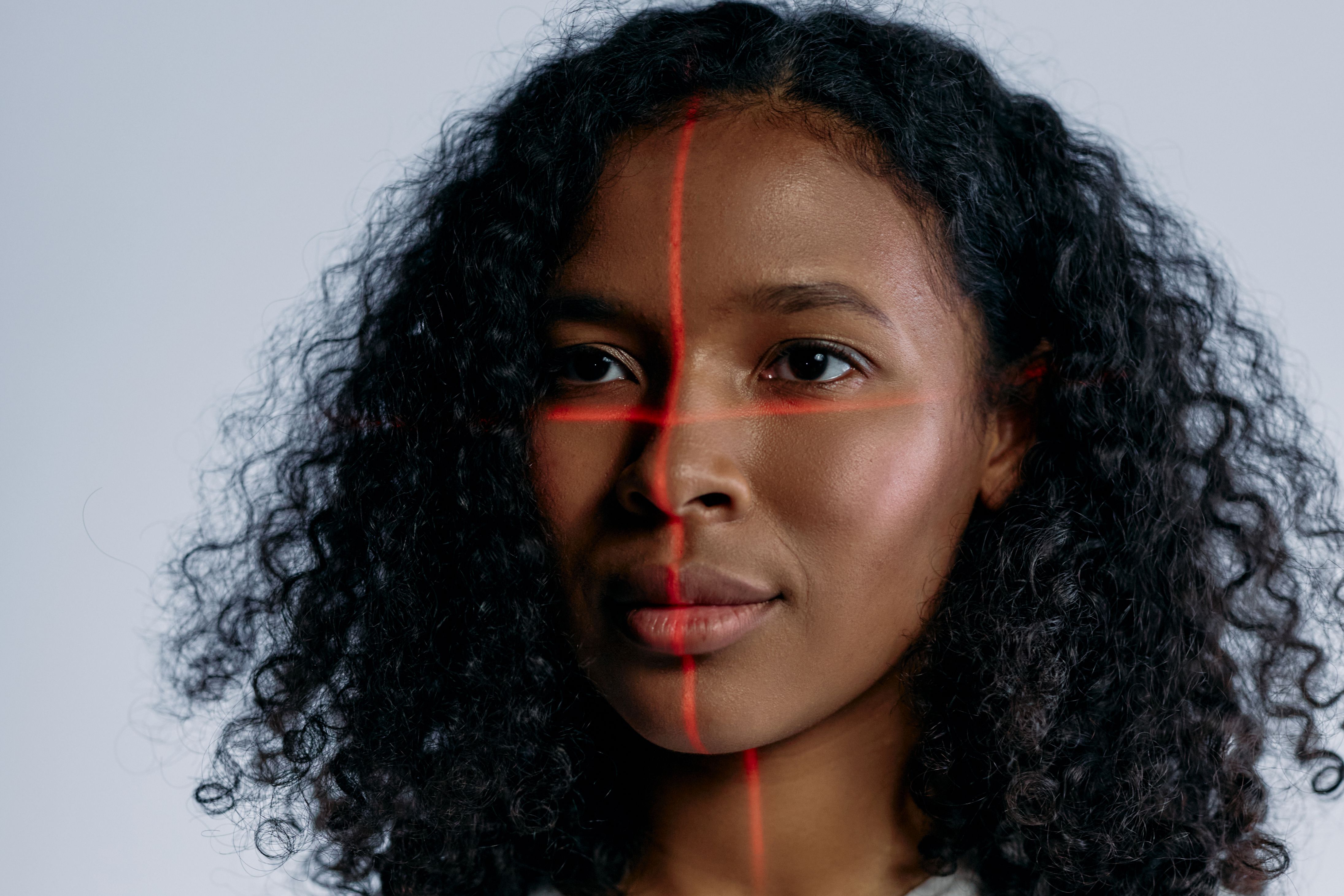
Researchers from Lancaster University, Stanford, and UC Berkeley found that people can identify synthetic faces only 58.4 percent of the time, and rate faces produced by newer diffusion models as more trustworthy than photos of real people.
Contents
An AI-generated face today stands a better chance of earning someone's trust than a photo of a real person. That is the conclusion of a study published on July 7, 2026 in the Journal of Vision by a team from Lancaster University, Stanford University, and the University of California, Berkeley.
The experiment had two stages. First, one group of participants tried to distinguish real photographs from faces generated by AI models, including older GAN networks and newer diffusion models. The result was close to a coin flip, under 60 percent accuracy, showing that the human eye is no longer an effective filter.
Trust matters more than realism
The second part of the experiment proved more unsettling. A new group of participants was asked not to identify whether a face was real, but to rate how trustworthy it looked, on a scale from 1 to 7. Faces from diffusion models, the technology behind most of today's image generators, scored highest at 4.70 points, clearly ahead of real photos of people, rated 4.03.
The authors call this a paradox: a face does not need to look more realistic to be trusted more, it just needs to look more likeable or neutral in a way that image generators can now reproduce systematically. According to the researchers, this suggests that judging a face's realism and judging its trustworthiness rely on two separate psychological mechanisms rather than a single combined impression.
Our study shows that people are vulnerable to being fooled by AI-generated images - Alexis McGuire, Lancaster University
As AI-generated images become increasingly sophisticated and accessible, we are, as a society, becoming increasingly exposed to synthetic faces, often in malicious and exploitative scenarios such as political disinformation, financial and identity fraud, and catfishing - Alexis McGuire, Lancaster University
A tool for scammers
The findings have a direct bearing on criminal practice. A face that inspires trust is the first step in most fraud scenarios, from phishing to fake job offers to romance scams run on dating platforms. If an image generator can automatically produce faces rated as more trustworthy than photos of real people, it hands criminals a tool that not only hides their identity but actively makes it easier to win a victim's trust.
The same mechanism applies to political disinformation. A fake profile of an expert, commentator, or eyewitness gains credibility not through the content it posts, but through the face on the avatar itself. The researchers note that the problem is growing as generative tools become more accessible, what required specialized skills just a few years ago can now be done in seconds with a free app.
Why old detection methods fail
For years, the standard advice was to scrutinize photo details closely, the number of fingers, facial symmetry, odd artifacts in the background. The Lancaster findings show that strategy loses its point against the latest diffusion models, which generate faces free of the typical flaws seen in earlier GAN generators. Study participants had access to full images and still got it wrong almost as often as if they had guessed at random.
Crucially, the problem does not lie in rendering quality but in the very mechanism of human trust perception. The brain judges a face's trustworthiness based on features such as symmetry, neutral expression, or specific proportions, and generative models, trained on millions of photos, have learned to reproduce exactly those features in an idealized form.
Implications for companies and users
For companies working in identity verification, banking, or online recruitment, the study's findings mean that relying on human judgment of a profile photo as part of verification is becoming increasingly risky. Systems based solely on visual checks by an employee or customer are losing effectiveness at the same pace image generators keep improving.
For ordinary users of social media and dating apps, the takeaway is simpler, though harder to put into daily practice: a likeable, trust-inspiring face in a profile photo is no longer reliable evidence that a real person is on the other end. Other verification methods are growing in importance, live video calls, mutual acquaintances, or confirming identity through an independent channel.
The study does not offer a ready-made technical fix, but the authors stress the need for further work on tools that can automatically detect synthetic images without relying on the human eye. Given results showing recognition accuracy barely above a coin flip, it is hard to expect users to handle this threat on their own without technological support.