News
Chinese Scientists Link Chips With Light, Speed Up AI Inference 149x
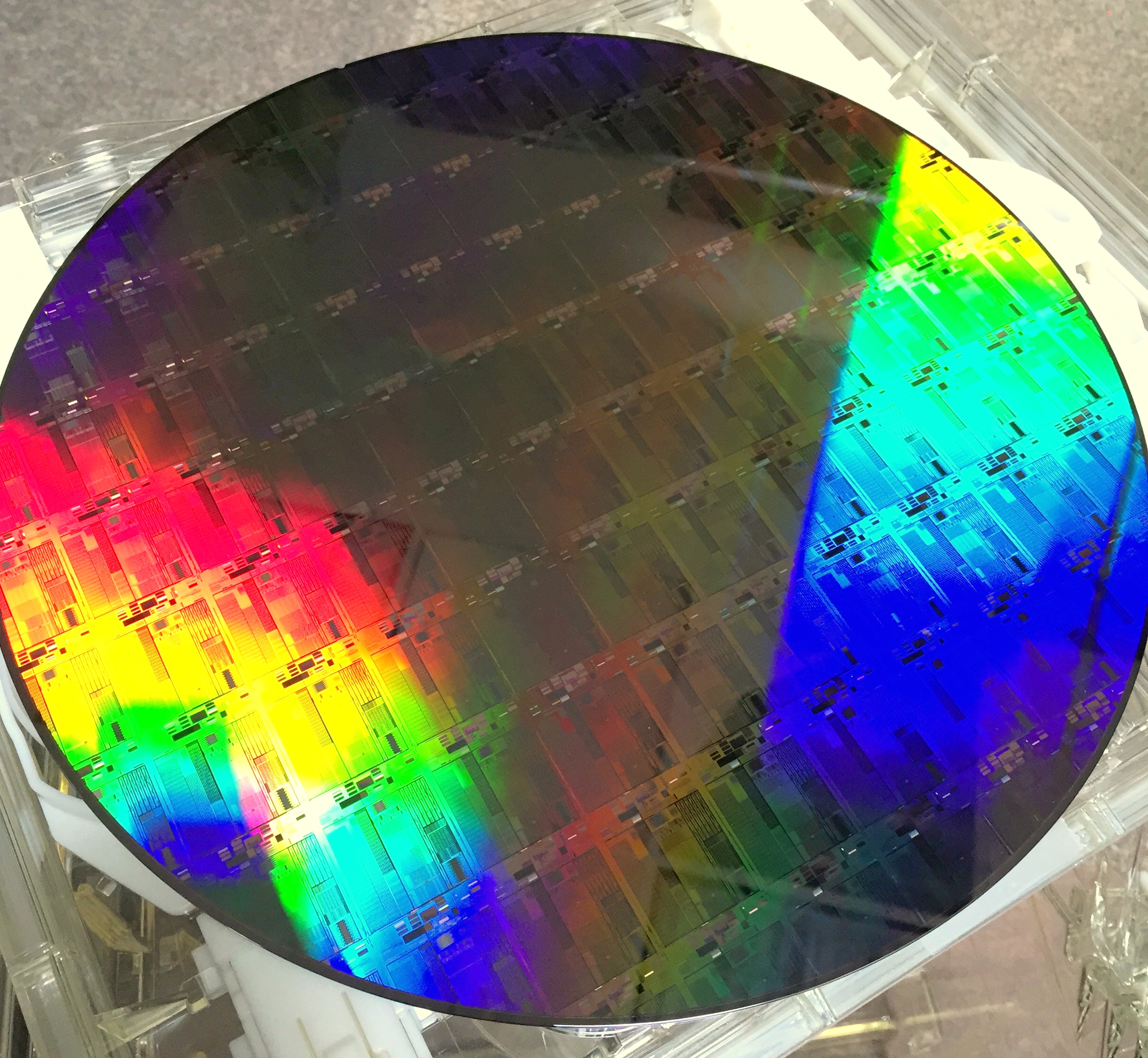
A team from Peking University developed an optical chip interconnect that proved up to 149 times faster than a single GPU on a neural network inference task, while using a fraction of its computing power.
Contents
Researchers at Peking University have published results that could change how AI infrastructure is built. Instead of linking processors through traditional electrical pathways, the team used light - and achieved neural network inference up to 149 times faster than a single GPU, using just a fraction of its computing power.
How the Optical Link Works
At the heart of the system are silicon photonic transceivers, which convert electrical signals into optical ones and back, transmitting data at 400 gigabits per second. Five FPGA processors were connected through an all-optical network supporting pipelined processing, while a 16x16 optical switch built with planar lightwave circuit technology keeps loss at no more than 5 decibels at a wavelength of 1,300 nanometers.
Another element is wavelength division multiplexing, which allows multiple independent data streams to travel through a single optical fiber. In tests, the entire system transmitted data at 400 Gb/s without errors, despite reconfigurable optical paths between the processors.
The Memory Wall Problem
The authors point out that the growing computing demands of AI systems collide with the so-called memory wall - the latency that arises at the interface between processor and memory. In deep neural networks, each successive layer must wait for the previous one to finish its calculations, which with classic electrical connections limits the speed of the entire system.
Instead of building single, ever larger and more resource-hungry chips, the Beijing team proposed a different approach: linking multiple more modest chips with an efficient optical interconnect, so that together they achieve performance comparable to much larger, power-hungry systems. The researchers stress this is the first practical demonstration of a fully optical chip-level link for distributed AI inference, moving beyond purely theoretical concepts toward real-world edge applications that require very low latency.
Amid the Race for Computing Power
The result arrives at a moment when the global AI industry is grappling with rising energy and infrastructure costs needed to train and run ever-larger models. Companies such as Meta and Microsoft are building successive gigawatt-scale data centers, and memory and GPU prices are hitting records due to AI-driven demand. Chinese research teams have spent months presenting alternative approaches to computing infrastructure, including photonic chips, partly in response to restricted access to Nvidia's latest chips.
South China Morning Post, which was the first to report more widely on the study, notes that the technology addresses exactly this problem - offering an alternative to the approach of simply adding more GPUs and expanding data centers. Lower energy and hardware use while maintaining high performance could matter especially for edge applications, where both response speed and energy consumption count.
What Comes Next
The paper describes a laboratory demonstration, not a finished commercial product - the authors themselves stress that this is a first step toward practical applications, not a final deployment. Still, it fits into a broader trend: in recent months, Chinese research centers, including Shanghai Jiao Tong University and Tsinghua University, have published further work on photonic chips as a complement to, or alternative for, classic GPUs in AI tasks.
What will matter for the industry is whether the Beijing approach can scale beyond the laboratory's five FPGA processors to systems the size of industrial data centers. If it can, optical interconnects could become one of the tools easing the pressure on energy and chips that has accompanied the entire AI industry for several years.