News
Google DeepMind's WeatherNext Model Predicts Hurricanes a Day Earlier Than Traditional Forecasts
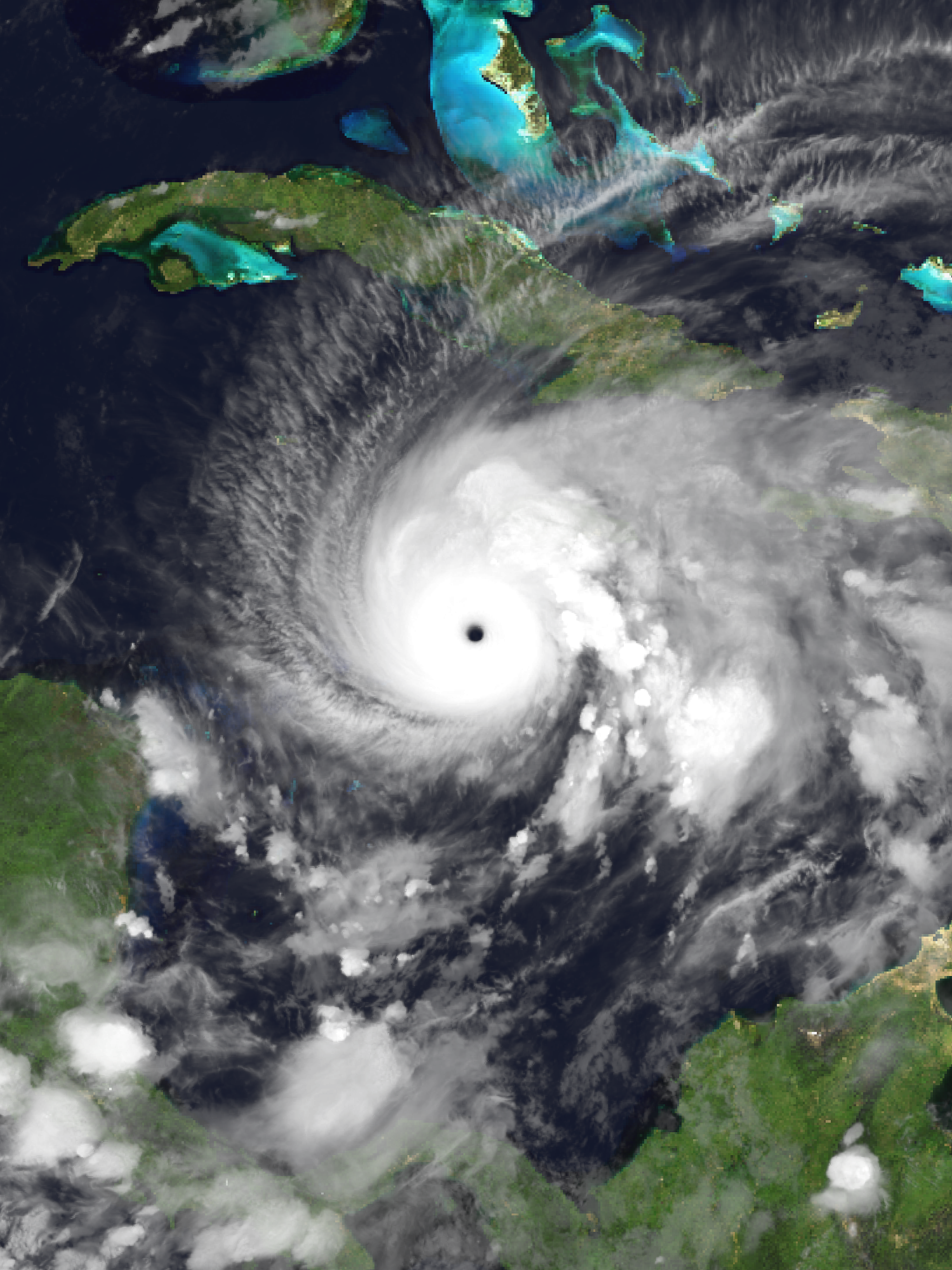
Google DeepMind's AI model has extended the reliable forecasting window for tropical cyclones from two to three days, and helped predict the rapid intensification of Hurricane Melissa in Jamaica well in advance.
Contents
Google DeepMind has published results in the journal Nature for its WeatherNext Cyclones model, which predicts the track, intensity and wind structure of tropical cyclones with accuracy that beats existing meteorological tools by a full extra day. During the 2025 hurricane season, the model already helped the US National Hurricane Center (NHC) issue earlier warnings about the rapid intensification of Hurricane Melissa, which struck Jamaica as the strongest storm in the island's history.
How the model works
WeatherNext Cyclones combines two approaches that previously required separate tools: global weather models, which are good at predicting a storm's track but weak on intensity, and specialized regional models, which are accurate on wind strength but computationally expensive. DeepMind merged both approaches into a single system built on what it calls Functional Generative Networks, which generate a thousand possible scenarios for how a cyclone might develop, each with an assigned probability, instead of a single forecast.
Rather than simulating atmospheric physics equation by equation, the model divides the globe into pixels with a resolution of 28 by 28 kilometers and learns how weather conditions in one location affect neighboring areas. DeepMind's researchers admit that achieving this level of accuracy from relatively low-resolution input data remains a surprise to them and an open research question.
Tested on Hurricane Melissa
The real-world test for the model was Hurricane Melissa, which struck Jamaica in 2025 as the strongest storm in the island's history. WeatherNext predicted the cyclone's rapid intensification to Category 5 three days before it happened, even though initial wind speeds were relatively low at the time. That allowed the National Hurricane Center to issue an earlier warning, giving local authorities extra time for evacuation and preparation.
That reduction in damage really makes a difference for our people - Evan Thompson, Meteorological Service Jamaica
DeepMind emphasizes that the scale of improvement WeatherNext delivers roughly matches a decade of progress in traditional operational meteorology. According to data cited in the paper, tropical cyclones have caused more than 700,000 deaths and $1.4 trillion in economic losses over the past fifty years, making every extra day of warning potentially significant for the death toll.
Collaboration with meteorologists and availability
The model was developed in collaboration with the US National Hurricane Center, the UK's Met Office, and the NOAA and NWS/NCEP agencies, with co-authors on the Nature paper including Mark DeMaria, John Cangialosi, Jonathan Martinez and James Franklin. DeepMind has released the model's code and weights as open source on GitHub, intended for use in both academic research and operational forecasting by national weather services. WeatherNext forecast visualizations are publicly available on Weather Lab, part of the Google Earth AI initiative.
At the same time, the authors caution that the model is meant to complement, not replace, traditional physics-based forecasting. Human expertise from meteorologists remains essential to verify whether the scenarios the network generates make physical sense, especially in unusual situations that were rarely represented in the training data.
Implications for forecasting
For countries most exposed to tropical cyclones, such as those in the Caribbean or Southeast Asia, extending the reliable forecast window from two to three days translates into real extra time for coastal evacuations and securing infrastructure. The shorter computation time, under a minute on a single TPU chip, also makes it cheaper and faster to produce updated forecasts as a storm develops, compared with classic numerical simulations that require hours of supercomputer time.
WeatherNext's performance during the 2025 season fits a broader trend of AI models playing a growing role in weather forecasting, alongside earlier Google DeepMind tools like GenCast, which also outperformed traditional numerical models in benchmark tests. Open-sourcing WeatherNext Cyclones could accelerate the adoption of similar systems by other national weather services, including European ones that rely on ECMWF forecasts day to day.