News
Google Invests in Nuclear Fusion Reactors to Power AI Data Centers
Google and German energy giant RWE have invested in Munich-based startup Proxima Fusion, which will build a demonstration stellarator reactor in Germany. The company raised 411 million euros at a 2.4 billion euro valuation, with the investment aimed at securing stable power for growing AI data centers.
Contents
Google has joined the roster of investors in Munich-based startup Proxima Fusion, which designs nuclear fusion reactors based on stellarator technology. The company announced in July 2026 a funding round of 411 million euros at a valuation of 2.4 billion euros, with German energy group RWE also among the investors.
Gundremmingen is located in Bavaria, on the German side of the border with the Czech Republic, so geographically it is a neighbor of Poland only through the chain of Central European countries, but symbolically significant, it shows where new energy infrastructure driven by AI demand is being located in the region. The town itself is already known for nuclear power, having previously hosted a conventional nuclear plant that was shut down in 2021 as part of Germany's nuclear phase-out.
Why Fusion Instead of Conventional Nuclear
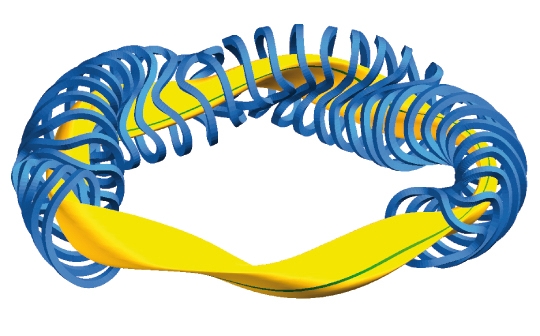
A stellarator, unlike the more common tokamak, confines plasma in a complex, twisted magnetic field generated by irregularly shaped coils. This allows the device to operate continuously, without the pulsed interruptions typical of tokamaks. Proxima Fusion builds on experience from Germany's Wendelstein 7-X, the world's largest stellarator, operated by the Max Planck Institute for Plasma Physics in Greifswald.
In February 2025, the company unveiled the concept for a commercial fusion power plant called Stellaris, developed together with industrial partners. The demonstration reactor in Gundremmingen is meant to be the next step toward a device capable of delivering power to the grid in the 2030s.
Energy Appetite Outpacing Supply
Data centers training and running large language models are consuming ever more electricity, and tech companies have spent months searching for power sources that do not depend on weather or gas prices. Google has for some time been building a portfolio of contracts spanning different nuclear technologies, from conventional reactors to small modules to experimental fusion, rather than betting everything on one approach.
The investment in Proxima Fusion fits this pattern. The company previously signed an agreement to take up to 200 megawatts from Commonwealth Fusion Systems' planned commercial facility called ARC, and is also involved in projects with Kairos Power and TAE Technologies. Each of these startups is pursuing a different path to fusion or advanced fission energy, and Google is effectively hedging its bets across several of them at once.
What It Means for Europe
For Europe's energy sector, RWE's participation in the round carries extra significance, it signals that major energy companies on the continent are treating fusion as a real part of the future energy mix rather than purely a scientific experiment. If the demonstration reactor in Gundremmingen is built on schedule, it could become a reference point for further investment in the region, including in countries neighboring Germany.
For Polish companies and institutions tracking the development of AI infrastructure, the cost context matters: building a single demonstration reactor will consume around 2 billion euros, and that is only the test stage, not a commercial power plant. It illustrates the scale of capital major tech companies are prepared to commit to securing power supplies for future data centers, including those planned in Central Europe.