News
Hyundai Unveils Physical AI Strategy, Targets 30,000 Atlas Robots a Year by 2028
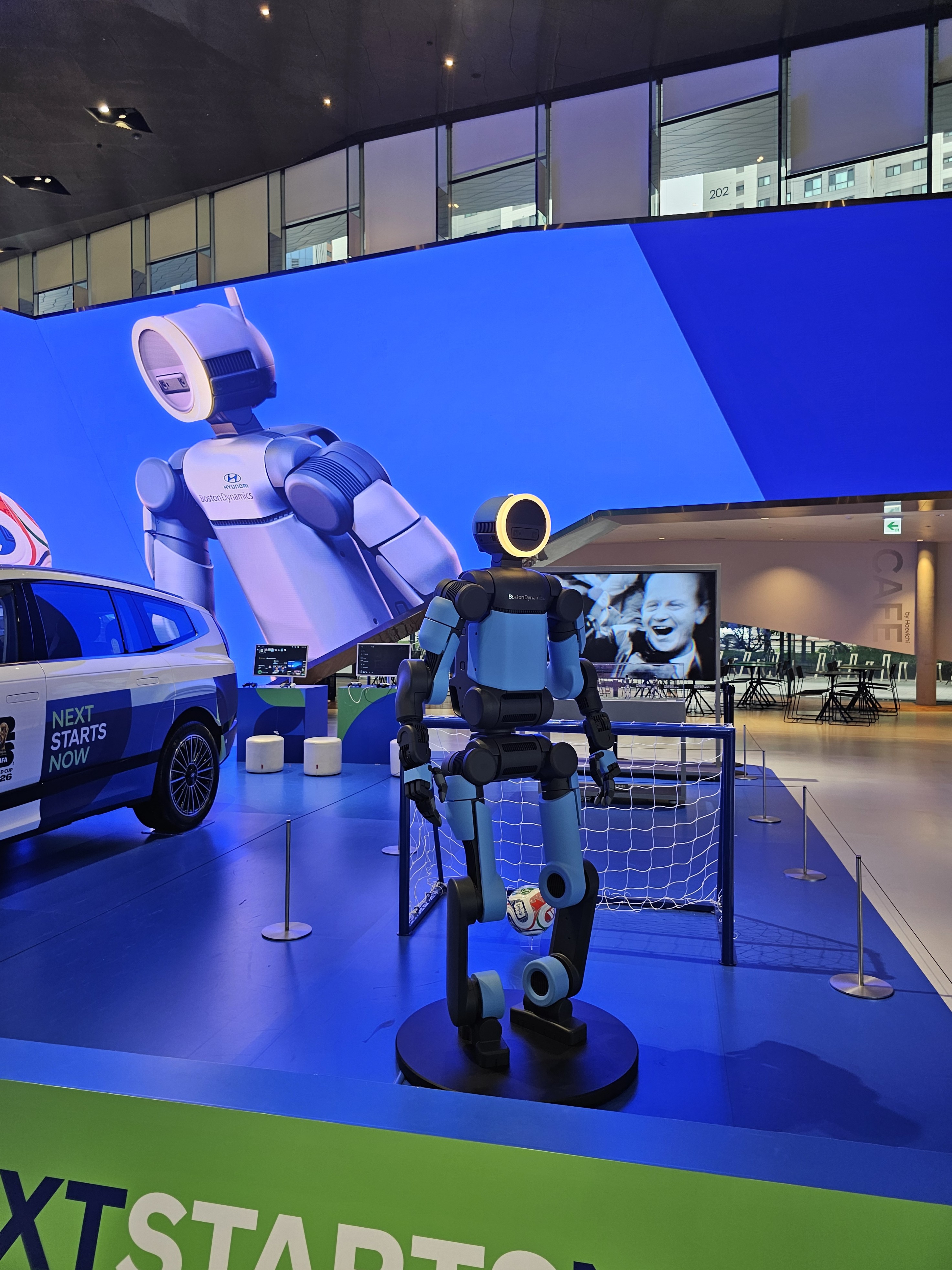
Hyundai Motor Group executive chair Euisun Chung unveiled a Physical AI strategy in San Francisco to transform the automaker into a robotics and autonomy powerhouse, combining Boston Dynamics robotics, Waymo self-driving technology, and investments worth tens of trillions of won.
Contents
Hyundai Motor Group has formally declared that it no longer wants to be just a carmaker. At the San Francisco AI Summit on July 24, 2026, executive chair Euisun Chung laid out a Physical AI strategy that ties together autonomous driving, robotics and smart factories into a single system, with the ultimate goal of managing entire cities.
From Devices to Smart Cities
Chung's framework lays out three stages of Physical AI development: smart devices, smart spaces, and finally integrated intelligence at the city level. In that final stage, urban infrastructure, vehicles and robots are meant to operate as one connected system managed by artificial intelligence.
Hyundai Motor Group is moving beyond the traditional boundaries of car manufacturing, expanding into autonomous driving, robotics and AI-defined factories - Euisun Chung, Executive Chair of Hyundai Motor Group
That line sums up the direction the group has been shifting toward for years, ever since it acquired Boston Dynamics in 2021. Now Hyundai is weaving those investments into a single corporate narrative, pitched directly to investors and tech partners in Silicon Valley rather than just at auto shows.
Alliances with Nvidia, Waymo and Boston Dynamics
Three technology partnerships sit at the core of the strategy. With Nvidia, Hyundai has signed a deal for 50,000 Blackwell chips and is jointly developing a Robot Reference Platform, a reference architecture for industrial and humanoid robots. The group is also launching its own Hyundai Motor Group Robot Application Center, meant to turn the platform's capabilities into actual factory deployments.
With Waymo, Hyundai is developing autonomous driving based on the IONIQ 5, built for autonomy at the Metaplant America factory in Georgia. It's the first time Hyundai's production line has been so directly tied to the autonomous tech of America's leading robotaxi player. The third pillar is robotics: Boston Dynamics, owned by Hyundai since 2021, has struck a strategic partnership with Google DeepMind to develop control models for next-generation humanoid robots.
Atlas Enters Mass Production
The most concrete announcement concerns the scale of Atlas production. Hyundai says it will open a US factory capable of building up to 30,000 humanoid robots a year by 2028. That figure would shift Atlas's status from a demo prototype, known mainly for viral acrobatics footage, to an industrial product built at real production scale.
On top of that comes the MobED platform, Hyundai's own mobile robot, and the concept of a data flywheel, a system that collects operational data from factories, vehicles and field robots and feeds it back as training data for future AI models. It's a mechanism similar to the one underpinning Tesla's edge in autonomous driving, but extended to industrial robotics.
Billions in Investment in South Korea
The strategy also has a domestic dimension. Hyundai has announced 9 trillion won, roughly $6.5 billion, for an AI Valley in Saemangeum, covering AI data centers, robotics factories and electrolyzer installations. On top of that, 42 trillion won, about $30 billion, is earmarked for a decade of investment in the Yeongnam region, spanning AI manufacturing, aerospace and renewable energy.
The end vision of Physical AI that we're pursuing is integrated intelligence at the city level, where urban infrastructure is seamlessly connected and managed - Euisun Chung, Executive Chair of Hyundai Motor Group
These sums put Hyundai alongside Samsung and SK Group among the Korean conglomerates redirecting industrial capital toward AI infrastructure rather than just consumer products.
What This Means for the Market
For the global race in humanoid robotics, Hyundai's announcement marks the arrival of a player with real manufacturing muscle behind it, competing with Tesla Optimus and startups like Figure or Agility Robotics not just on technology but by transplanting automotive factory scale onto robots. Bringing Nvidia, Waymo and Google DeepMind together under one strategy also shows that the lines between carmakers, AI companies and chip suppliers are blurring faster than they were even a year ago.
For observers of the automotive and industrial market in Poland, the pace is what matters most. Hyundai, like Toyota, spent years emphasizing the limits of factory automation, yet it is now declaring mass production of humanoid robots on a concrete timeline, a shift that could affect the strategies of automotive suppliers and subcontractors operating in Central Europe as well.