News
Jensen Huang at G20: AI Is Infrastructure Like Water or Power, a Gigawatt Costs $50-60 Billion
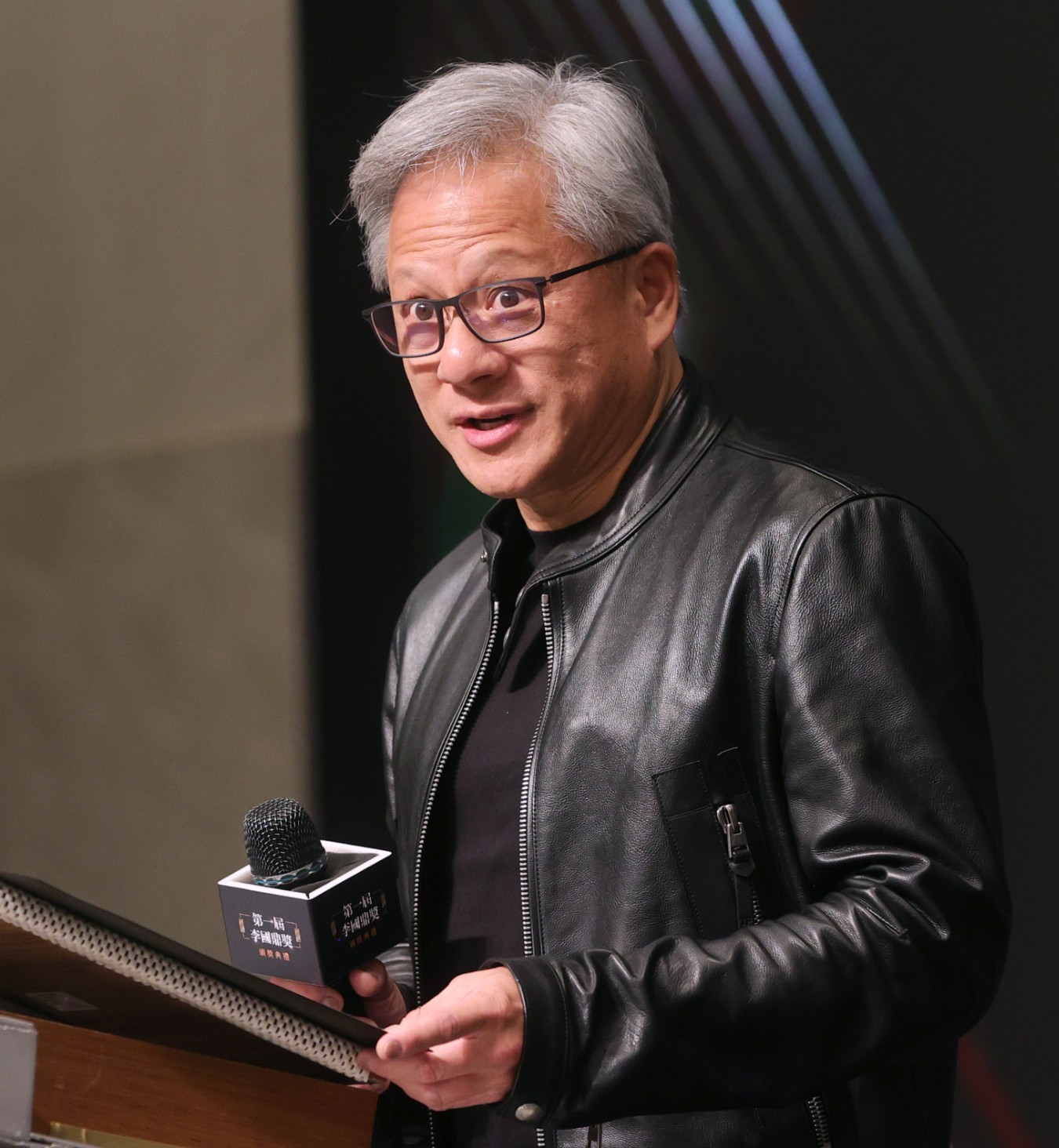
Nvidia's CEO told G20 ministers in Chapel Hill that artificial intelligence deserves the same treatment as roads or the power grid, putting the cost of one gigawatt of AI computing capacity at $50-60 billion.
Jensen Huang, CEO of Nvidia, called on G20 ministers to treat artificial intelligence as infrastructure on par with water, roads, electricity or the internet. At the G20 Innovation Ministerial in Chapel Hill, North Carolina, he laid out a concrete figure for governments: building one gigawatt of AI computing capacity costs between $50 and $60 billion.
Huang said plainly that every country needs to build its own computing infrastructure if it wants to keep control over its economy in the AI era. In his conversation with Lutnick, he compared artificial intelligence to the most basic systems that modern states rely on.
Every country needs to recognize that this is infrastructure, just like water, roads, electricity or the internet - Jensen Huang, CEO of Nvidia
The Gigawatt Math
The $50-60 billion per gigawatt estimate, informally dubbed 'Jensen's math' within the industry, covers not just the chips themselves but the entire ecosystem needed to run a data center: servers, cooling systems and power infrastructure. Huang has been citing the figure for some time as a benchmark for governments and investors planning AI spending, but in Chapel Hill he tied it directly, for the first time, to a political appeal aimed at G20 ministers.
The Nvidia chief also used his well-known 'five-layer cake' framework: energy at the base, then chips, then data centers, then AI models, and data and applications on top. According to him, no country needs to dominate every layer at once, but each should decide which layers to invest in so as not to become entirely dependent on foreign suppliers.
AI as the Great Equalizer
Huang called artificial intelligence the 'great equalizer,' arguing that the technology democratizes access to computing and research capabilities, letting countries without extensive scientific infrastructure tap into AI power just like tech powerhouses. The message fits into a broader narrative pushed by American AI companies, which for months have been urging governments worldwide to speed up infrastructure investment rather than focus on regulation.
A United Industry Front
The presence on stage not only of Huang but also Sam Altman of OpenAI, Anthropic co-founder Tom Brown, Meta's Mark Zuckerberg and Elon Musk, alongside US administration officials, Commerce Secretary Howard Lutnick, Treasury Secretary Scott Bessent and White House Director of Science and Technology Policy Michael Kratsios, made the event read as a coordinated lobbying push by AI industry leaders backed by the US government. The message was consistent: fewer regulations pre-empting hypothetical risks, more speed in building infrastructure, and regulation only where real harm appears.
This stance contrasts with the European Union's approach, where the AI Act imposes predefined obligations on developers of the most powerful models, and with China's model built on strong state control. American companies and the Trump administration are presenting their own vision at the G20 forum as a third way: rapid development with minimal regulatory constraints.
What This Means for Poland
For Poland and other smaller economies, Huang's math has concrete practical implications. Investment on the scale of tens of billions of dollars for a single gigawatt explains why individual Central European countries rarely build large-scale AI computing centers on their own, and instead count on participating in EU AI gigafactory consortia or gaining access to neighboring countries' computing capacity. Huang's remarks further bolster the argument of those who say that without their own energy and computing infrastructure, countries like Poland will remain dependent on foreign cloud and chip suppliers.
The ministerial summit in Chapel Hill was a preview of the December G20 leaders' summit, where the topic of AI regulation and infrastructure is expected to return before an even wider group. G20 governments will have to decide how closely they follow the American vision of light-touch oversight and intensive investment, versus maintaining a more cautious regulatory approach modeled on the EU's AI Act.