News
Musk at G20 Summit: AI Will Dominate Nearly Every Office Job by End of 2027
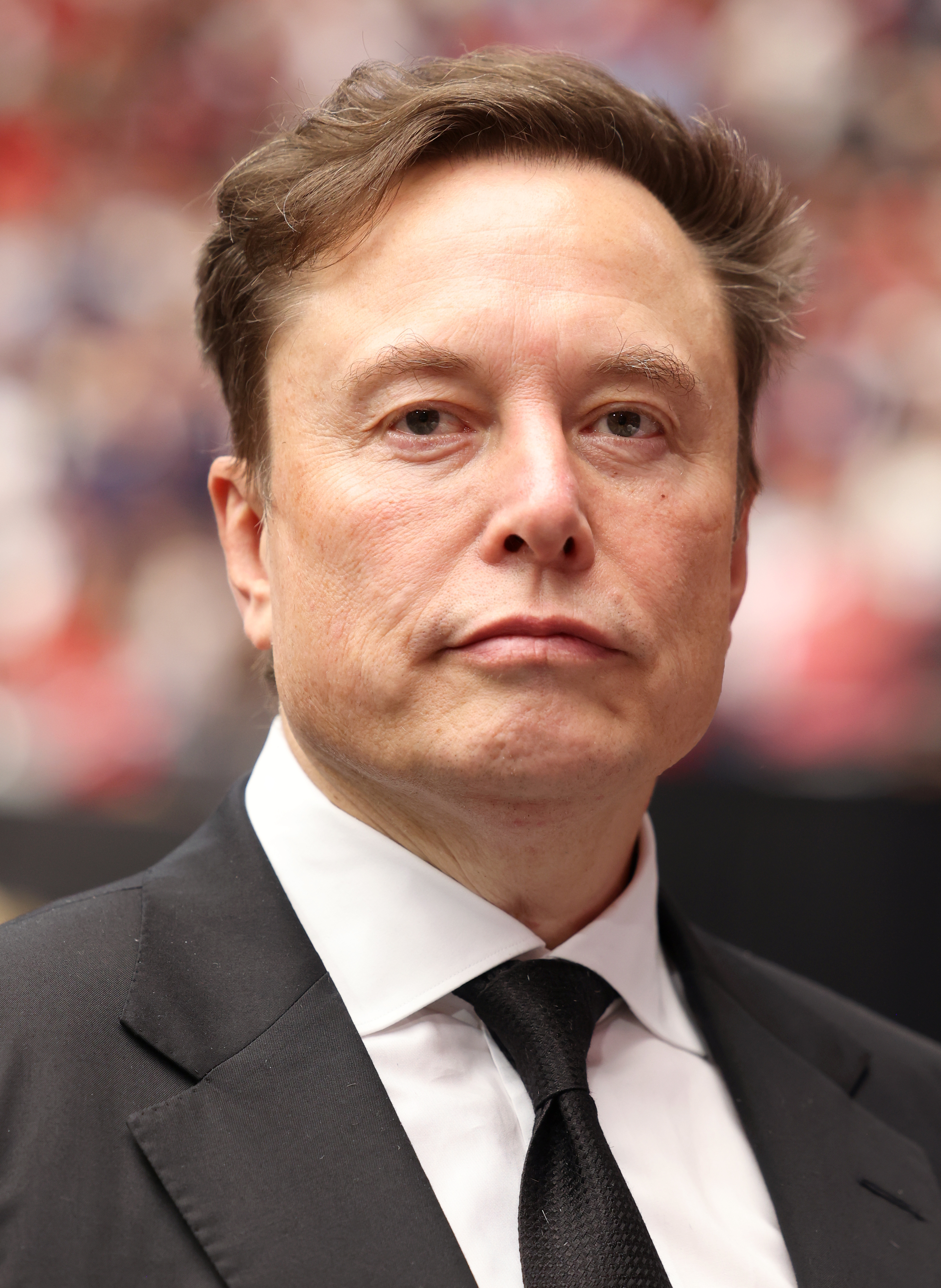
Elon Musk spoke virtually at the G20 innovation forum in Chapel Hill, predicting that artificial intelligence will surpass humans in nearly every non-physical job by the end of 2027, and criticized EU regulations as a brake on progress.
Contents
Elon Musk warned participants at the two-day G20 innovation forum in Chapel Hill, North Carolina, that artificial intelligence will surpass humans in nearly every non-physical job within the next year. The billionaire also spoke of a billion humanoid robots within a decade and sharply criticized the EU's approach to AI regulation.
The event was organized by the U.S. Department of Commerce and the White House Office of Science and Technology Policy as part of the two-day G20 innovation forum, which brought together finance, economy, and digitalization ministers from twenty countries. It took place on September 1 and 2 at the Carolina Inn in Chapel Hill, with Musk joining the organizers remotely.
What Musk Said
The head of Tesla and SpaceX focused on the pace of AI development in office and engineering work. In his view, AI will soon surpass humans in practically all digital tasks, from writing code to engineering design.
AI is just going to crush all humans at writing software and be extremely good at all forms of engineering and everything digital. - Elon Musk, CEO of Tesla and SpaceX
Musk added that this level of AI capability is expected to be reached before the end of next year, meaning by the end of 2027. This is a firmer version of his earlier predictions about AI catching up to humans in digital tasks - this time he used the strong word "dominate," rather than merely matching human competence.
Robots and the Economy
The billionaire also presented figures on robotics. According to him, at least a billion humanoid robots will be operating worldwide within a decade, each roughly five times more productive than the average human. Musk estimates that artificial intelligence alone could grow the global economy by 20 to 30 percent. These predictions fit into Tesla's long-running narrative around its Optimus robot program, though this time they were made in an official, intergovernmental context at the G20 forum.
Regulation Criticism and a Power Warning
Musk used his appearance to attack the EU's approach to regulating new technologies. In his view, the European model, in which new solutions are banned by default until approval is granted, slows AI deployment compared to the more liberal American approach.
New things need to be legal by default, not illegal. In the European Union, the level of regulation is extraordinarily high, and it's holding back progress. - Elon Musk
Alongside his criticism of regulation, Musk offered a more technical warning: analysts expect an electricity shortage for AI chips of at least 15 gigawatts in 2027. Production of AI chips is growing 40-50 percent annually, but energy infrastructure, including transformers, wiring, and cooling, is not keeping pace. Global production capacity is expected to reach 45-50 gigawatts, of which only 28-40 gigawatts will actually be used.
Poland's Presence and Priorities
Polish ministers also took part in the event: Digital Affairs Minister Krzysztof Gawkowski and Finance Minister Andrzej Domański. During the session, Domański outlined three priorities for Poland and the G20 group: removing barriers to entrepreneurship, a pragmatic approach to the energy transition, and investment in human capital, with particular emphasis on digital skills, artificial intelligence, and STEM subjects. He also referenced the transformation of Poland's economy from a centrally planned economy worth $60 billion to a market economy worth more than a trillion dollars, presenting Poland as an example of successful deregulation.
Economic growth has brought prosperity to millions of people and transformed our economy. - Andrzej Domański, Minister of Finance
What This Means for Businesses in Poland
For Polish businesses and workers, Musk's remarks are another signal that the pace of automation in office and engineering work is set to accelerate faster than many expected even a year ago. Still, his predictions remain the statements of an entrepreneur with a stake in his own AI and robotics products, not an independent analysis, so specific dates are best treated as the upper bound of an optimistic scenario rather than a certainty. His warning about the power shortage for data centers, on the other hand, carries more concrete weight - it concerns the global energy and chip supply chain, which will also affect how quickly Polish companies can benefit from increasingly cheaper AI models.
The Chapel Hill forum runs through September 2, and participants are expected to work out shared principles for light-touch AI regulation, pushed by the U.S. administration. Further remarks, including from Sam Altman and Jensen Huang, may bring additional concrete announcements on investment and computing capacity.