News
NASA and IBM Release Open Source AI Model to Study the Moon
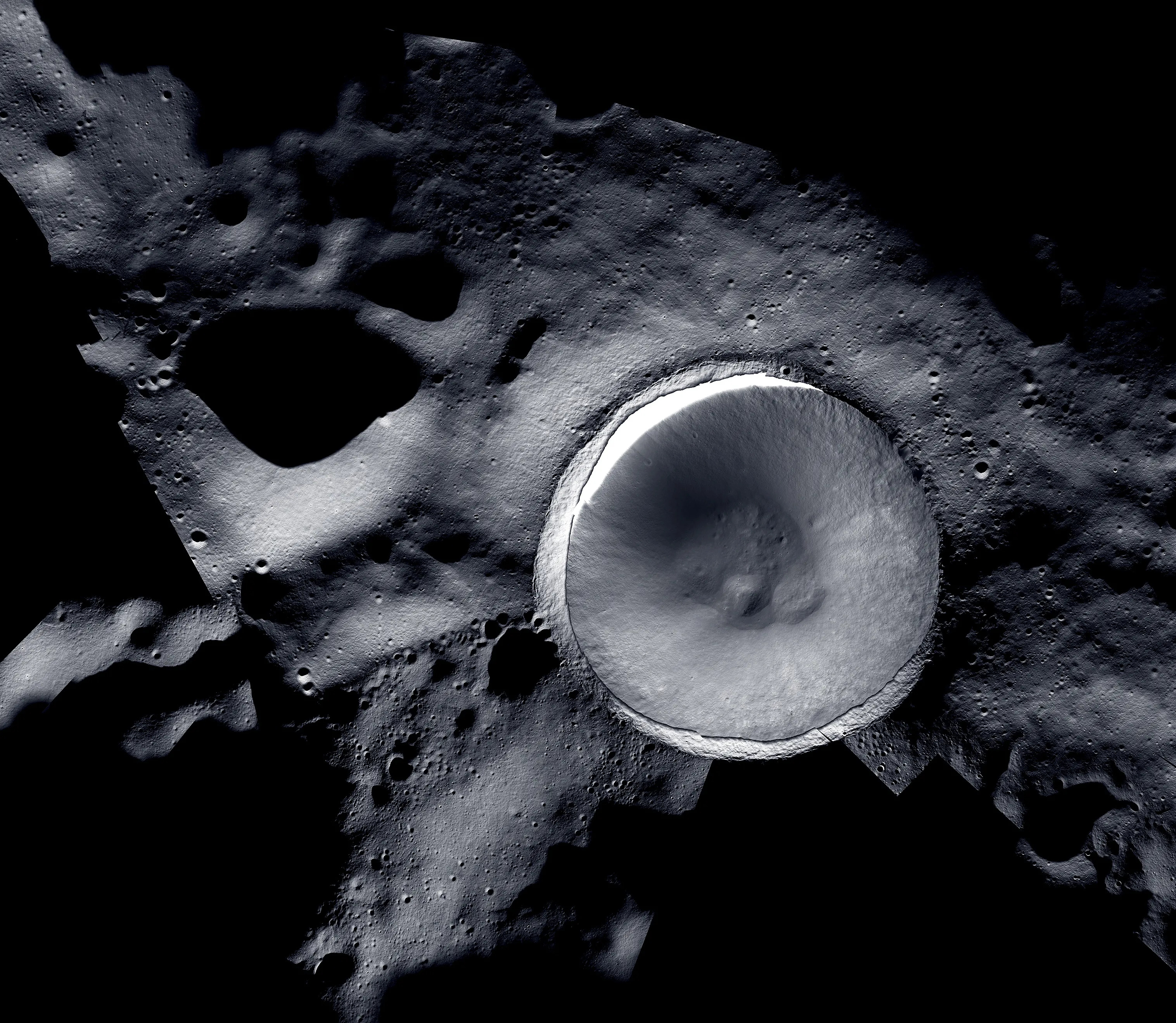
NASA and IBM Research have published the NASA-IBM Lunar Foundation Model, an open source AI model trained on 17 years of data from the Lunar Reconnaissance Orbiter, designed to help detect craters, volcanic features and ice at the Moon's poles.
Contents
NASA and IBM Research released an open source artificial intelligence model for analyzing the Moon's surface on September 10. The NASA-IBM Lunar Foundation Model was published on Hugging Face along with full code on GitHub and a dataset combining measurements from nine scientific instruments.
The model was not built for a single specific task. After additional fine-tuning on a small number of labeled examples, it can map craters, identify young volcanic structures known as irregular mare patches, and estimate where ice may lie in polar regions. Particular attention was paid to the Moon's south pole, where temperatures in permanently shadowed craters drop as low as minus 246 degrees Celsius and ice may have survived there for billions of years.
How the Model Was Trained
The project was led by the Impact AI team at Marshall Space Flight Center, in collaboration with scientists from the Planetary Science Division, Goddard Space Flight Center and Ames Research Center. Training relied primarily on data from the Lunar Reconnaissance Orbiter collected over the mission's 17 years, supplemented with gravitational measurements from GRAIL, data from Lunar Prospector and the Japanese SELENE/Kaguya probe.
IBM and NASA combined more than 30 data layers from nine instruments so that, for the same location on the lunar surface, an optical image could be matched with information on temperature, terrain shape and geophysical properties. This data fusion matters especially for the permanently shadowed craters at the south pole, which receive no sunlight, making standard optical cameras useless there, so the presence of ice has to be inferred from thermal, radar, gravitational and topographic data.
Testing on a New Crater
One test of the model involved detecting a new impact crater formed after a SpaceX rocket stage collided with the lunar surface near the Einstein crater. The model compared Lunar Reconnaissance Orbiter images from before and after the impact, recognized previously existing craters, and at the same time flagged the newly formed feature.
To real opportunity we see with AI: turning large-scale data into new discoveries - Kevin Murphy, Chief Science Data Officer, NASA Headquarters
The NASA-IBM Lunar Foundation Model gives scientists a foundation to explore the Moon at scale - Juan Bernabe-Moreno, Director, IBM Research Europe, UK and Ireland
Significance for the Artemis Program
NASA is running the Artemis program, under which it plans to return humans to the lunar surface, currently targeted for 2028. Identifying locations where ice likely exists has direct bearing on choosing future landing sites, since water ice could theoretically be processed into drinking water, oxygen or rocket fuel for crewed missions.
The model is part of a broader NASA strategy for using artificial intelligence in science. The agency has been amassing huge volumes of data from space probes for decades, but manually analyzing it is time-consuming for scientists. Foundation models trained on large satellite datasets are meant to speed up the search for patterns that elude traditional, purpose-built algorithms.
Open Access
The NASA-IBM Lunar Foundation Model is publicly available on Hugging Face, and the full source code has been published on GitHub. The model has been integrated with the open source TerraTorch toolkit, intended to make it easier for researchers outside NASA and IBM to fine-tune it for their own research applications on small, specialized datasets.
Making the model and its training data open means research teams around the world can use the tool regardless of whether they have direct access to raw NASA mission data. The project's authors stress that this openness is meant to build a global scientific community around lunar research, rather than limit the tool to NASA and IBM teams.