News
No-Budget Filmmaker Wins AI Film Festival in Venice
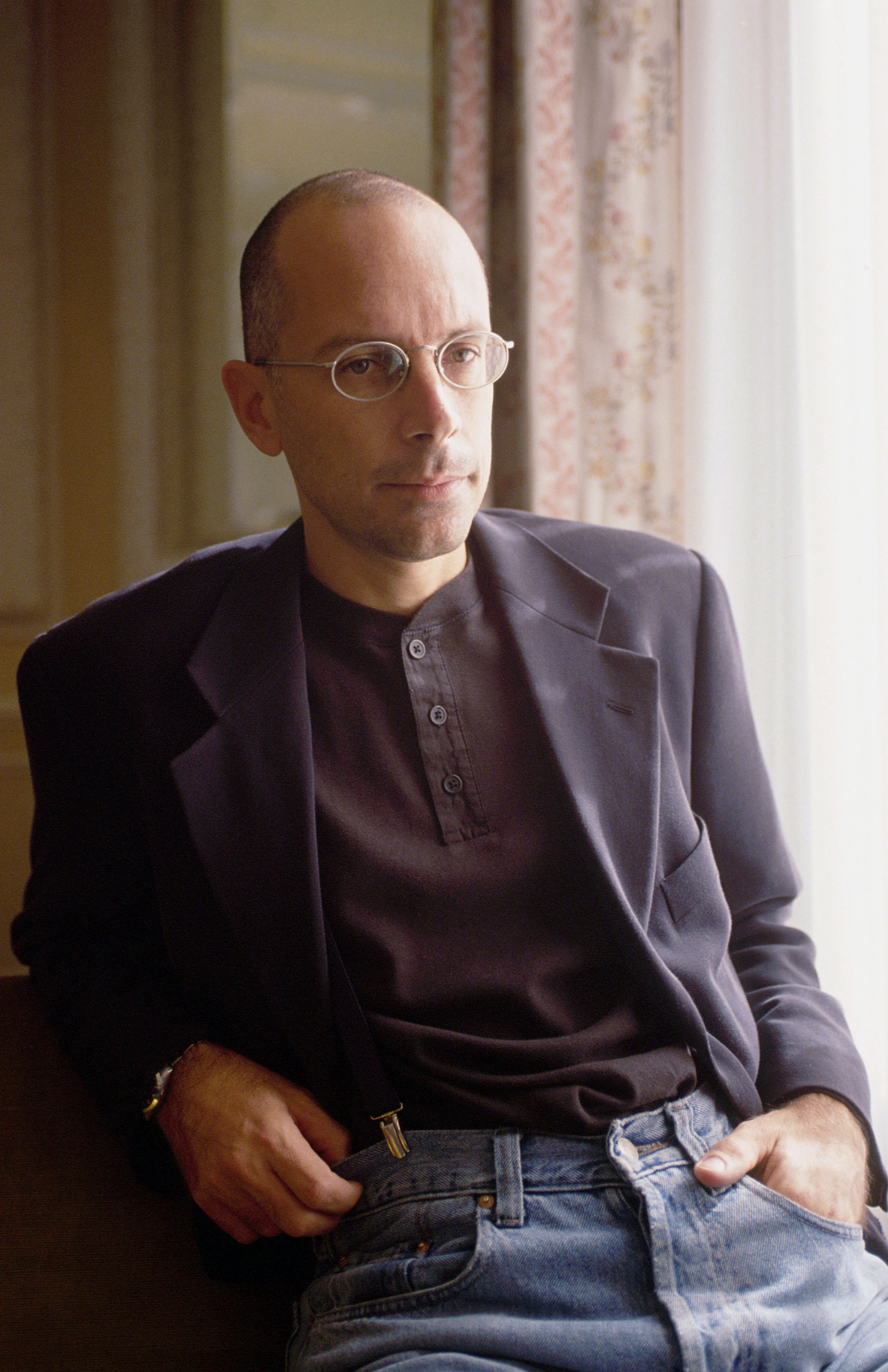
Canadian filmmaker Robert Gaudette won the third edition of the Reply AI Film Festival with an eight-minute film created almost entirely with AI tools. The award was presented in Venice alongside the 83rd Venice Film Festival, with over 3,000 entries from 76 countries.
Contents
While actors and directors of traditional cinema shone on the red carpet of the 83rd Venice International Film Festival, a few steps away at the Tennis Club Venezia on the Lido, a contest was being decided where entirely different skills mattered. The Reply AI Film Festival 2026 awarded a short film made with no budget, no actors and no film crew, using only image and video generators.
The Reply AI Film Festival is a competition organized by the Italian technology company Reply, running alongside the Venice film festival for the third time. The format is simple: creators from around the world submit short films made entirely or largely with artificial intelligence tools, and an international jury picks the best productions based on cinematic language, concept and execution.
A story without a budget
The winning film tells the story of Marcel, a Parisian dancer with a facial deformity whose solitary life begins to change when a woman tries to reach out to him. Gaudette made it by compensating for the lack of funding, actors and a professional film crew with generative tools: Grok, Nano Banana and Seedance were used to create the imagery, movement and sets.
The creator himself admitted the project started as an experiment and that winning came as a surprise to him. The film's story fits the narrative the festival wants to promote: artificial intelligence as a tool that democratizes filmmaking, making it accessible to creators without access to traditional financing.
This win means a great deal to me and is a genuine surprise. I started working on this film as an experiment - Robert Gaudette, director of 'A Face Only A Mother Could Love'
An Oscar winner and the Lion King co-creator on the jury
The jury's lineup gave the competition a weight rarely seen at other AI film events. It was chaired by Gabriele Salvatores, an Oscar winner for 'Mediterraneo,' and the panel of judges included, among others, Rob Minkoff, co-creator of 'The Lion King,' director Catherine Hardwicke, and film critic Brian Welk of Indie Wire.
Salvatores made no secret of his enthusiasm for the level of the submissions, saying he could have given the award to almost any of the short films presented, and that he was especially impressed by the skill of the young directors. That assessment stands in contrast to the film industry's widespread distrust of generative AI, also visible this year in Venice around Maggie Gyllenhaal's short film, in which the director deliberately chose not to use AI to create a digital version of Marilyn Monroe.
I could have given the award to almost any of the short films presented. I was deeply impressed by the skill of the young directors - Gabriele Salvatores, chair of the Reply AI Film Festival jury
The other winners
Beyond the top prize, several additional awards were handed out. Second place went to 'Le Drip' by the duo Alex Naghavi and Ezra Li from the United States, and third to 'Centenarian Kindergarten' by the Chinese studio 2xLabs, which also received the AI for Good award. The Reply AI Studios Grand Prix went to the British film 'Website' by Jiaze Li, which also won the audience award. A special award was given to the Spanish production 'The Child of the Sea' by Ibai Abad.
Filippo Rizzante, Reply's Chief Technology Officer, pointed to a qualitative leap visible in this year's submissions compared with previous editions of the festival. In his view, the progress concerns not just the visual layer but, above all, the maturity with which creators are incorporating AI tools into the creative process, treating them as part of their craft rather than a special effect in itself.
It's not just that the visual quality has improved, but above all the maturity with which artificial intelligence is being integrated into the creative process - Filippo Rizzante, CTO of Reply
Cinema at a crossroads
The presence of an AI festival right next to the main Venice event shows how quickly generative artificial intelligence is making its way into the world of film, even as many creators and critics still approach it with reserve. Venice Film Festival artistic director Alberto Barbera has previously stressed that the change brought by AI could prove deeper than the shift from analog to digital cinema, affecting the entire filmmaking process, from script to distribution.
For Polish filmmakers and film students, Gaudette's story is a signal that the barrier to entry into film production is dropping significantly. A short film made with no budget, actors or crew, one that wins praise from jurors of Salvatores's stature, shows that tools like Grok, Nano Banana and Seedance are becoming a real alternative to expensive equipment and production, though the question of where such films fit within the traditional cinema circuit remains open.
The third edition of the Reply AI Film Festival also confirms that major tech companies see the intersection of cinema and AI as a permanent promotional platform, not a one-off experiment. The scale of submissions, over 3,000 films from 76 countries, suggests that the community of creators working with generative video tools is growing faster than the festival mainstream might suggest.