News
Nvidia Debuts AI Agents as Creative Partners at SIGGRAPH 2026
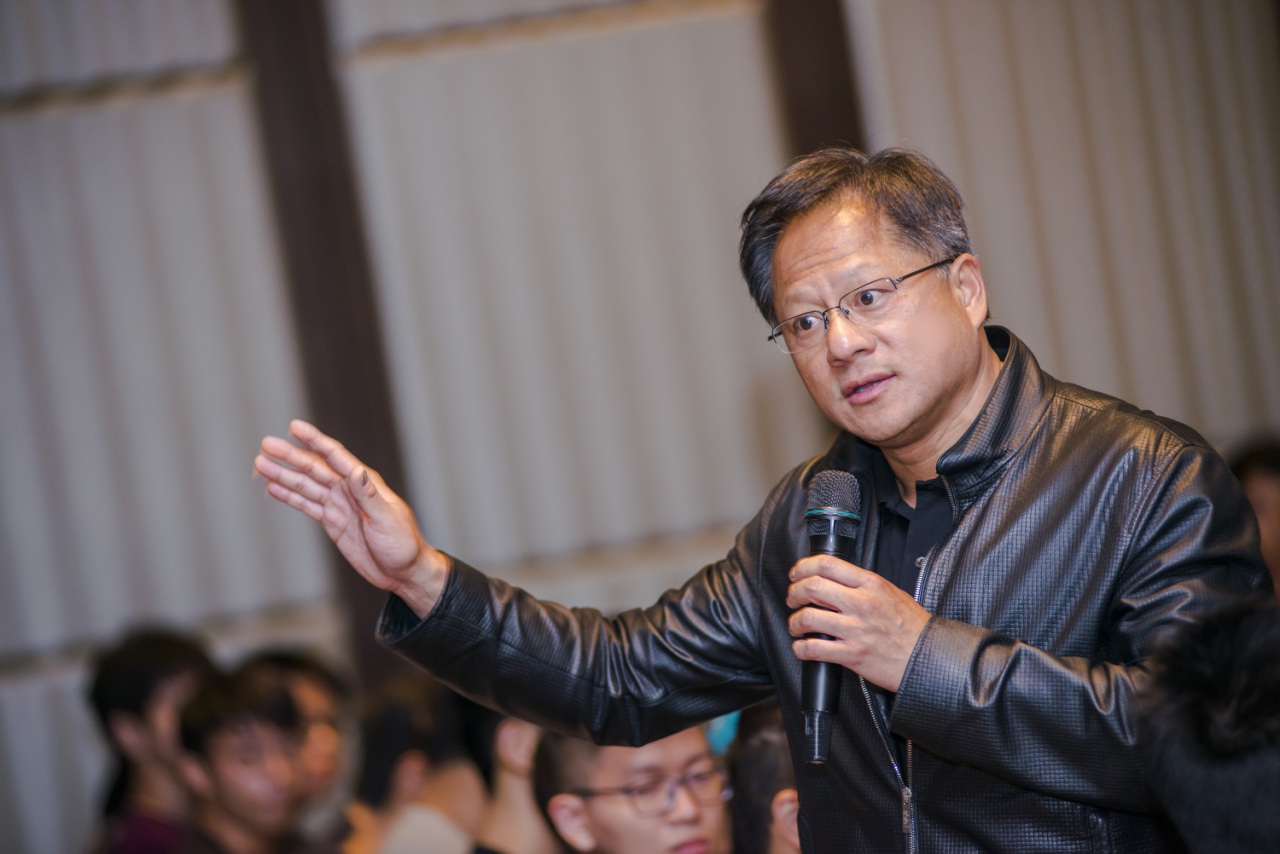
At SIGGRAPH 2026 in Los Angeles, Nvidia showed off an AI agent co-hosting a live presentation, alongside a new world model, Cosmos 3, and an open source physics engine, Newton, aimed at millions of graphics and simulation creators.
Contents
Nvidia used its SIGGRAPH 2026 keynote in Los Angeles to show off an artificial intelligence agent as a full creative partner in building 3D scenes live, not just a tool for generating images on demand. The company paired the demonstration with the launch of new Omniverse libraries and the open source physics engine Newton, aimed at game developers, visual effects studios and vehicle design firms.
Agent as Co-Host
The centerpiece of Nvidia's demo was a scene in which company engineer Damien Fagnou built a physics simulation application live, working alongside an AI agent named Lexi. The agent didn't just answer questions, it actively took part in constructing the scene, suggesting solutions and carrying out some of the technical work in real time.
This approach fits into the broader narrative of this year's SIGGRAPH, which casts artificial intelligence as a partner that extends creators' capabilities rather than replacing them. Conference organizers had already emphasized this theme in materials promoting the event, tying it to Google DeepMind's presentations on the Gemini, Genie 3 and Veo 3.1 models.
Cosmos 3 and New Omniverse Libraries
Nvidia also unveiled the next step in its Cosmos line of world models. Cosmos 3, which debuted at GTC Taipei in June, uses a mixture-of-transformers architecture that combines visual reasoning, environment generation and next-action prediction in a single system. Previous models in the family have already been downloaded more than two million times, underscoring the demand for tools that generate training data for robots and autonomous vehicles.
The company also presented a new set of Omniverse libraries for RTX sensor simulation, GPU physics and digital asset validation, described as part of the Agent Toolkit. It is meant to give AI agents concrete tools for building simulation-ready worlds on their own, rather than limiting their role to generating individual images or textures.
Newton and Open Physics
The second pillar of the presentation was Newton, an open source, GPU-accelerated physics engine built on NVIDIA Warp and the OpenUSD standard. The engine is being developed in collaboration with Google DeepMind and Disney Research, and its development is overseen by the Linux Foundation, meant to guarantee the project's independence from any single vendor. SIGGRAPH hosted workshops on integrating Newton with Isaac Lab, Nvidia's robot training platform.
AI is not a means of replacing talent, but of extending its work - Chris Redmann, chair of SIGGRAPH 2026
Industrial Applications
Beyond games and visual effects, Nvidia showed how the same tools are making their way into the automotive industry. Electric vehicle maker Rivian uses digital twins built on Nvidia technology to speed up vehicle design, rendering photorealistic, drivable environments in real time on a single GPU to test autonomous systems.
A day devoted to physical AI, scheduled for July 21, brought together a team of Nvidia researchers presenting the individual pieces of the puzzle: Ming-Yu Liu, head of the Cosmos lab, discussed the world model's development, Aaron Luk presented progress on the OpenUSD standard, and Miles Macklin showcased Newton. Liu's team is also behind Edify, a line of generative models for creative industries that the company says already power platforms used by millions of creators.
Significance for the Industry
For game and visual effects studios, this means tools previously available mainly to large animation companies are set to reach a wider range of creators, including smaller teams using the open Omniverse and Newton libraries without licensing fees. Open sourcing the physics engine and developing it jointly with rival labs like Google DeepMind signals that Nvidia is betting on standardizing the foundations of simulation while keeping its edge in hardware and generative models.
For Polish production studios and industrial visualization firms, the practical takeaway is that access to advanced simulation tools and world models no longer requires an in-house research team, and AI agents are starting to take over part of the technical work of building scenes, which could shorten production times for smaller teams.
Nvidia has not yet given a firm timeline for making Cosmos 3 broadly available beyond early access partners, nor full pricing for the Agent Toolkit libraries. The next test of these announcements will be whether independent game developers and VFX studios actually start incorporating agents like Lexi into their own production pipelines, or whether they remain a conference demo for now.