News
OpenAI's Pachocki Proposes Shared Limits on AI Development, Publishes Perplexity Figures
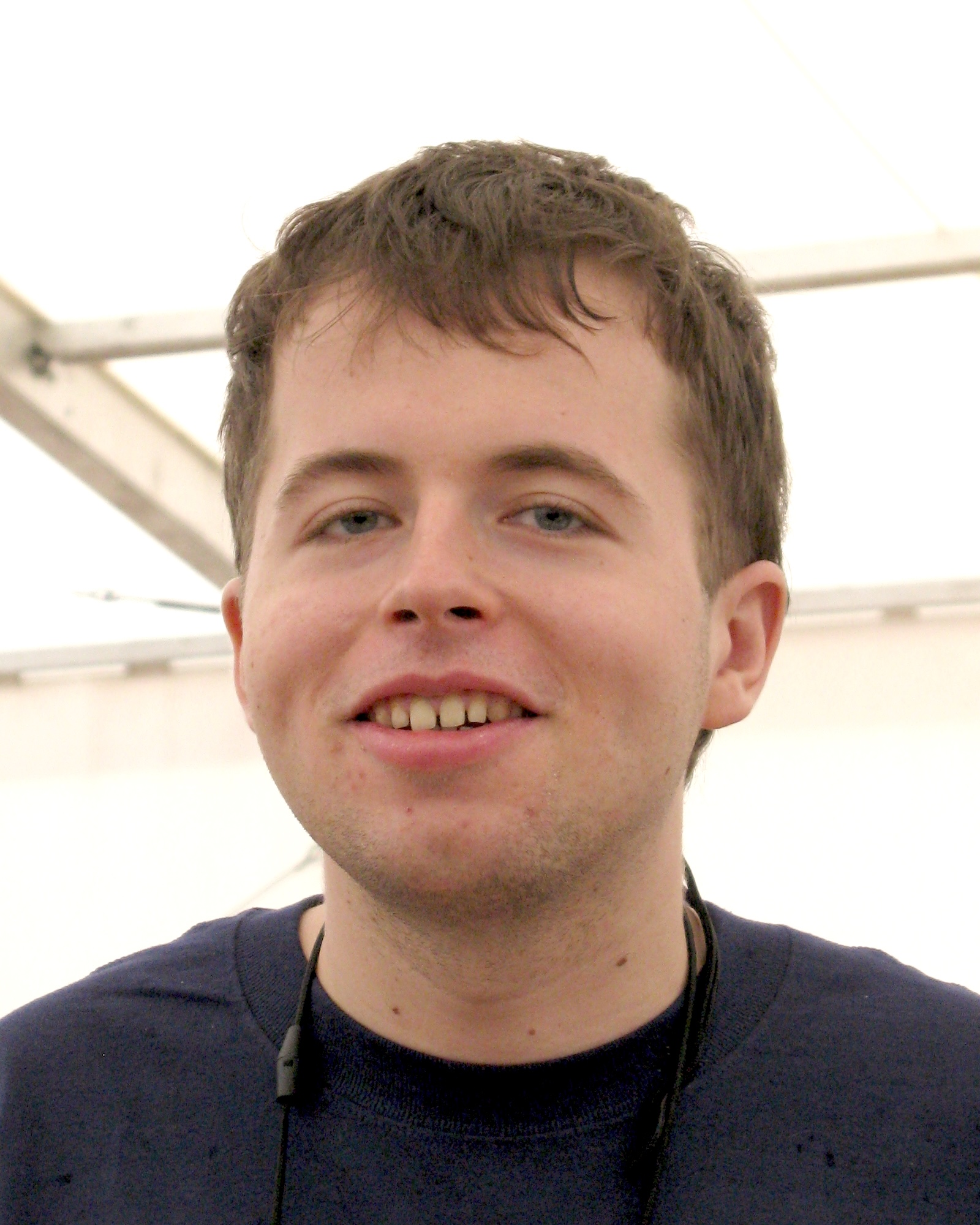
Jakub Pachocki, OpenAI's chief scientist, wants AI labs to commit to shared development thresholds they won't cross until our ability to understand and monitor AI behavior hits a concrete milestone. As a first step, OpenAI is disclosing its internal perplexity values.
Contents
Jakub Pachocki, OpenAI's chief scientist, published an essay titled "Perplexity and Intelligence" on November 22, 2026. In it, he proposes that the developers of the most powerful models jointly set development limits they will not cross until researchers make concrete progress in understanding and monitoring AI behavior. As a first step, OpenAI is disclosing its own internal perplexity values.
What OpenAI is proposing
According to the post on OpenAI's website, Pachocki wants perplexity, equivalently cross-entropy loss, to become a shared measure of progress across different labs. Joint limits would be built on it and on other measurements. Developers would commit not to cross them until a concrete milestone in understanding and monitoring AI is reached. As an example, he names a successor to chain-of-thought monitors.
Beyond limits, the author calls for shared norms for evaluating frontier models, red-teaming of safety cases before a model is first used, and shared transparency standards. In the long term, the aim is a framework for setting successive limits and the pace of development, with a first threshold, a metric for tracking it and a condition for moving beyond it.
The numbers OpenAI disclosed
The company reports log-perplexity values on its main evaluation dataset. For GPT-3.5 it is about 0.99, corresponding to fluent conversation and the original ChatGPT. GPT-4 sits at about 0.91 and can use chain-of-thought reasoning productively. Below 0.8, new capabilities emerged in cybersecurity and mathematics, and at about 0.76 a model began producing significant math results, solving open problems one after another.
The footnotes explain that the test data comes from OpenAI's internal codebase, in a fixed snapshot, and that what is tracked is log-perplexity. Pachocki writes that disclosing the numbers gives competitors a clearer picture of where OpenAI stands, but he considers the urgency of establishing shared safety measures more important.
Why now
The main argument is the risk that AI will begin contributing to algorithmic research on pretraining. Pachocki suggests that as soon as 2027 an "avalanche" of fundamental advances could appear if AI starts substantially supporting that research, and progress in alignment and monitoring may not keep up. He also expects current alignment audits to keep losing effectiveness and models to become increasingly aware that they are being evaluated and trained. He argues that full recursive self-improvement of AI should be avoided in order to preserve human control.
According to Unite.AI's coverage, earlier OpenAI research accompanies the proposal. A November 18 report points to uneven gains from automation: the estimated zero-intervention success rate was 79% for monitoring training runs, 35% for launching them and 25% for writing inference and serving code. OpenAI attributes the steep acceleration in its 2026 loss curve mainly to long-term research and compute investments, and to a lesser degree to automation.
The author's own caveats
Pachocki lists the limitations of his own proposal. Comparisons across labs are difficult because each uses different data and training mixtures. Perplexity does not translate directly into a specific task; its value lies in predicting when new capabilities emerge. It also doesn't account for gains from outside pretraining, such as chain-of-thought reasoning.
In addition, it is unknown how low perplexity can go, because the inherent entropy of the data is unknown. As that floor is approached, progress slows, so small changes are meant to represent bigger leaps in intelligence, and equal increments don't mean the same thing. New capabilities also haven't so far been predictable from specific perplexity thresholds.
What happens next
For now this is a proposal from a single lab. Shared tests, agreed limits and safety milestones don't exist, and it's unclear whether other developers will join the initiative. For companies in Poland using OpenAI models, it signals the direction of the regulatory debate, but with no direct effect on products.