News
Prosecutors Demand Documents Over AI-Generated Report by Poland's Brand Promotion Envoy
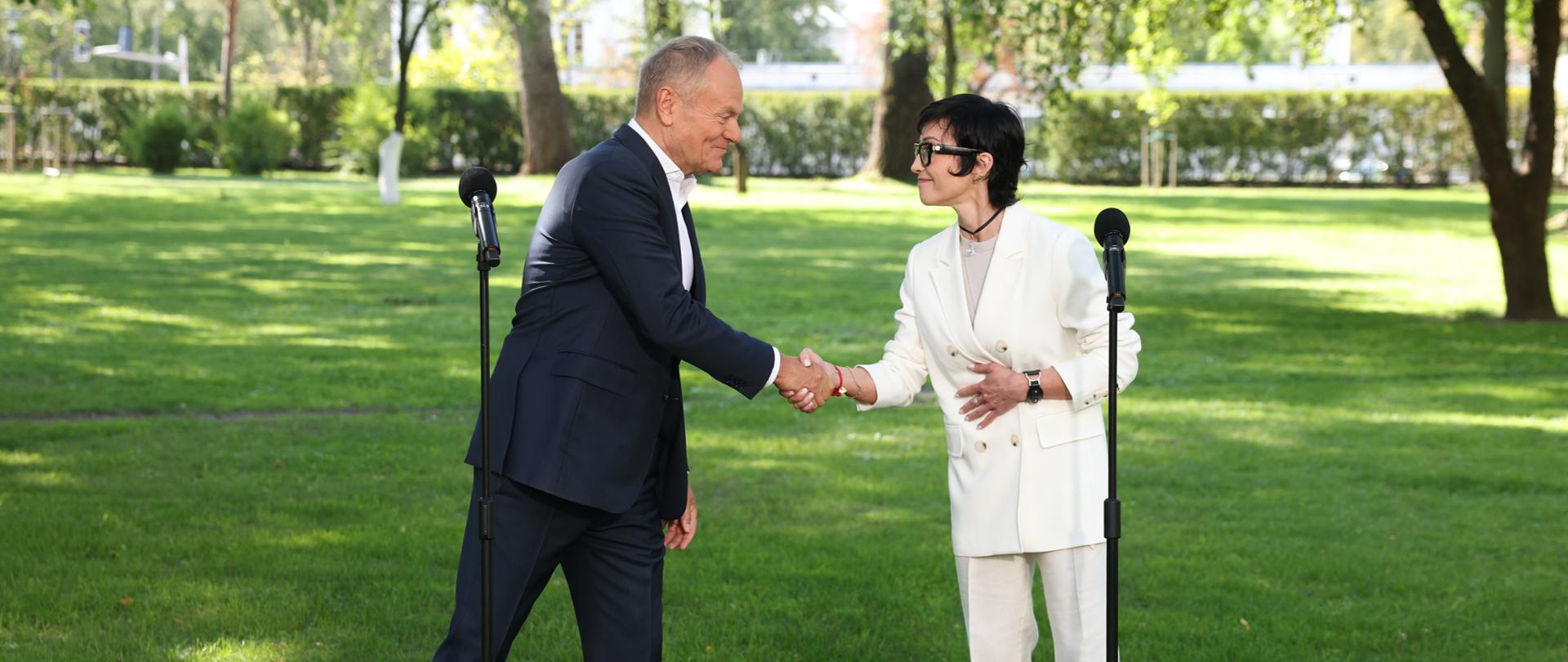
Warsaw's regional prosecutor's office has asked the Ministry of Sport and Tourism for a copy of the "Polaków Portret Własny" report and the contract behind it, after allegations that the nearly 200,000 zloty document was largely produced using artificial intelligence.
Warsaw's regional prosecutor's office has formally opened an inquiry into the 'Polaków Portret Własny' ('Self-Portrait of Poles') report, authored by Barbara Mróz-Gorgoń, the current government plenipotentiary for promoting Poland's brand. Investigators demanded that the Ministry of Sport and Tourism hand over a copy of the document itself, along with the contract governing its preparation and financing, after experts and politicians alleged that the report was largely generated by artificial intelligence.
Prosecutors' Demand
According to the Polish Press Agency (PAP), prosecutors said they had asked the sports ministry to send a copy of the report along with the contractual documentation related to its creation. It is the first formal step taken by investigators in a case that has electrified Polish politics for a week and raised questions about how public institutions oversee the use of generative AI in commissioned expert reports.
The request for documents follows complaints filed with the prosecutor's office and the Central Anti-Corruption Bureau after the report drew public criticism. Investigators want to establish the terms under which the document was produced, who financed it, and whether the scope of work described in the contract matches what was actually delivered.
History of the Controversial Report
The 'Polaków Portret Własny' report was produced back in late 2025, before Mróz-Gorgoń took up her government post in late July 2026. The document surfaced online on Thursday, triggering a wave of criticism from experts, including information security specialist Łukasz Olejnik, who pointed to numerous signs suggesting the broad use of language models in its creation.
Critics highlighted factual errors in the text, including a description of Katowice as a city located in the 'northern center of Poland', a geographical mistake hard to explain as anything other than an oversight from automated text generation or editing. For opposition politicians, these errors became evidence that a document worth nearly 200,000 zloty was paid for even though it was largely written by a machine.
We used AI tools solely for transcription, summarization and text editing, they did not design the research content or draw conclusions - Barbara Mróz-Gorgoń, government plenipotentiary for promoting Poland's brand
Allegations of Fraud
Law and Justice (PiS) and Rozwój Plus filed separate complaints, demanding that the case be investigated by both the prosecutor's office and the CBA. Politicians from both parties argue that irregularities occurred in the spending of public funds on a document whose actual substantive value is in doubt.
Rozwój Plus MP Paweł Jabłoński, who was the first to publicize the case, estimated the cost of the report at nearly 200,000 zloty and publicly asked whether the Ministry of Sport and Tourism had paid that amount for a document generated by AI. The sports ministry, however, denied that the publication was covered by its contract, further complicating efforts to determine who actually commissioned and financed the report.
Did the Ministry of Sport and Tourism pay 200,000 zloty for a report generated by AI? - Sebastian Meitz, an expert affiliated with the Sobieski Institute
What's Next
Mróz-Gorgoń has defended herself, arguing that the report was used internally within a think tank and was never meant to enter public circulation, and that she herself was not yet a state official at the time. Deputy Digitalization Minister Dariusz Standerski announced that all the circumstances surrounding the document's creation would be clarified, without specifying how or by when.
It is now up to the prosecutor's office to decide whether the evidence gathered, including the documents requested from the ministry, provides grounds for opening formal criminal proceedings, or whether the case will end with preliminary verification steps. Establishing the actual source of the report's funding will be key, given that the sports ministry has distanced itself from responsibility for the publication.
For Poland's administration, the case is the first such high-profile test of how public institutions account for the use of generative artificial intelligence in paid expert reports. The ustawa o systemach sztucznej inteligencji (Poland's national AI systems act) is formally in force, but the country's supervisory authority for it has still not been appointed, limiting the ability to quickly and independently verify this kind of procurement outside of prosecutorial channels.
The Mróz-Gorgoń report case also shows how difficult it is in practice to distinguish acceptable AI assistance in text editing from a situation in which a language model is responsible for the substantive content of a study. Until there are clear standards for disclosing such assistance in documents commissioned by public administration, similar controversies are likely to recur with future publicly funded expert reports.