News
Scientists: Biology Doesn't Rule Out Conscious AI
A new analysis published in the journal Trends Open challenges the argument that consciousness requires a biological brain. The authors acknowledge, however, that science still cannot explain what consciousness in humans actually is.
Contents
Two researchers working in cognitive and computational neuroscience have published a paper challenging one of the most frequently repeated arguments against the possibility of conscious artificial intelligence. In their view, the mere fact that every known conscious being is a biological organism does not prove that consciousness requires a biological body.
The paper's starting point is a critique of reasoning the authors call too hasty: since consciousness has so far only been observed in biological beings, this is taken to prove that biology is necessary for it. Klatzmann and Doerig point out that this is a logical error - the fact that a phenomenon has so far appeared only in one context does not mean it cannot occur in another.
Two Kinds of Biological Naturalism
The researchers separate two versions of the popular theory of biological naturalism. The first, constitutive version, states outright that without biological matter, consciousness cannot arise. Klatzmann and Doerig reject this version as a position that cannot be scientifically justified or falsified.
The second version, which they call enabling, assumes something subtler: the biological body processes information in a particular way that may prove crucial for the emergence of subjective experience. The authors consider this hypothesis worth further study, though they stress it remains unclear exactly what in biological information processing would constitute that necessary ingredient.
A Thought Experiment With a Chip
To illustrate the problem, the authors draw on a classic thought experiment: gradually replacing parts of the brain with computer chips that perform exactly the same computational functions as the neurons they replace. If consciousness depends solely on information-processing operations rather than on the material the processing substrate is made of, such a brain should remain conscious even after being fully replaced.
I would be surprised if current AI models develop consciousness, but we can't entirely rule it out - Ulysse Klatzmann, Université de Montréal
This line of thinking fits within functionalism, the position in philosophy of mind holding that consciousness is determined by the kind of processes carried out, not by the substance in which they occur. Klatzmann and Doerig do not claim functionalism is true - they merely emphasize that science currently lacks the tools to rule it out.
The Biggest Obstacle: We Don't Know What Consciousness Is
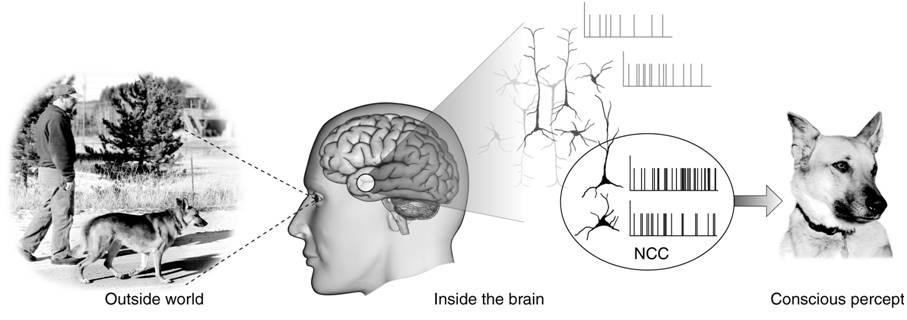
The authors acknowledge that the biggest problem is not a lack of evidence for machine consciousness, but a lack of understanding of what consciousness even is in humans. We know we experience the blue of the sky, the sound of music, or pain, because we experience it - but science still cannot explain the mechanism by which the brain produces these subjective sensations.
The history of science shows that things that seem self-evident may turn out to be false - Ulysse Klatzmann, Université de Montréal
This lack of a fundamental theory of consciousness means that any discussion of whether language models might one day possess it rests on premises scientists themselves cannot yet verify. Klatzmann notes that intuitions about consciousness are deeply culturally rooted and have long been tied to intelligence and cognitive abilities, which may not necessarily be the right reference point.
Implications for the AI Debate
The publication arrives at a moment when questions about the moral status and possible experience of AI systems are gaining traction among AI safety researchers, and labs are increasingly funding research into so-called model welfare. Klatzmann and Doerig's paper does not settle this dispute, but it removes one of the arguments most often used to shut it down prematurely.
For readers following the development of artificial intelligence, the paper is a reminder that speculation about conscious machines - which regularly resurfaces around the release of new language models - currently has no solid scientific backing in either direction. Neither the claim that AI will never be conscious nor the opposite claim is fully supported by the current state of knowledge about the brain.
The authors call for further research into which specific properties of biological information processing, if any, are necessary for the emergence of subjective experience. Until such an answer exists, they argue, the debate over AI consciousness will remain largely philosophical rather than empirical.