News
Scientists Use Google AI to Map Entire Nervous System of Male Fruit Fly
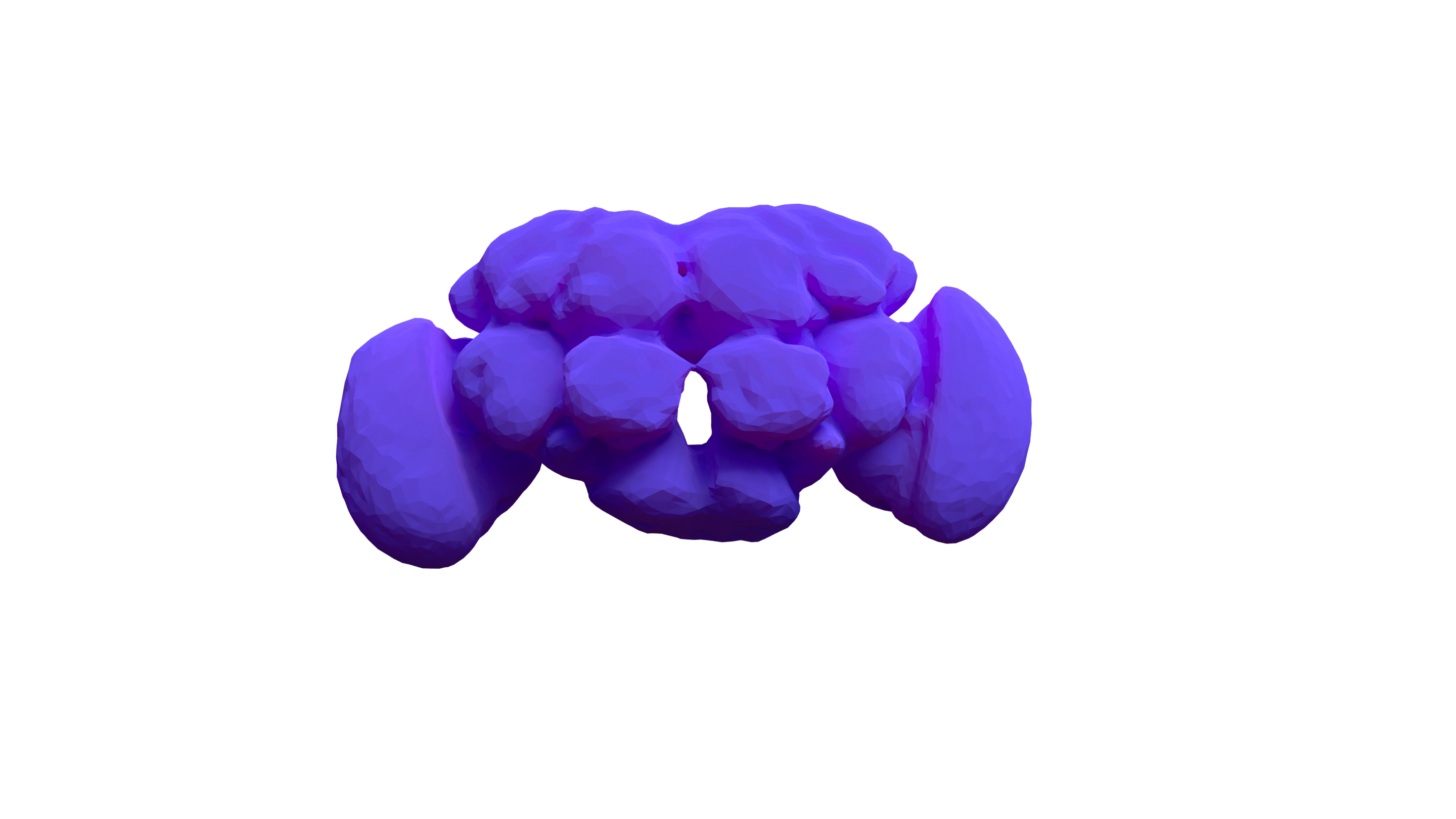
Teams from Janelia Research Campus and Google have published a complete connectivity map of the male fruit fly's brain and nerve cord - 166,700 neurons and 124.2 million synapses, reconstructed with the help of artificial intelligence algorithms.
Contents
A team of researchers from Janelia Research Campus, the University of Cambridge, and Google Research published on September 3, 2026 the most complete map yet of the nervous system of a male Drosophila melanogaster fruit fly. The connectome covers the brain, both optic lobes, and the nerve cord - the insect equivalent of a spinal cord - and for the first time allows researchers to trace a direct signal pathway from the eyes all the way to the legs within a single, continuous dataset.
The data were generated from thousands of ultrathin slices of brain tissue photographed under an electron microscope and then digitally stitched into a coherent spatial model. The work was led by the FlyEM team at Janelia Research Campus, part of the Howard Hughes Medical Institute, together with the Cambridge Drosophila Connectomics Group at the MRC Laboratory of Molecular Biology. The results appeared simultaneously in two peer-reviewed scientific journals, itself a reflection of the scale of the material.
What the Connectome Shows
A connectome is a complete map of connections between neurons - the equivalent of a wiring diagram for a living brain. For the male fruit fly, researchers traced 166,700 nerve cells linked by more than 124 million synapses, cataloguing around 11,000 distinct neuron types along the way. The analysis showed that visual processing involves more than half of all neuron types in the brain and extends much deeper than previously thought, well beyond the traditionally defined optic lobes. For the first time, researchers were also able to combine the brain, optic lobes, and nerve cord - the structure that controls the movement of the legs and wings - into a single, seamless model. Earlier maps, including the 2020 hemibrain covering about 25,000 neurons, showed only fragments of the nervous system.
Google's AI Role
Manually tracing millions of connections from microscope images would have been practically impossible - estimates from years ago put the task at 500 people working for a decade. Google Research's Connectomics team developed machine learning algorithms to automatically segment electron microscopy images, that is, to recognize the boundaries of individual neurons and synapses across millions of microscopic cross-sections. Experts at Janelia and Cambridge verified and labeled the results, but automation cut the process by roughly a thousandfold compared to the original estimates.
Google is pushing these methods further. In a parallel project, the company's research team unveiled a model called MoGen, which generates synthetic neuron shapes to train networks that reconstruct brain circuits. In tests on mouse tissue, synthetic neurons reduced reconstruction errors by 4.4 percent, which at the scale of an entire mouse brain translates to savings of roughly 157 person-years of manual correction. Google also released a series of visual materials showing what work on the fly connectome looks like, highlighting AI's role in accelerating neuroscience.
Differences Between Males and Females
A key reason researchers decided to map the male nervous system as well was to enable a direct comparison with the female connectome, published in 2024 by teams from Princeton and Cambridge as part of the FlyWire project and covering about 140,000 neurons. The analysis showed that sensory and motor circuits at the periphery of the nervous system are nearly identical between the sexes, while the differences are concentrated in higher brain centers.
Around 100 male-specific neurons form a tightly interwoven network in the central part of the brain, coordinating courtship and aggressive behaviors characteristic of that sex - for example, males attack rivals by lunging, while females respond by head-butting. Although these neurons make up only a small fraction of all nerve cells, their dimorphism propagates further through the connection network, supporting the idea that even small circuit differences can affect how the whole brain functions.
These two datasets give researchers the first opportunity to examine both sexes of a socially complex animal at the level of individual cells - Gerry Rubin, Janelia Research Campus (HHMI)
From Idea to Map
Work on the fruit fly connectome began at Janelia back in 2008, when most neuroscientists were skeptical of the idea - the technology available at the time suggested that a complete map of an insect brain would take 500 people a decade to produce. The breakthrough came from a combination of improved electron microscopy, developed under the direction of Harald Hess, and image segmentation algorithms built jointly with Google. The first partial result, the 2020 hemibrain, proved the project's feasibility and inspired hundreds of subsequent studies worldwide.
This lets us go from the eyes to the legs in a single step - Greg Jefferis, MRC Laboratory of Molecular Biology, Cambridge
Implications for Neuroscience and Medicine
The fruit fly has only about 200,000 neurons compared with 86-120 billion in the human brain, but its nervous system produces surprisingly complex behaviors - navigation, learning, aggression, and courtship - and is small enough to be described in its entirety. Researchers hope that the rules governing fly circuits will translate into hypotheses that can later be tested in mammalian brains, including mice and eventually humans. For the development of artificial intelligence itself, the project is also proof that automated image analysis and machine learning can perform work that seemed physically impossible for human teams just a little over a decade ago - much as happened earlier with protein structure prediction by systems like AlphaFold.
The Janelia team has already announced its next steps: a full female connectome is being reconstructed at the same expanded scope as the male one, while other research groups at the center are working on connectivity maps of other species' brains, including zebrafish larvae and the transparent Danionella fish, as further steps toward mapping the much larger brains of vertebrates.