News
UK Foreign Secretary: The World Cannot Wait for an "AI Hiroshima"
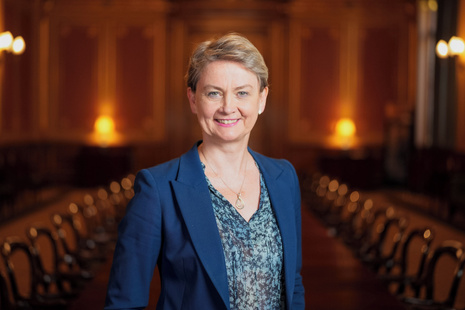
In an essay for Chatham House, UK Foreign Secretary Yvette Cooper warns that artificial intelligence could become the biggest security challenge of the next decade and calls for international AI agreements before a Hiroshima-scale catastrophe occurs.
Contents
British Foreign Secretary Yvette Cooper has warned that the world cannot wait for a Hiroshima-scale catastrophe before starting to seriously regulate artificial intelligence. In an essay prepared for the London think tank Chatham House, titled "Britain's Place In The New World Order," the head of British diplomacy compared the current absence of global AI agreements to the situation before nuclear weapons were used in 1945.
Cooper argues that repeating the same pattern with artificial intelligence would be an irreparable mistake. Unlike nuclear weapons, where the effects of use were immediately and locally visible, the risks associated with advanced AI may be diffuse and hard to detect until they accumulate into a serious security crisis.
Why now
The essay arrives amid heightened diplomatic activity around global AI regulation. In recent weeks the UN opened the first global summit dedicated to AI regulation in Geneva, and a panel of experts appointed by the organization warned that the window for effective control over the development of this technology may be closing. Cooper's remarks fit into this sequence of events, but frame the issue in more personal terms, as an appeal from a specific government ready to take on a leadership role in the process.
We cannot afford to wait for an AI equivalent of Hiroshima before we start acting - Yvette Cooper, UK Foreign Secretary
The head of the Foreign Office stresses that with nuclear weapons, international agreements only emerged after the world had been shown their "terrifying power." In her view, humanity cannot afford to repeat this mechanism when it comes to artificial intelligence, since the scale of potential harm, from disruption of critical infrastructure to automated cyberattacks, could be just as extensive, or greater.
Bletchley Park as the starting point
Cooper builds her argument on the legacy of the 2023 Bletchley Park summit, the first major international gathering dedicated to the safety of advanced AI, organized by Rishi Sunak's government. The essay suggests Britain is well positioned to continue leading the global debate on AI safety, building on the Bletchley Declaration and the Hiroshima Process agreed earlier by G7 countries on a code of conduct for companies developing advanced AI systems.
In the background is a warning from the Five Eyes intelligence alliance, which assessed that cyberattacks using artificial intelligence could become a real threat within months rather than years, as previously assumed. This shift in the time horizon is one of the reasons British diplomacy is accelerating action on the international stage.
No agreement among the major powers
Cooper admits outright that, despite a growing number of declarations and summits, the major powers developing AI, the United States, China and the European Union, still have no binding agreements regulating the technology comparable to nuclear non-proliferation treaties. This point is key to understanding why her appeal sounds more alarming than standard diplomatic statements: it points to a real institutional gap, not merely a need for further talks.
For Polish readers, Cooper's essay carries significance beyond British domestic politics. As a member of the EU and NATO, Poland will need to take a position on the direction of the European and transatlantic debate on AI regulation in the context of national security, especially since the national law on artificial intelligence systems is currently awaiting the president's signature after votes concluded in the Sejm (the lower house of Poland's parliament).
What comes next
Cooper's essay does not include a specific timeline or mechanism for a new treaty, but signals that Britain will push to place binding AI agreements higher on the agenda of upcoming international meetings, including G7 and UN forums. The topic is likely to resurface at future security summits, such as the Munich Security Conference, where Cooper regularly speaks on issues related to new technologies.

