News
UN Opens First Global Dialogue on AI Regulation, Guterres Calls for Controls on Killer Robots
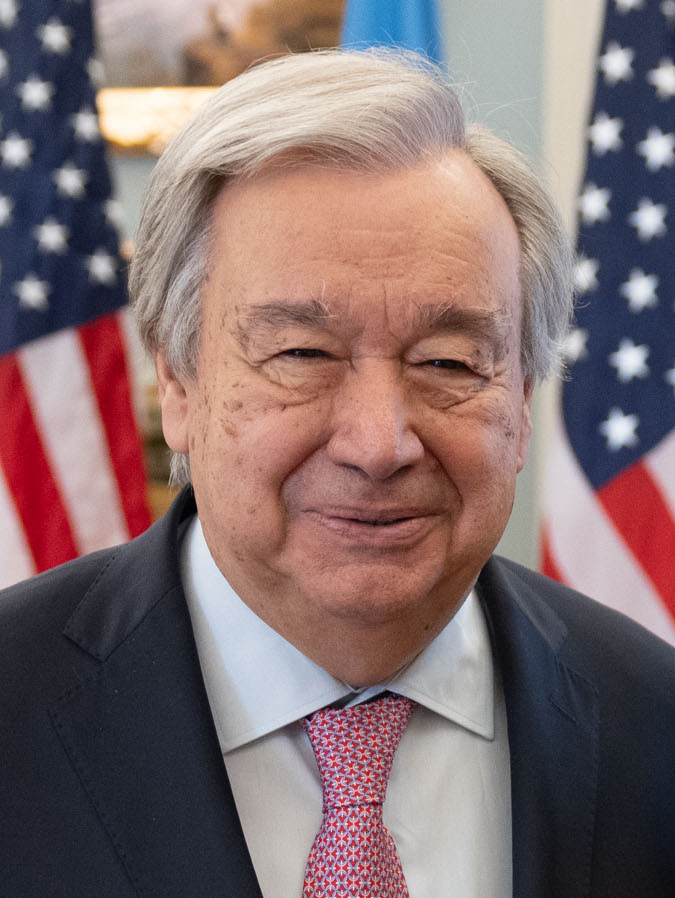
Geneva hosted the first UN Global Dialogue on AI Governance, drawing delegates from around the world. Secretary-General Antonio Guterres demanded worldwide controls on AI, warning against autonomous weapons and a wave of deepfakes targeting women.
Contents
The first edition of the UN Global Dialogue on Artificial Intelligence Governance opened in Geneva on July 6, 2026, a meeting closing on July 7 and flowing directly into the ITU AI for Good summit, which runs through July 10. UN Secretary-General Antonio Guterres used the opening to issue a firm call for far-reaching, worldwide controls on artificial intelligence.
Guterres's Appeal
The Secretary-General highlighted two parallel threats: the militarization of artificial intelligence, including the development of autonomous weapons described as killer robots, and the deepening digital divide, in which billions of people still lack access to this transformative technology. He demanded that any future international agreement put safety first, with particular emphasis on protecting children from digitally generated manipulation and exploitation.
Machines can inform, but humans must decide, and answer - Antonio Guterres, UN Secretary-General
Killer Robots on the Battlefield
Guterres warned that increasingly powerful AI systems, originally designed for civilian use, are now reaching the battlefield, where autonomous combat systems are becoming the norm rather than the exception. This was one of the reasons the Secretary-General called for binding, global rules to be developed before the technology's development slips beyond the control of states and international organizations.
The UN's Independent International Scientific Panel on Artificial Intelligence warned during the dialogue that AI could cause catastrophic harm, both on its own and in the hands of malicious users, and that the pace of the technology's development is outstripping both scientific understanding of the phenomenon and governments' capacity to introduce adequate regulation.
Deepfakes and Violence Against Women
President of the UN General Assembly Annalena Baerbock presented data that caused a stir among delegates: 99 percent of deepfakes online are sexual in nature, and 96 percent of them target women and girls. It was one of the concrete examples organizers used to show that the debate over AI regulation is not an abstract academic discussion, but a response to real, mass-scale harm already occurring today.
Access for Developing Countries
The second pillar of Guterres's appeal was equitable access to technology. The Secretary-General demanded unimpeded access to AI for developing countries, arguing that the benefits of the artificial intelligence revolution cannot be monopolized by a handful of wealthy states and corporations. More than 20 countries have already pledged support for an initiative to build local AI capacity, intended as a first step toward narrowing the global digital divide.
Guterres also set a concrete environmental condition: all data centers powering AI systems are to run on renewable energy by 2030. This is a direct reference to the growing energy demands of AI infrastructure, an issue increasingly discussed by developed-country governments as well, some of which are building their own power plants to serve data centers.
What's Next
The Geneva dialogue did not conclude with a binding treaty, but rather with a framework for further talks, to continue at the next edition scheduled for May 2027 in New York. For Poland and other European Union countries already implementing the AI Act, the standards being developed at the UN on autonomous weapons, child protection, and equitable access to technology could in the future become a reference point for further amendments to EU legislation.
Sources: UN News (news.un.org), Digital Watch Observatory (dig.watch)