News
UN Panel Warns Window to Control AI Is Closing
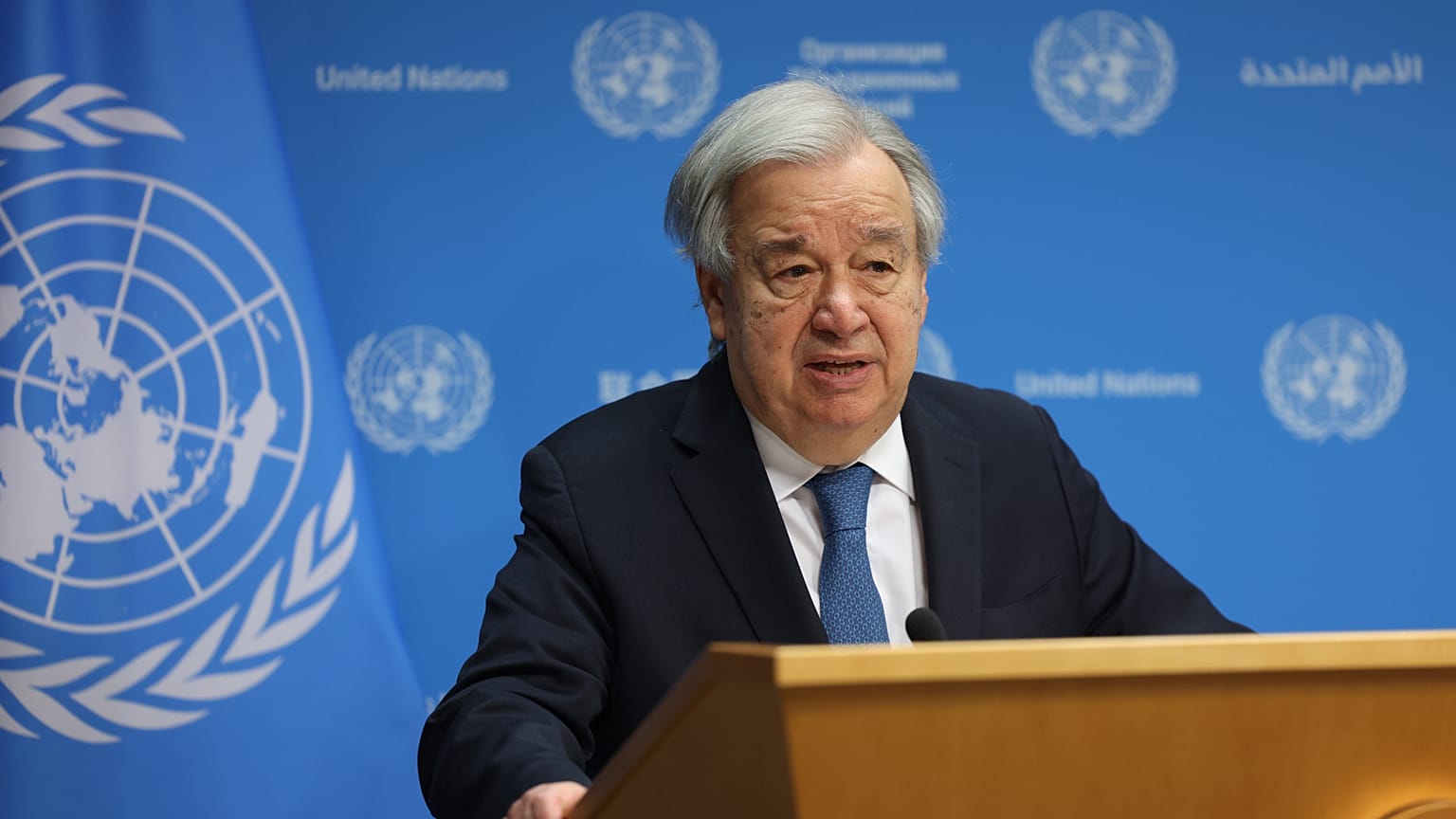
An independent UN scientific panel has published its first report warning that the world is losing the ability to jointly regulate artificial intelligence, just before the Global Dialogue on AI Governance opens in Geneva on July 6.
Contents
The United Nations' independent International Scientific Panel on AI has published its first report, warning that the window for putting shared, effective rules around AI development in place is closing fast. The document lands on governments' desks just before the UN's Global Dialogue on AI Governance opens in Geneva on July 6, where member states are expected to hash out a common approach to the technology.
The panel comprises 40 experts from around the world and was set up by the UN General Assembly in 2025. Its report states plainly that the longer AI develops without shared rules, the less influence governments and ordinary people will have over the technology's final shape. UN Secretary-General António Guterres underscored the point, warning against a scenario in which decisions about AI's future are made without input from democratic institutions.
A pace nobody controls
The report highlights a pace of technological progress that is hard to measure against familiar regulatory yardsticks. According to the data it cites, the difficulty of tasks AI systems can complete on their own doubles every few months. Generative AI now writes code, analyzes large datasets, produces realistic video content and supports scientific discovery, while agentic AI, systems capable of carrying out multi-step tasks on their own, poses entirely new oversight challenges for regulators.
The experts list specific risks: AI-generated sexual content and deepfakes that disproportionately target women and children, increasingly convincing disinformation that undermines democratic debate, the use of AI for fraud and social engineering by cybercriminals, and the growing carbon footprint of the data centers powering these systems.
Benefits that cannot be ignored
The report is not solely a list of threats, though. The panel notes that AI has modeled the structure of more than 200 million proteins, speeding up research into new drugs, supporting vaccine development and the fight against antibiotic resistance, helping detect famine risks earlier, and expanding access to education and support for people with disabilities. According to the authors, this tension between real benefits and real risks is set to be the central theme of the talks in Geneva.
A global gap in computing power
One of the report's strongest threads concerns unequal access to AI infrastructure worldwide. The United States controls about 75 percent of the global supercomputing capacity used to train AI models, China another 15 percent, putting 90 percent of advanced compute resources in the hands of two countries. Developing nations lack the infrastructure, the specialists, and the funding to build, or even audit, AI systems that their economies and security increasingly depend on.
The panel also points to regulatory chaos: more than 40 different, scattered AI governance frameworks exist worldwide, and they are rarely tested for real-world effectiveness. In many cases, model safety testing is carried out by the very companies building those models, raising doubts about how independent such assessments really are and how much control they actually provide over risk.
What it means for Poland
For Polish readers, the report carries direct practical weight. Starting August 2, 2026, most provisions of the EU's AI Act will take full effect across the European Union, and the Sejm (the lower house of Poland's parliament) recently finished work on a national law on AI systems, which is now awaiting the president's signature. The UN report shows that even the most advanced regional regulations, such as the European AI Act, may struggle to keep pace with the technology if they are not backed by global coordination.
Companies operating in Poland that are rolling out AI systems to meet EU requirements should treat the August deadline as a starting point, not an endpoint, for compliance work. The Geneva dialogue could set the direction for further regulatory changes that will eventually make their way into European and Polish law, particularly in areas such as independent model audits and standards for labeling synthetic content.
The outcome of the Geneva talks will only become clear once the dialogue concludes, but the fact that the UN chose to publish such a forceful report just before it opens suggests member states will have to grapple with hard numbers rather than vague pledges about responsible AI development. The coming months will show whether global regulatory coordination can keep up with the pace the panel's report describes.

