News
US Bans Chinese Humanoid Robot Imports, Citing Remote Takeover Risk
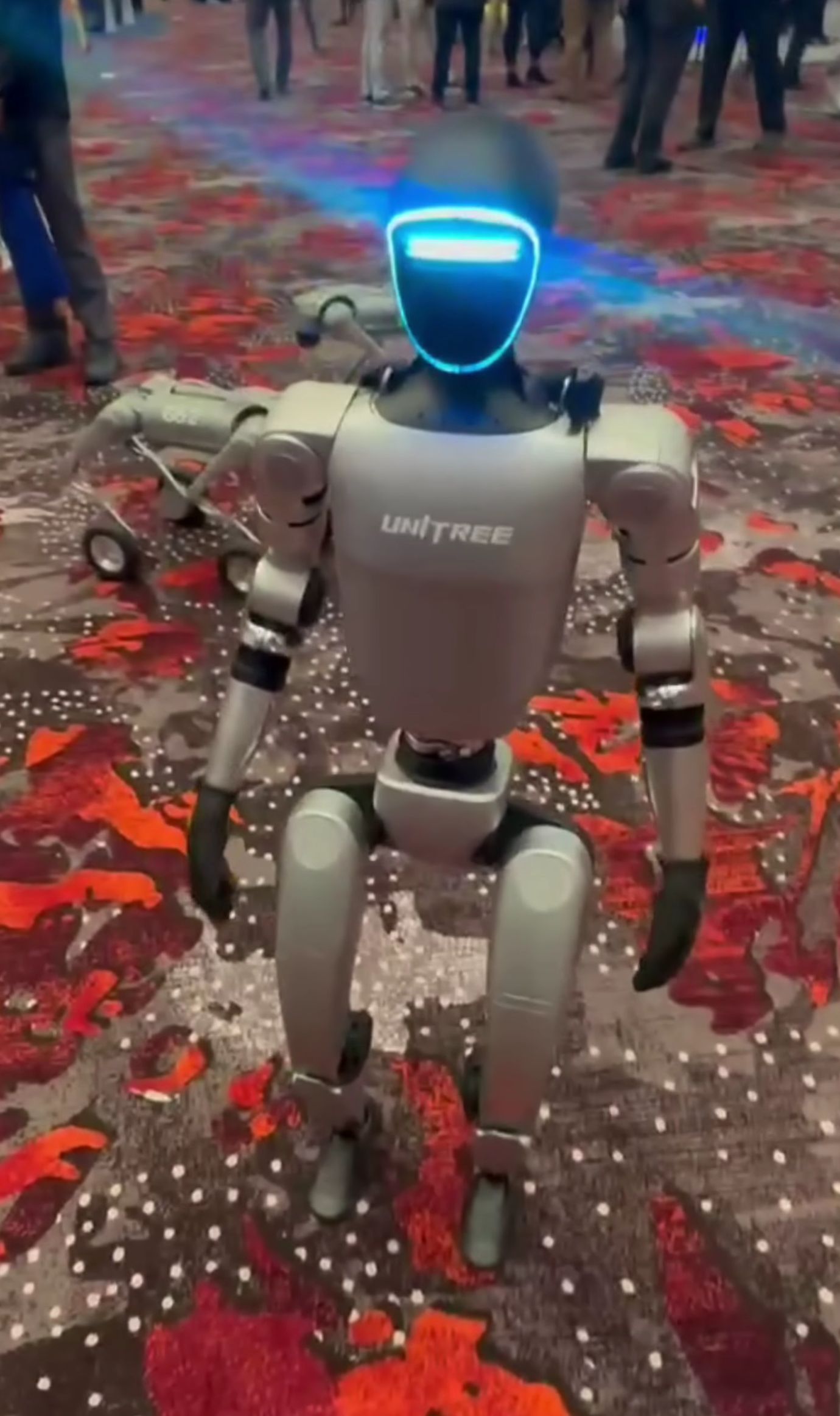
The US Federal Communications Commission has banned imports of new foreign-made humanoid and quadruped robots, citing the UniPwn vulnerability in Unitree devices that allows full remote takeover.
Contents
The US Federal Communications Commission (FCC) announced on July 28, 2026 a ban on bringing new models of foreign-made humanoid robots, quadruped robots, and networked power inverters onto the American market. The decision hits Chinese manufacturers hardest, since they dominate the global humanoid robotics market, and the agency cited national security risks, including the possibility of remotely seizing control of the devices.
What the FCC actually banned
The FCC's decision covers only new models still seeking US market authorization, it is not a recall order for devices already sold, nor a ban on their continued use. The commission justified the move by arguing that advanced robots built abroad create, in the document's words, broad attack surfaces and leave them vulnerable to data exfiltration.
The agency stated directly that such devices could be used to surveil Americans, bolster the capabilities of foreign intelligence services, or remotely seize control of the robots themselves. That language points squarely at a scenario where a machine working in a factory, warehouse, or home stops obeying its owner and starts taking commands from outside.
The UniPwn flaw as evidence
The argument regulators cite most often is UniPwn, a previously discovered flaw in the Bluetooth Low Energy connectivity of Unitree robots. The vulnerability grants root-level access to the Go2 and B2 (quadruped) and G1 and H1 (humanoid) models, and its most dangerous trait is its ability to spread on its own: an infected robot scans its surroundings for other Unitree devices and takes them over without any user involvement.
This isn't the first case of its kind. Back in March 2025, security researchers described a backdoor built into the firmware of the same company's Go1 quadruped robot, one that launched automatically on startup, connected to a cloud tunnel operated from China, and gave anyone holding the right API key full remote control of the hardware.
Following President Trump's lead, the FCC will continue to play its part in securing America's critical supply chains - Brendan Carr, FCC Chairman
Chinese robot market under pressure
The scale matters: of roughly 15,000 humanoid robots shipped worldwide in 2025, Unitree and Agibot together accounted for more than 10,000 units, while American rivals like Tesla and Figure AI delivered only a few hundred each. The Pentagon had previously added Unitree to its list of Chinese tech firms it says are linked to the Chinese military, a claim Beijing firmly denies.
The ban does not cover Boston Dynamics, a company owned by South Korea's Hyundai, because its robots are manufactured in the United States. That distinction shows the rule is less about the origin of capital and more about where production happens and how the component supply chain is structured.
Beijing's response and what comes next
China's embassy in Washington criticized the decision and vowed to respond to what it called actions harming the interests of Chinese companies.
We urge the United States to stop smearing Chinese companies and threatening them with sanctions - Chinese Embassy in Washington
The timing is especially awkward for Unitree, since the ban took effect just six days after the company began commercial sales of its humanoids in Europe, opening the first Western market to a Chinese maker of this class of hardware. The US market, described as the most lucrative in the industry, is now closed to new models from Unitree and competing Chinese brands alike.
The FCC's decision fits into a broader pattern of US restrictions on Chinese technology, from curbs on Huawei to export controls on AI chips, and signals that after telecommunications and semiconductors, humanoid robotics is becoming the next front in the tech rivalry between Washington and Beijing.
For Polish companies weighing whether to deploy humanoid or quadruped robots in warehouses or on production lines, the practical stakes differ from those in the US, EU rules remain separate, but the UniPwn flaw and the earlier Go1 backdoor both show that the question of who actually holds remote access to the hardware being purchased applies to every market, not just the American one.