News
AI Assists Live in Brain Surgery for First Time, Saving Patient's Sight
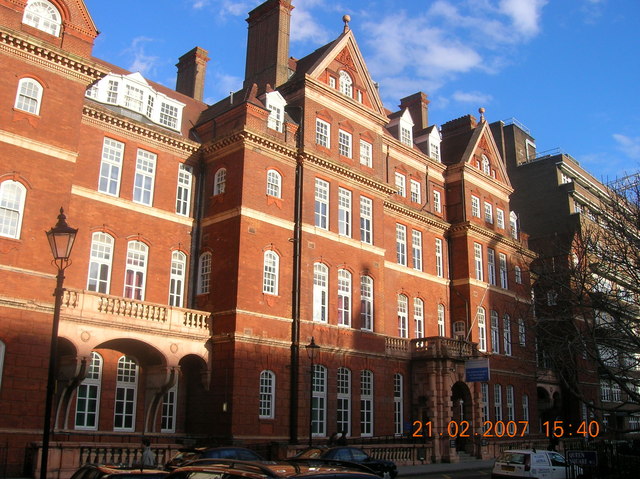
A UCL and UCLH team in London carried out the world's first brain surgery in which an AI system analyzed live endoscope footage and pointed surgeons to critical structures in real time. The patient, who had a pituitary tumor removed, fully regained his eyesight.
Contents
On August 26, 2026, surgeons at the National Hospital for Neurology and Neurosurgery (NHNN) in London removed a brain tumor with the help of artificial intelligence analyzing the operation in real time for the first time in history. The system did not control anything itself, but continuously advised the team on the location of critical vessels and nerves - an error of just one millimeter could have meant blindness, a stroke, or the patient's death.
How the system worked
A pituitary tumor sits in one of the most sensitive locations in the human body, right next to the carotid arteries and the nerves responsible for vision. Normally, surgeons rely mainly on pre-operative scans and their own experience. The system built by the UCL Hawkes Institute went a step further: it analyzed the endoscope camera feed in real time, classifying every pixel of the image and overlaying color-coded markers of critical anatomical structures on a second monitor.
Technically, it is a neural network trained on hundreds of earlier endoscopic recordings of pituitary surgeries, in which neurosurgeons manually marked, frame by frame, the position of arteries, optic nerves and other sensitive structures. Based on this, the model learned to recognize the same elements in the live feed and also to track the surgical instruments themselves.
By learning from hundreds of surgical recordings, the system was exposed to a variety of cases that a surgeon would typically only encounter after many years of practice - Dr Sophia Bano, technical lead of the AI project, UCL
The surgery and the patient
The patient was Rhys Hibbert, a 48-year-old customer service manager from Bedfordshire. He was admitted to hospital after losing consciousness and suffering a seizure while out on a walk in December 2024. The diagnosis revealed a small, roughly 11-millimeter, benign pituitary tumor pressing on the nerves responsible for vision, causing gradually worsening eyesight, dizziness and chronic fatigue.
The procedure was led by Professor Hani Marcus of the UCL Queen Square Institute of Neurology, a neurosurgeon at NHNN, together with Danyal Khan, a UCL doctoral student and UCL/UCLH neurosurgery resident, who have been developing the project for years. The AI system acted purely as an advisor, displaying markers on an additional screen - humans made every decision and every movement of the scalpel.
Huge thanks to the trial participants and the whole team who worked to improve patient outcomes, taking this important first step on a global scale - Prof. Hani Marcus, neurosurgeon, UCL/UCLH
Outcome of the procedure
The tumor was removed entirely and the patient's eyesight was fully preserved. Hibbert described his condition after waking from anesthesia as a clear improvement in vision compared to before the operation, when for more than a year he had dealt with a deteriorating field of view. Within a week he also regained independent mobility, and eight weeks after the procedure he reported significantly better energy levels and no more of the dizziness he had experienced before.
When I woke up, I could see everything in the room clearly. It was like having a panoramic, three-hundred-and-sixty-degree view of everything around me - Rhys Hibbert, patient
What's next for the project
The project is funded by the UK's National Institute for Health and Care Research (NIHR) and Google, with additional support from the NIHR Biomedical Research Centre at UCLH, the Royal College of Surgeons, EPSRC and Wellcome. The UCL team says this is only the first step toward a system they informally call a "ChatGPT for surgeons" - a tool that provides real-time guidance during the riskiest stages of an operation, while leaving full decision-making authority with the doctor.
UK health innovation minister James Frith called the case an example of AI at its best, stressing that patients are gaining access to care that seemed out of reach until recently. The system's creators say they plan to extend the research to more patients and to other types of neurosurgical procedures where millimeter-level precision determines the side effects of the operation.
For neurosurgery patients around the world, including in Poland, this case points to the direction in which tools supporting the most precise procedures are heading - not replacing the surgeon, but reducing the risk of error in places where a millimeter can decide a patient's life, sight or mobility. Rolling out similar systems in Polish neurosurgical centers would depend on access to the large sets of surgical recordings needed to train such models, as well as on regulatory approval to use AI as a supporting tool in the operating room.