News
AI Deciphers Hidden DNA Switch Present in 60 Percent of Human Genes
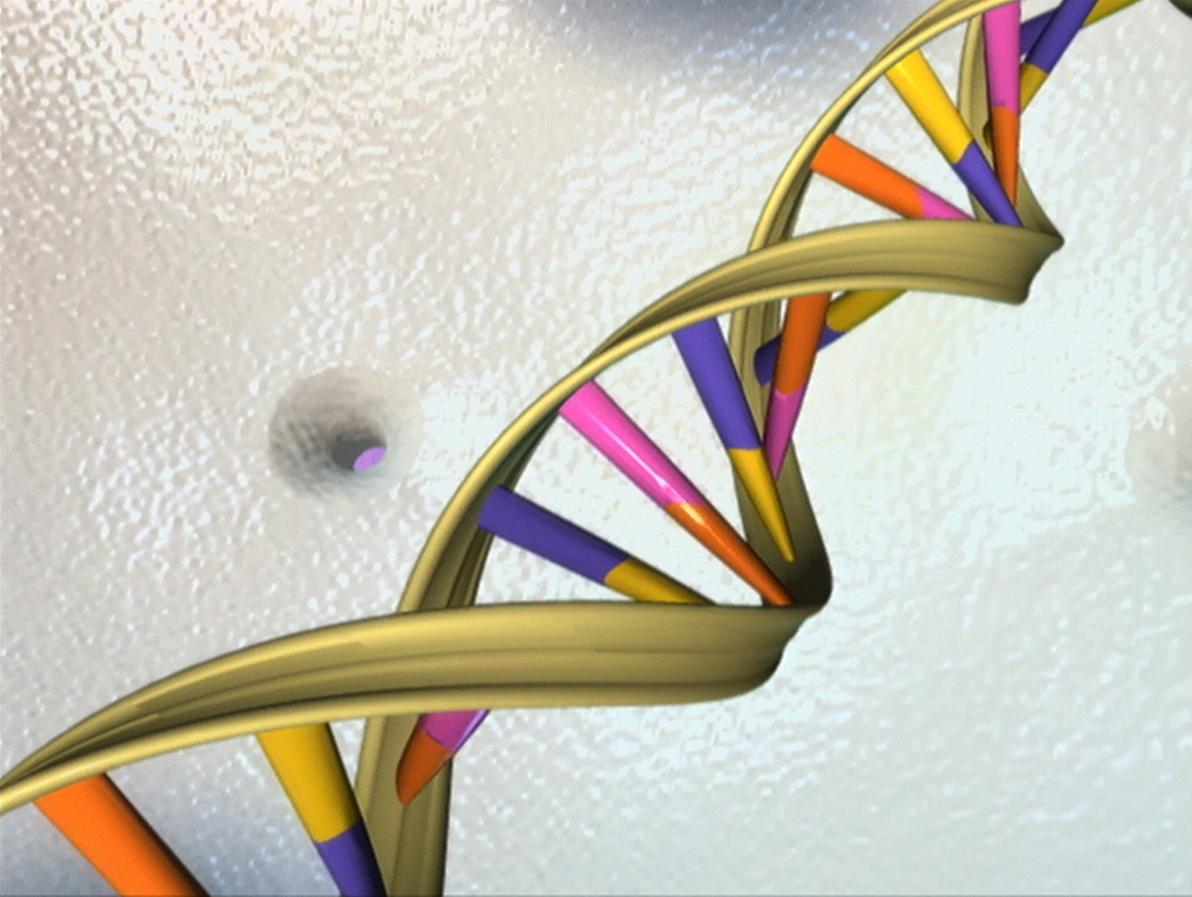
Researchers at UC San Diego trained an AI model that can predict, for the first time, the presence and effects of mutations in the so-called initiator, a short DNA sequence marking the start of transcription for about 60 percent of human genes. The discovery has direct implications for assessing cancer-related mutations.
Contents
A team of molecular biologists at the University of California, San Diego used machine learning to decode a short DNA sequence called the initiator, which marks the exact spot where a cell begins reading a gene. The findings, published August 21 in the journal Genes & Development, provide for the first time a tool to assess whether a given mutation at this site will turn a gene on, off, or weaken its activity, a result with direct implications for interpreting cancer mutations.
How the AI model worked
The foundation of the study was building a massive training dataset. Researchers generated about half a million variants of the initiator sequence and used high-throughput sequencing to measure how each one affected transcriptional activity, that is, how strongly it triggered a gene to be read.
The resulting data was used to train a machine learning model that learned to recognize the DNA pattern characteristic of the initiator, much like language models learn grammatical rules from large text datasets. The result is an algorithm capable of determining, from sequence alone, whether a given gene fragment functions as an initiator and how strongly it activates it.
Implications for cancer research
The authors point to the TERT gene promoter as a practical example. Mutations in this region can change how strongly the gene is switched on, leading to increased telomerase activity, an enzyme that lets cancer cells bypass the natural limits on how many times they can divide.
With the new model, researchers can screen thousands of DNA variants found in tumor samples far more quickly, assessing which ones actually affect gene activity and which are neutral changes with no clinical significance. Previously, such assessments required painstaking lab experiments for each individual variant.
AI models made it possible, for the first time, to strongly predict the presence or absence of an initiator in human genes, and that allowed us to decode the DNA sequence pattern of this element - James T. Kadonaga, Professor of Molecular Biology, UC San Diego
A step toward the full DNA code
Kadonaga described the publication as a step forward in combining lab experiments with artificial intelligence. His team plans to extend the approach to larger and more diverse datasets and to incorporate the model into existing tumor genomics analysis systems used in oncology labs.
The researchers also want to use their understanding of the initiator pattern to design synthetic gene promoters with programmed properties, which could find applications in gene therapies. The team's ultimate goal is to decode the full gene expression code across all six billion bases of human DNA, not just the initiator region.
Broader context for DNA research
The discovery fits into a broader trend of using artificial intelligence to interpret the so-called dark matter of the genome, the non-coding regions of DNA that don't produce proteins but control when and how strongly genes are activated. For decades, these regions were difficult to analyze using purely laboratory methods because of the enormous number of possible sequence variants.
The San Diego team's work is basic research, not a ready clinical tool, so direct use with patients is still a way off. The model still needs to be validated on larger, more population-diverse datasets before it can enter routine oncology diagnostics.
For Polish oncology and genomics centers, which increasingly rely on machine learning tools to analyze cancer sequencing data, publications like this one in peer-reviewed journals signal which models and approaches are worth tracking when building in-house analytical pipelines, before commercial diagnostic tools begin applying similar approaches at scale.