News
AI Measures Offside to Within 10 Centimeters at the 2026 World Cup
At the ongoing 2026 World Cup in Canada, Mexico and the US, referees are backed by a network of AI systems, from sharpened offside measurement to Lenovo's analytics assistant for all 48 national teams.
Contents
The ongoing 2026 World Cup is the first tournament where artificial intelligence works simultaneously at the offside line, in the head referee's earpiece, and within national teams' analytics staffs. The tournament in Canada, Mexico, and the United States runs until July 19, and the technological infrastructure has been expanded so significantly compared to previous editions that referees and coaches themselves have received new tools built on machine learning.
Offside Down to the Centimeter
The core of the technology package remains the semi-automated offside technology system, known as SAOT, familiar to fans from previous tournaments. At the 2026 World Cup, however, it runs in a markedly more sensitive version. Sixteen cameras positioned around the pitch track each player as a set of 29 points assigned to individual body parts, and the algorithm calculates position relative to the last defender's line with an accuracy of 10 centimeters, down from the 50 centimeters tested previously.
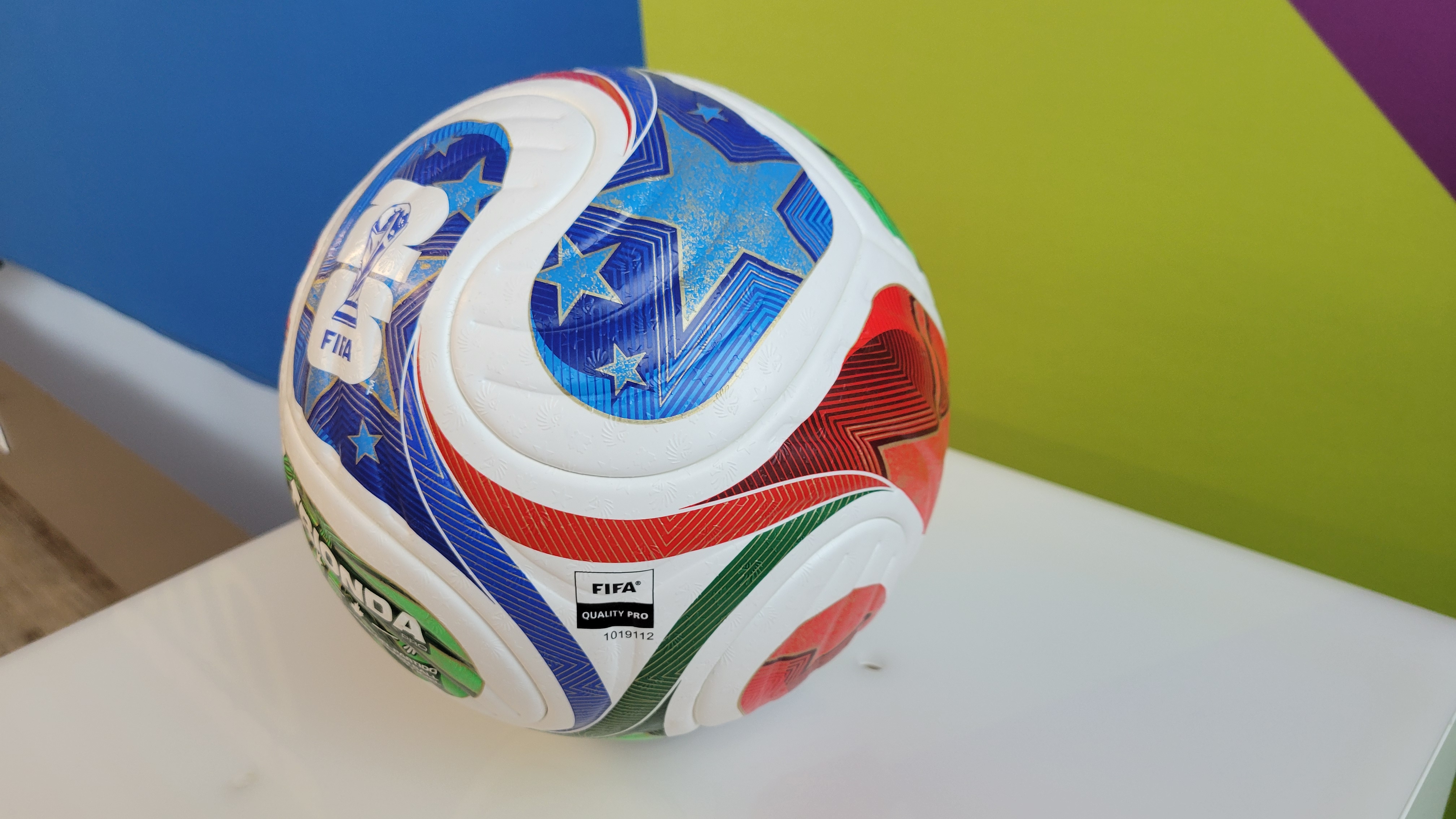
The geometric data is supplemented by the ball itself. The Adidas Trionda, the tournament's official ball, has a built-in microchip with an inertial measurement unit that records position, speed, and spin 500 times per second. Combining camera footage with ball telemetry is meant to shorten the time referees need to confirm offside decisions and reduce the number of disputed calls in millimeter-level analysis.
AI in the Referee's Earpiece
The role of the VAR system has also been expanded. Artificial intelligence now prepares short, ready-made messages sent directly to the head referee's earpiece, for example an offside notification or a Delay signal when analysis requires more time. This is meant to reduce stoppages in play caused by manual communication between VAR officials and the on-field referee.
A separate system, Referee View, handles stabilization of footage from referees' body cameras. AI-based software smooths, in real time, footage captured during running and contact with players, which is meant to improve the quality of material used both for reviewing decisions and in television broadcasts. The technology was tested a year earlier during the FIFA Club World Cup.
Digital Player Models
Before the tournament, each of the more than 1,200 players taking part in the World Cup was digitally scanned. Based on this, AI created detailed avatars with real body dimensions, used in 3D animations for VAR replays, especially in disputed situations where the precise positioning of a player's body at the moment of a pass matters. The solution was tested earlier during the FIFA Intercontinental Cup involving CR Flamengo and Pyramids FC.
An Analyst for Every National Team
Beyond officiating, artificial intelligence has also reached coaching staffs. Football AI Pro, a tool created jointly by FIFA and Lenovo, has been made available to all 48 national teams taking part in the tournament, regardless of federation budget. The system generates visualizations, statistical tables, and historical analyses of opponents' performances, which according to its creators is meant to level the playing field for teams with smaller analytics departments against federations that run their own data divisions.
It's a corporate knowledge assistant that coordinates the work of a team of intelligent agents - Ken Wong, Lenovo Vice President
Scale Forces Automation
Expanding the field from 32 to 48 national teams means 104 matches played at 16 stadiums across three countries over 39 days. That scale, alongside the underlying goal of improving decision accuracy, is part of the case for automation: at this number of matches, manual analysis of every disputed situation by referees would be considerably slower, and differences in officiating quality between group-stage and final matches harder to even out.
For Polish fans, the most tangible effect of these systems is shorter VAR review stoppages and more precise offside lines shown in television broadcasts. For the sports and technology industries, it's further proof that vision models and IoT sensors are moving straight from the lab to the world's biggest sporting events, tested first at smaller club tournaments before reaching the World Cup.
Neither the federations nor FIFA have yet released data on how many disputed situations were resolved thanks to the new version of SAOT compared with the previous tournament, or whether average VAR stoppage time has decreased. Such summaries typically appear only after the competition ends, meaning after July 19.