News
AI System Analyzes Prostate Surgery Video to Predict Patient Recovery
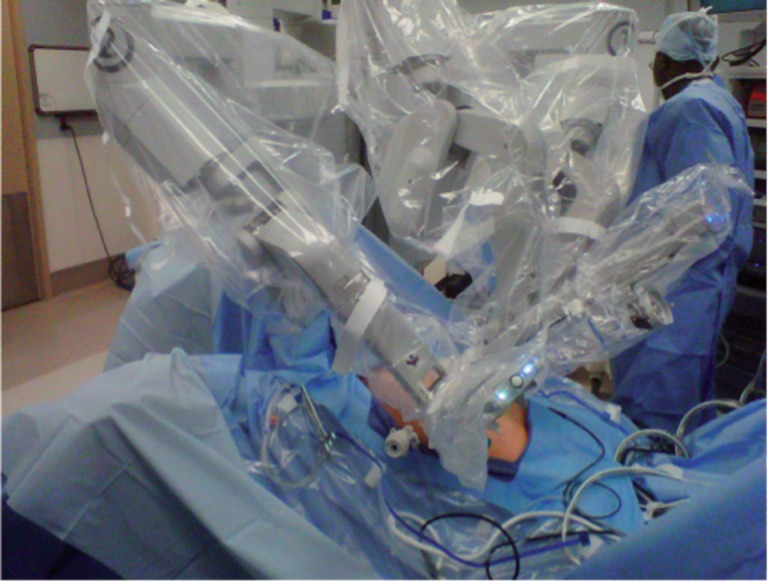
Researchers at Cedars-Sinai built a system called Frame-to-Outcome that watches footage from robotic prostate cancer surgeries, reads the surgeon's movements, and predicts whether a patient will regain sexual function, matching expert assessments but far faster.
A team at Cedars-Sinai Medical Center in Los Angeles has developed an artificial intelligence system that watches footage from robotic prostate cancer surgeries and, based on the surgeon's movements, predicts whether a patient will regain sexual function. The findings were published in the journal npj Digital Medicine, and the news was picked up by outlets including the Polish outlet Alert Medyczny.
Prostate cancer remains one of the most commonly diagnosed cancers in men, and surgical treatment carries a risk of lasting complications, chiefly loss of sexual function and bladder control. The critical moment of the procedure is the nerve-sparing phase, in which the surgeon must remove the diseased gland without damaging the nerve bundles responsible for erection. The precision of movements at this stage has long been considered one of the main factors determining a patient's quality of life after treatment.
How the system works
Frame-to-Outcome doesn't evaluate medical imaging, it evaluates the surgeon's own behavior. The system identifies so-called surgical gestures in the video, that is, repeatable sequences of instrument movements, the speed of manipulation of nerve tissue, and the order of individual steps in the procedure. From this, it calculates the probability that a given patient will regain sexual function after surgery.
The research team combined expertise from three Cedars-Sinai units: the Department of Urology, the Department of Computational Biomedicine, and the Center for Artificial Intelligence Research and Education. The project involved Jason Moore, head of computational biomedicine, along with researchers Xi Li, Nicholas Matsumoto, Jay Moran, Miguel E. Hernandez and Cherine Yang, with international collaborators Alvin C. Goh, Christian Wagner and Geoffrey A. Sonn.
Test results
In tests on 29 additional operations not previously used to train the model, F2O's predictions about patients' recovery of sexual function matched the assessments of experienced physicians who reviewed the same footage manually. The difference was in time: manual expert evaluation of surgical technique takes a long time, while the system automates the process and cuts that time drastically.
Our goal isn't just to predict who will recover. We want to identify the surgical techniques that produce the best outcomes, so surgeons can learn, refine their skills and improve care for future patients - Dr. Andrew Hung, professor of urology, Cedars-Sinai
What this means for surgeons
Until now, evaluating surgical technique relied mainly on the subjective judgment of mentors watching recordings of their trainees' or colleagues' procedures. That process is time-consuming and hard to scale, especially at centers training many young surgeons at once. A tool like F2O could provide objective, quantifiable feedback, pointing to specific movements or sequences linked to better outcomes, instead of a general "do this better."
The study's authors emphasize that the system doesn't replace the surgeon or make clinical decisions on a doctor's behalf. Its role is limited to analyzing footage and providing data that can help with training and with standardizing surgical quality across different centers, where teams' experience levels can vary widely.
Implications for Poland
In Poland, the number of robotic prostatectomies is growing year over year as the fleet of da Vinci systems expands across public and private hospitals, but the number of centers with deep experience in this specific procedure remains limited. Tools that analyze surgical technique from video footage could eventually support the training of younger surgeons without requiring hours of mentor supervision over every single procedure, though deploying such systems in Polish hospitals would require separate clinical validation and regulatory approval.
The study fits into a broader trend of using artificial intelligence in oncological surgery, where models are learning not only to recognize cancerous lesions in diagnostic images but also to assess the quality of the procedure itself. Publication in npj Digital Medicine, a Nature-family journal focused on digital medicine, lends the results added scientific credibility, though as with any single study, confirmation in larger, independent patient groups will be necessary.