News
AlphaGo Co-Creator Leaves DeepMind, Bets Against LLM Scaling
Thore Graepel, one of the scientists behind the landmark AlphaGo paper, has left Google DeepMind to launch a startup betting on structured search rather than further scaling large language models.
Contents
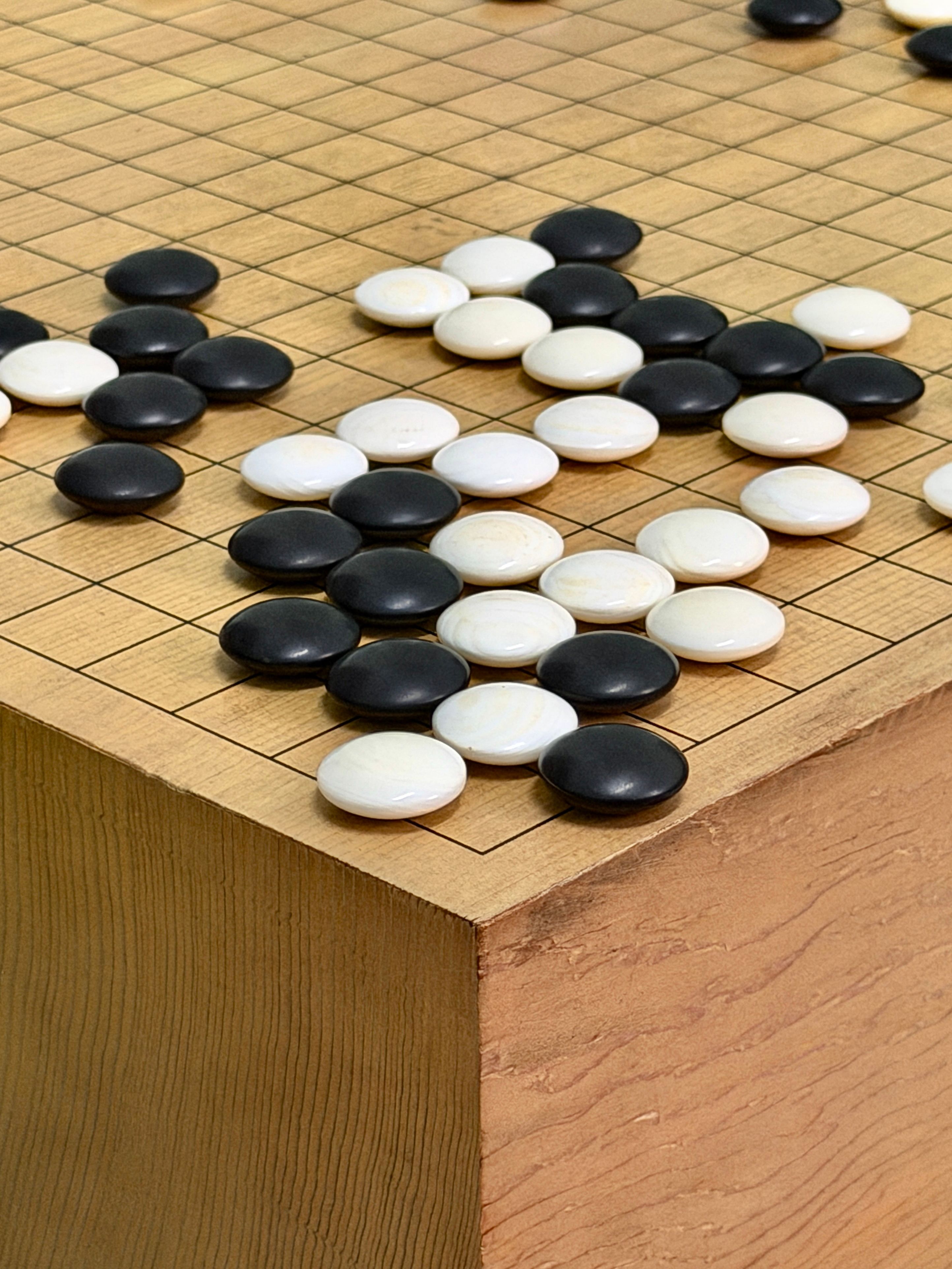
Thore Graepel, a physicist and one of the researchers credited on the landmark 2016 Nature paper describing AlphaGo, has left Google DeepMind. According to Sifted, Graepel is starting his own venture that aims to bring the search and planning methods behind the game of Go to robots and real-world systems, rather than continuing to scale up large language models.
Graepel belongs to a small group of researchers who, in the middle of the last decade, built a system combining neural networks with Monte Carlo tree search. That approach let AlphaGo defeat world champion Lee Sedol, and later led to AlphaZero and MuZero, programs that learned chess, Go and shogi with no human training data, purely by playing games against themselves.
A return and a second departure
This is not the first time Graepel has moved in and out of DeepMind's orbit. Before joining the lab, he led a team researching web services and advertising at Microsoft Research Cambridge, and earned his PhD in machine learning at TU Berlin in 2001. He is also a professor of machine learning at University College London.
He returned to Google DeepMind in 2025 as a Distinguished Research Scientist, where he worked on what the lab called post-AGI scenarios, essentially the question of what happens to research and society once systems reach general-intelligence level. A year later, he decided to leave the company for good to pursue his own vision of AI development outside a large lab.
A bet against scaling
At the heart of Graepel's decision is a technical dispute that has been playing out among AI researchers for months. Much of the industry, including OpenAI, Google and Anthropic, is betting on further scaling of language models and training data as the main path to more capable systems. Graepel belongs to the camp that believes scale alone won't be enough to achieve reliable reasoning and planning under uncertainty.
We need to go back to the architecture and fundamentally redesign it so that it does proper reasoning - Thore Graepel, to Sifted
On his website, Graepel describes the goal of his new venture as bringing AlphaGo-style reasoning to frontier models, so that machines can plan and act under genuine real-world uncertainty. Instead of a board game, the reference point will be robots and agents making decisions in the physical world.
Search and learned evaluation don't much care where the uncertainty comes from - a game tree, a cell, an agent choosing what to do next - Thore Graepel
An exodus from DeepMind
Graepel's departure fits a broader pattern of founding talent leaving Google DeepMind. The highest-profile case remains David Silver, AlphaGo's chief architect and Graepel's closest collaborator on the original paper, who founded the London startup Ineffable Intelligence in January 2026. The company raised a European-record seed round of $1.1 billion at a $5.1 billion valuation, and in September 2026 announced six co-founders, including four former DeepMind researchers previously tied to the AlphaStar project.
Graepel did not join Silver's team, even though the two researchers spent years working on the same problems. He is building a separate venture, with no company name, funding round or list of co-founders disclosed yet. That suggests the idea of returning to search- and planning-based methods has several independent champions in Europe, rather than a single unified camp.
What it means for the market
For industry watchers, another DeepMind veteran's departure confirms that the dispute over the future of AI architectures is not just an academic debate, but a real factor shaping where capital and talent flow. If structured-search approaches do prove more effective for robotics and planning than continued language-model scaling, European startups founded by former DeepMind researchers could gain a technological edge over American and Chinese labs betting mainly on scale.
It's too early to tell whether Graepel's bet will pay off. Search methods have proven highly effective in games with strictly defined rules, such as Go or chess, but transferring them to the open, unpredictable physical world is a challenge of a different order. The fact that an experienced AlphaGo co-creator is backing this approach over further LLM scaling adds another voice to a debate that will help determine the direction of the entire AI industry in the coming years.