News
Anthropic Poaches Four Top Scientists From Universities and Google in Two Weeks
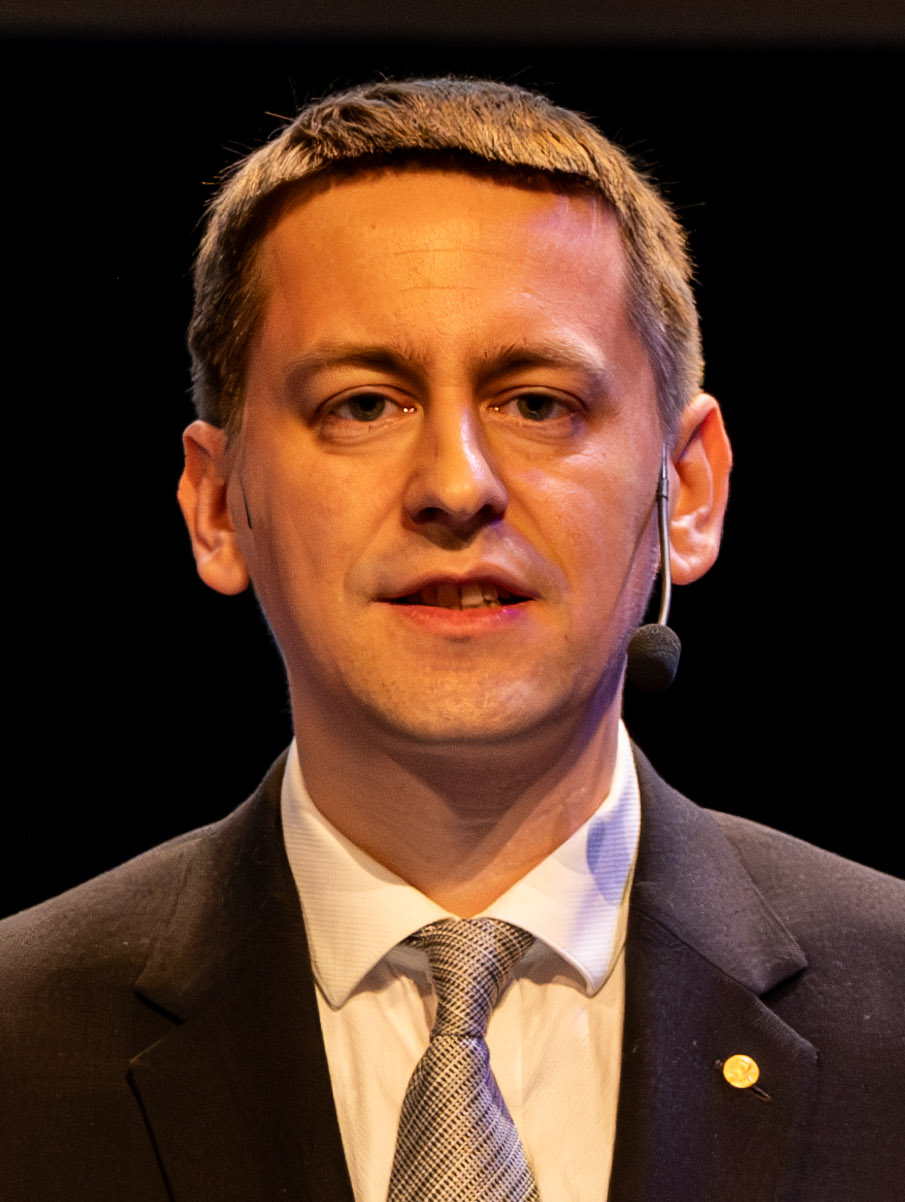
In just two weeks, Anthropic recruited Nobel laureate John Jumper, Berkeley computer science chair Jelani Nelson, and two leading Google Gemini researchers. Universities and Google DeepMind warn the AI talent race is entering a new phase.
Contents
Anthropic has hired four leading scientists away from universities and Google DeepMind in the span of two weeks, including Nobel laureate John Jumper and Jelani Nelson, chair of the computer science department at the University of California, Berkeley. The string of hires shows that the competition for AI talent is no longer just moving between companies, but flowing directly from universities into commercial labs.
For nearly nine years, Jumper led the AlphaFold team at Google DeepMind, where in 2024 he shared the Nobel Prize in Chemistry with Demis Hassabis for solving the protein structure prediction problem. In an announcement on X, he wrote that after years of work he needs time to recharge before joining Anthropic. He thanked Hassabis for entrusting him with leading the AlphaFold team just six months after he finished his PhD.
Berkeley loses its department chair
Just days after Jumper's announcement, Jelani Nelson joined Anthropic. Nelson chairs the computer science division within the electrical engineering and computer sciences department at UC Berkeley, one of the world's strongest AI research hubs. He specializes in streaming algorithms and dimensionality reduction, theoretical fields that underpin large language models. Like Jumper, he opted for academic leave rather than resigning outright, preserving his path back to the university.
I've joined Anthropic and I'm on leave from the university. I'm excited to work with so many talented, dedicated people on the defining technology of our time - Jelani Nelson, chair of the EECS computer science department, UC Berkeley
Google loses Gemini researchers
Also reportedly moving to Anthropic were Jonas Adler, who worked on Google's coding tools, and Alexander Pritzel, who specializes in model pretraining, the phase of training on massive datasets. Neither Google nor Anthropic has officially confirmed the moves, and Anthropic spokespeople declined to comment. It marks a further blow to Google DeepMind's Gemini team, which has already lost several researchers in recent months to Meta, OpenAI, and Anthropic.
Fortune and other tech outlets have previously reported that the talent drain at Google DeepMind is raising doubts about whether the lab can hold onto its leading position in the race toward artificial general intelligence. Google DeepMind's own coding models team is said to have lost six researchers to competitors in recent weeks.
A new phase in the talent race
Until now, AI labs mostly competed for engineers who could train and scale models. The latest wave of hiring looks different: companies are going after scientists who understand the theoretical limits of what models can do, the algorithms underlying machine learning, and AI safety. Industry commentators describe it as a shift in emphasis away from raw model capability toward fundamental algorithmic theory, at a moment when scaling up compute is starting to hit its limits.
The academic-leave arrangement used by Jumper and Nelson isn't new. Fei-Fei Li took a similar path in 2017, taking leave from Stanford to work at Google. For universities, this is less painful than losing faculty outright, but it still means their most talented scientists are spending time and energy on commercial projects instead of teaching and academic publishing.
Fallout for universities and the market
The Information described the phenomenon as a growing source of anxiety for universities, which are losing their best faculty to AI labs offering salaries and computing resources academia cannot match. Some market observers note that companies like Anthropic, OpenAI, and Meta are increasingly functioning as a parallel system of research institutions, drawing in the very people who once trained the next generation of specialists.
For Polish universities and research centers, the situation in the US is a warning sign, albeit on a different scale. Domestic teams working on Polish language models, such as Bielik, also compete for the small pool of specialists capable of conducting world-class research, and job offers from global AI labs represent real competition on both pay and prestige.
Anthropic has not disclosed exactly what roles the new hires will take or which projects they will lead. The company is simultaneously expanding research into model safety and interpretability, meaning understanding the internal mechanisms behind how Claude works, which may explain its interest in researchers with a theoretical rather than purely engineering background.