News
Bessent: Trump and Xi Agreed Humans Must Be Involved in Military AI Decisions
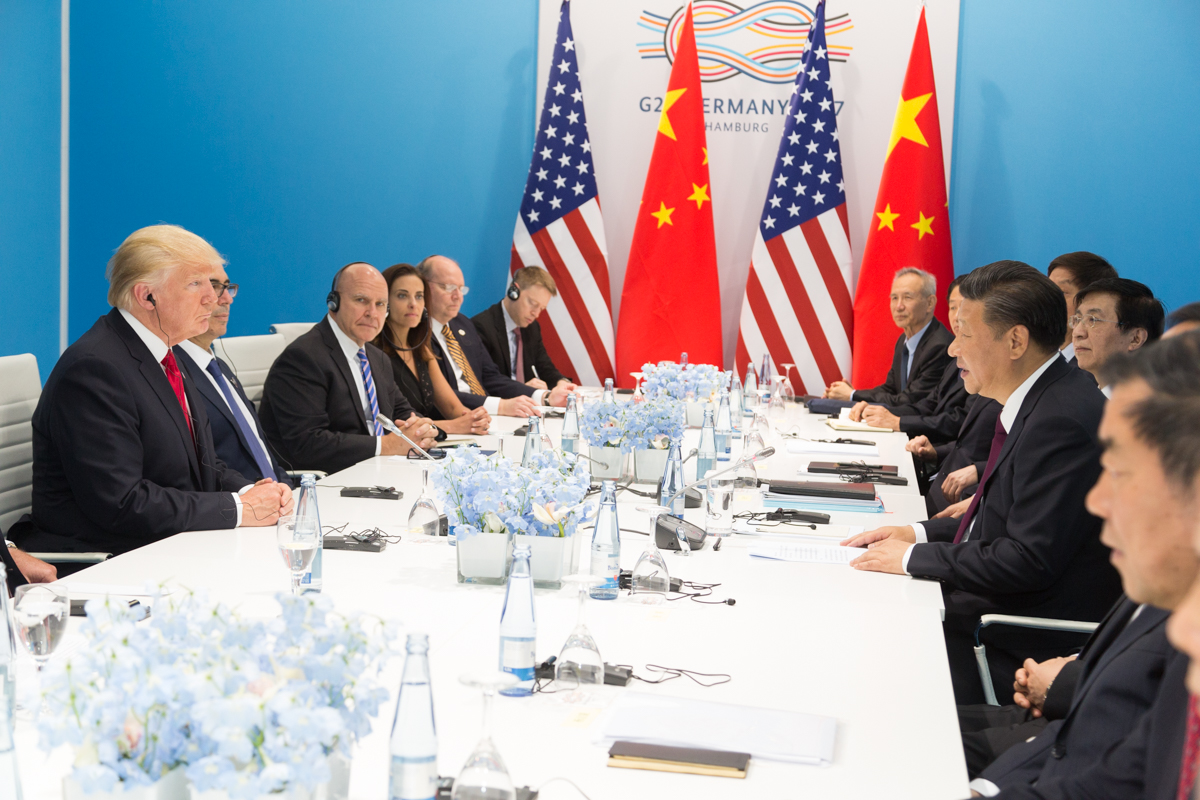
Treasury Secretary Scott Bessent says Trump and Xi agreed after their Shenzhen summit that humans should take part in military decisions involving AI. The account does not quote the agreement's text and so far comes only from the US side.
Contents
US President Donald Trump and Chinese leader Xi Jinping agreed that humans should be involved in military decisions that use artificial intelligence. Treasury Secretary Scott Bessent disclosed this on Friday, November 20, in an interview with CNBC, according to a Reuters report published by Defense News. The report does not quote the text of the agreement or any Chinese officials describing its terms.
What Bessent says was agreed
Bessent told CNBC it was very important that both leaders agreed humans should always be involved, and that AI should not be autonomous in major military actions. He used the abbreviation "SI," short for "super intelligence," the administration's preferred term.
He also said the two countries' race for AI supremacy would not affect the agreement, which he said requires human involvement and other safeguards. In his words: "There's nothing to do with competition when it says that both sides agree that no major military operation should be launched without a human being involved."
What the report leaves out
The Reuters report published by Defense News rests solely on Bessent's words. It includes no statements from Chinese officials and no description of specific terms or how the deal would be enforced. It is therefore hard to judge whether this is a binding commitment or a political declaration.
Chips and the race with China
In the same interview, Bessent argued that US AI labs need to maintain their technological lead, calling it the best defense against "dangerous" Chinese AI models used in cyberattacks. He added that the H200 remains the most advanced chip China can buy with licenses, after Trump took what he called a "very firm line." By his account, orders from China have been scarce, and he thinks the country is probably many years behind in building its own chips.
Bessent also said the spying allegations involving former Nvidia CEO Jensen Huang and a Chinese national he was romantically involved with did not come up at the Trump-Xi meeting. He downplayed differences with Commerce Secretary Howard Lutnick over chip restrictions, saying officials follow the president's instructions. On Monday, the Commerce Department tightened China's access to advanced AI chips, including those in overseas data centers where Chinese entities can rent computing power.
A separate data center pledge
After returning from Asia, Trump said at the White House that the US will not allow companies to build data centers outside the country. According to NBC News, he spoke of "tremendous penalties" for companies that do so, and also described it as a tax. He admitted he had not told his own staff about it, and NBC notes it is unclear how the plan would be implemented. The White House did not immediately respond to a request for comment.
The sources do not suggest this announcement was part of the arrangements with Xi. These were two separate statements made on the same day.
What happens next
Until the text of the arrangements is available, it is unclear which systems and actions the human-involvement provision covers, or who would enforce it. For Polish readers, the main point is that, according to the US side, the US and China, which are competing for AI supremacy, agreed on a principle of human control in military uses, though so far only in general terms.