News
Cardinal Bo Urges Christian Lawmakers to Ban Autonomous Weapons
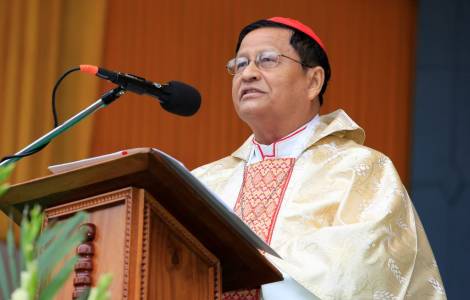
Cardinal Charles Maung Bo appealed in Assisi to Christian lawmakers worldwide to back a binding, international ban on fully autonomous lethal weapons and keep artificial intelligence under human control.
Contents
Cardinal Charles Maung Bo, Archbishop of Yangon in Myanmar, called on August 24 in Assisi for Christian lawmakers from around the world to support an immediate, binding ban on fully autonomous lethal weapons. In his view, handing the decision to kill over to machines amounts to the total collapse of the concept of moral agency.
The address was delivered at a meeting organized by the International Catholic Legislators Network, a network of Catholic members of parliament and senators from many countries. The Assisi summit closed out several days of the organization's gathering in Rome, during which participants also met privately with Pope Leo XIV.
The cardinal's moral argument
Bo built his argument around the concept of moral agency. In his assessment, a machine can never be held responsible for taking a life, because it neither understands the consequences of such a decision nor is capable of compassion.
When you hand lethal force to an autonomous weapons system, the concept of the 'moral agent' collapses entirely - Cardinal Charles Maung Bo
The cardinal directed his appeal squarely at lawmakers, framing regulation of autonomous weapons as a duty tied to their office. He said the mandate for Christian legislators on this issue was unambiguous.
You must lead the effort for an immediate, binding international ban on fully autonomous lethal weapons - Cardinal Charles Maung Bo
AI as a driver of inequality
Bo did not limit his remarks to autonomous weapons alone. He also warned that artificial intelligence itself is becoming a tool that deepens global power imbalances, since it falls first into the hands of the wealthiest and most powerful geopolitical actors.
The cardinal tied that warning to his own experience of the situation in Myanmar, where armed conflict and a humanitarian crisis have persisted for years. He also invoked the name of Christopher Olah, co-founder of Anthropic, as evidence that even the builders of the most advanced AI systems recognize the need to regulate them.
Concrete demands for lawmakers
Beyond the ban on autonomous weapons, the cardinal laid out three further demands for parliamentarians: binding legal limits on AI development, enforced transparency from technology companies, and outright rejection of automating the act of killing. He warned that a failure by lawmakers to regulate amounts, in practice, to abandoning their sovereign duty to their citizens.
Part of a wider church chorus on AI
The Assisi appeal joins a series of statements from Catholic church leaders on artificial intelligence and autonomous weapons, though it stems from a separate event and a different speaker than the earlier remarks by Pope Leo XIV or the appeals from the UN and the Red Cross on the same issue. Bo laid out three pillars around which he believes Christian leadership in the digital age should be built: no war, peace for all, and prosperity for all.
For Polish readers, the relevance of appeals like this one is mainly indirect. Poland has so far withheld support for the earlier UN and Red Cross appeal to ban autonomous weapons, and work on international regulation in this area continues in parallel at the UN and in bodies such as the Group of Governmental Experts on Lethal Autonomous Weapons Systems. Voices like Cardinal Bo's add political pressure on governments that still need to take a position in these negotiations.
The question of autonomous weapons carries added weight amid ongoing conflicts, including the war in Ukraine, where AI-assisted systems are already being used to analyze the battlefield situation. Without a binding international treaty, decisions on deploying such systems remain in the hands of individual states and their militaries.