News
Comarch Reports Record EBITDA, Credits AI-First Strategy for Faster Rollouts
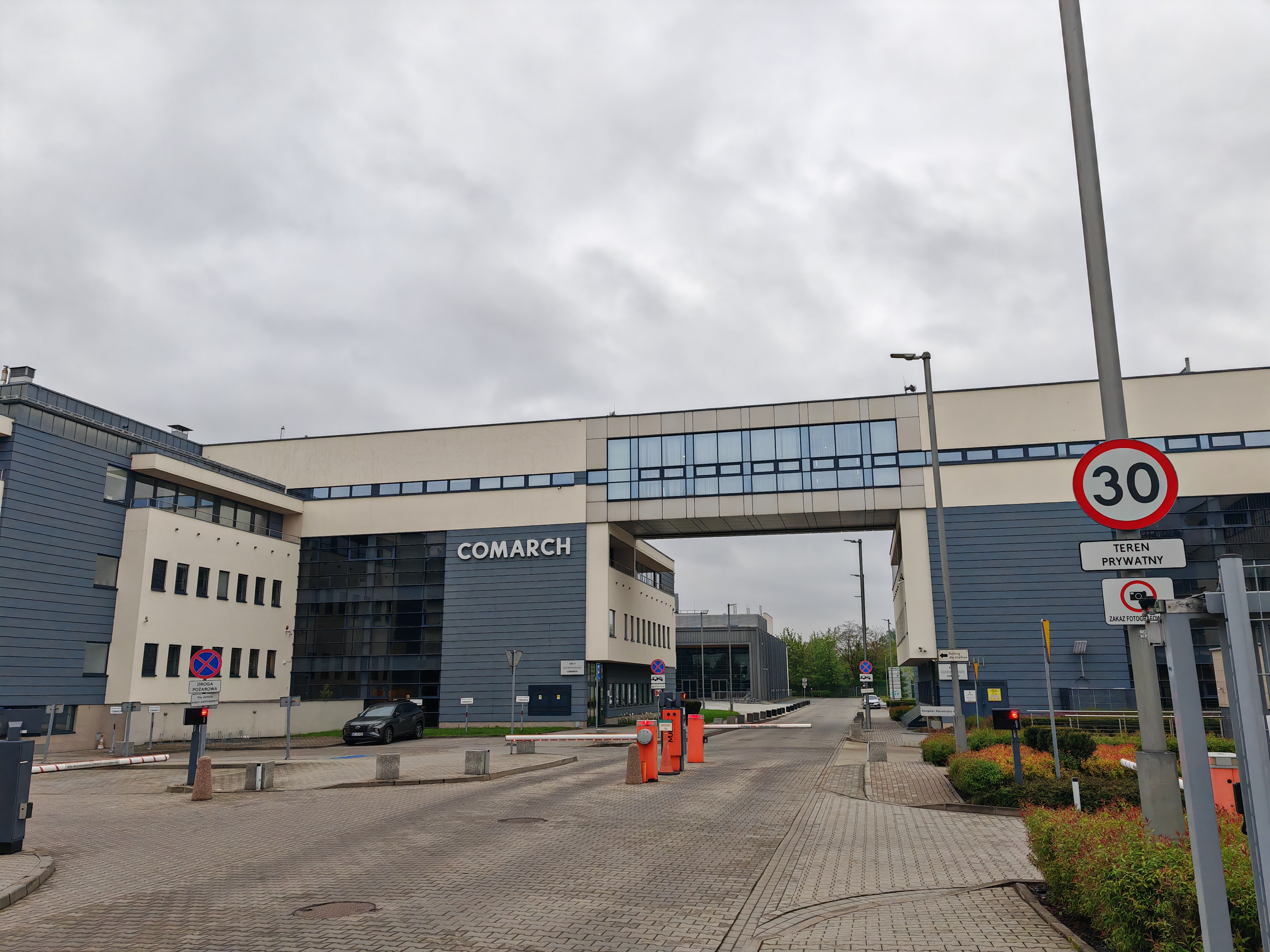
Polish IT company Comarch posted record EBITDA of PLN 381 million, with CEO Jarosław Mikos crediting the shift to an AI-first organization that cut deployment times for some products from 18 months to 6-9 months.
Contents
Comarch, one of Poland's largest IT companies, has reported record EBITDA for the past year. CEO Jarosław Mikos argues that the key driver of growth is a deep reorganization of the company around artificial intelligence, which has genuinely shortened product deployment times for clients.
The information comes from an extensive interview the Comarch CEO gave to the daily newspaper "Puls Biznesu," the key points of which the company later published in its own press center. In it, Mikos sums up a year of intensive rebuilding of sales and production structures that translated into a marked improvement in profitability.
Where the profitability gains come from
According to the company's CEO, the improved results stem from two parallel processes. The first is the streamlining of sales structures and more effective order acquisition, which directly drove the more than 30 percent increase in the order backlog. The second is a change in how production teams work, increasingly relying on AI-based tools at every stage of software development.
Over the past year we put a lot of effort into streamlining our sales structures and winning contracts - Jarosław Mikos, CEO of Comarch
AI-first in practice
Comarch describes its current organization as "AI-first" - an approach in which AI tools are not an add-on to existing processes but the starting point when designing new ones. The company has launched an internal AI Academy, where teams undergo certification in using AI tools in day-to-day development and implementation work.
The most measurable effect of this shift is said to be shorter deployment times. Mikos notes that products whose implementation at a client used to take as long as 18 months can now be launched in 6 to 9 months. That is a cut of roughly half which, in the business of systems for large corporate and telecom clients, translates directly into a faster return on investment for the client and faster invoicing for the vendor.
There are products we used to think would take 18 months to implement, and now we're able to deploy them in 6 to 9 months - Jarosław Mikos, CEO of Comarch
Test automation and agentization
One of the areas where the change is most visible is software testing. Mikos stresses that the testing phase used to be one of the most time-consuming stages of project work, and automating it with AI-powered tools has significantly shortened schedules.
One of the areas we're heavily automating is the testing phase, which used to be fairly lengthy - Jarosław Mikos, CEO of Comarch
The company also talks about an approach it calls "agentization" - handing off part of the work to autonomous AI agents that carry out repetitive coding and deployment tasks without constant human oversight at every step. This approach, similar to strategies now being rolled out by many global tech companies, is meant to let teams focus on tasks that require expert domain knowledge.
What it means for Poland's IT sector
Comarch's results are among the first concrete, numerical confirmations that investment in artificial intelligence is genuinely translating into the financial performance of a large Polish tech company, rather than just featuring in strategy declarations. For corporate clients, this potentially means shorter system deployment timelines, something a large part of Poland's IT sector builds its business on.
For the industry itself, it is also a signal that the pace of AI tool adoption at large, established organizations is starting to become a real competitive factor rather than just a conference topic. Comarch, which employs thousands of developers and serves clients in sectors including telecommunications, finance and retail, is one of the few Polish companies of this scale to publicly tie specific financial metrics to an AI-driven transformation.
The growing order backlog for the current year, which exceeds PLN 1.9 billion, suggests the company's management expects to maintain the current growth pace in the coming quarters. A key test of the AI-first strategy will be whether shortened deployment times hold up as order volume grows and pressure on production teams increases.