News
Fed Chair: AI-Driven Price Increases Don't Have to Mean Inflation
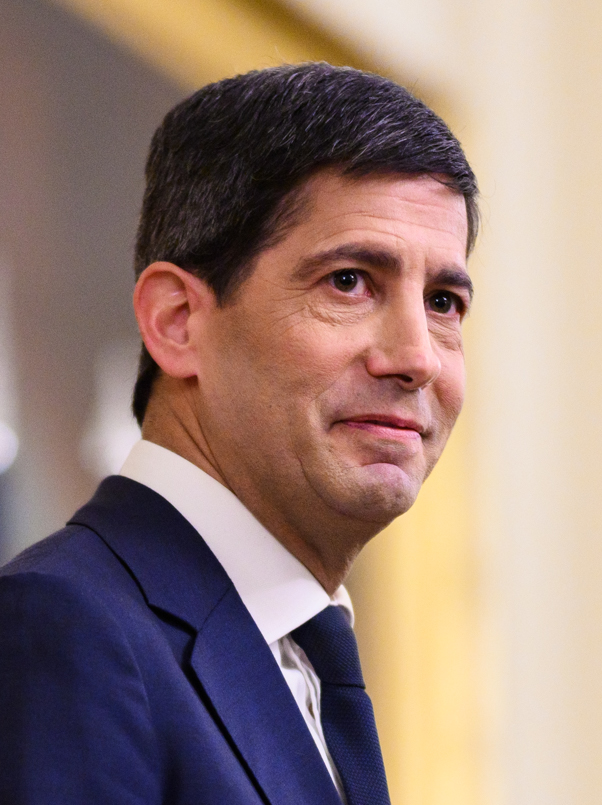
Kevin Warsh told Congress the AI investment boom is already pushing up chip prices, but argued the pressure doesn't have to translate into lasting inflation. Most of his Fed colleagues disagree.
Contents
Federal Reserve Chairman Kevin Warsh admitted in Tuesday's congressional testimony that the rapid buildout of AI infrastructure is already raising the price of computer hardware, though in his view that pressure doesn't have to turn into persistent inflation. It was the first such direct comment from the new Fed chair on the AI boom's impact on prices, delivered during his first testimony before the House of Representatives since taking office.
What Warsh Said
In an exchange with lawmakers about the AI boom's impact on the economy, Warsh acknowledged that investment in AI infrastructure is already pushing up the price of computer chips. He cautioned, however, that whether this pressure proves durably inflationary remains a matter of debate among policymakers. Earlier, at the ECB's central banking forum in Sintra in early July, Warsh called the question of whether AI is inflationary one of the central issues central bankers are grappling with today.
Warsh has struck an optimistic tone on the AI spending wave for months, arguing that the technology's spread among American workers will boost their productivity, translating into higher corporate profits and wages without triggering inflationary pressure. In his assessment, the current AI-driven surge in demand will, over time, also lead to an increase in supply, easing price pressure across supply chains.
The AI shock is leading to a boom in capital expenditure. We're seeing it mainly on the demand side, but I'm confident that at some point we'll see it on the supply side too - Kevin Warsh, Chairman of the Federal Reserve
A Divided Federal Reserve
Warsh's position isn't shared by most of his Fed colleagues. According to FOMC meeting minutes, most participants believe that robust corporate AI spending could contribute to more persistent inflationary pressure rather than a one-time price jump. New York Fed President John Williams has previously pointed to AI-related spending as a source of demand that could push the central bank toward raising interest rates if the persistent imbalance between demand and supply starts feeding through to inflation.
The disagreement within the Fed carries practical weight for monetary policy. Warsh, known for limiting forward guidance, signaling rate decisions in advance, did not reveal during the testimony whether the Fed would move to raise rates in the coming months. He did assure lawmakers, however, that the committee has no tolerance for persistently elevated inflation and remains committed to pursuing price stability.
Hardware Prices Are Already Rising
The price pressure Warsh described is already visible in the market. Prices for RAM and memory chips are rising at a pace electronics makers are passing on to consumers, and component shortages driven by demand from AI data centers are pushing up production costs for laptops, consoles and other devices. Warsh pointed to this very dynamic in his testimony as evidence that the investment boom is genuinely feeding through to the prices of finished products, even if the mechanism itself isn't necessarily inflationary in the macroeconomic sense.
Warsh called AI investment the most defining feature of the current U.S. economy, underscoring the scale of tech companies' spending on data centers and chips. Referring to the inflation data published that same morning, he cautioned that the improved figures don't mean the problem has been solved.
There will be some who look at today's numbers and say 'mission accomplished.' That is not my view - Kevin Warsh, Chairman of the Federal Reserve
What It Means for Poland
The dispute within the Fed over whether the AI boom is inflationary carries weight beyond the United States. The U.S. central bank's interest rate decisions affect the dollar's exchange rate, the global cost of credit, and commodity prices, including the semiconductors and computer memory that Polish tech companies and electronics makers also buy. If the camp warning of persistent AI-driven inflation gains the upper hand at the Fed, higher U.S. interest rates could raise the cost of financing data center investment in Europe as well.
The debate also shows that even the officials most responsible for price stability aren't certain today how the AI investment boom will ultimately affect the economy. The coming months, including monthly data on consumer inflation and tech company capital spending, will test which side of the Fed's dispute was right.