News
Google adds TPU 8tx and 8i Max to its eighth-generation chip family for confidential compute and long context
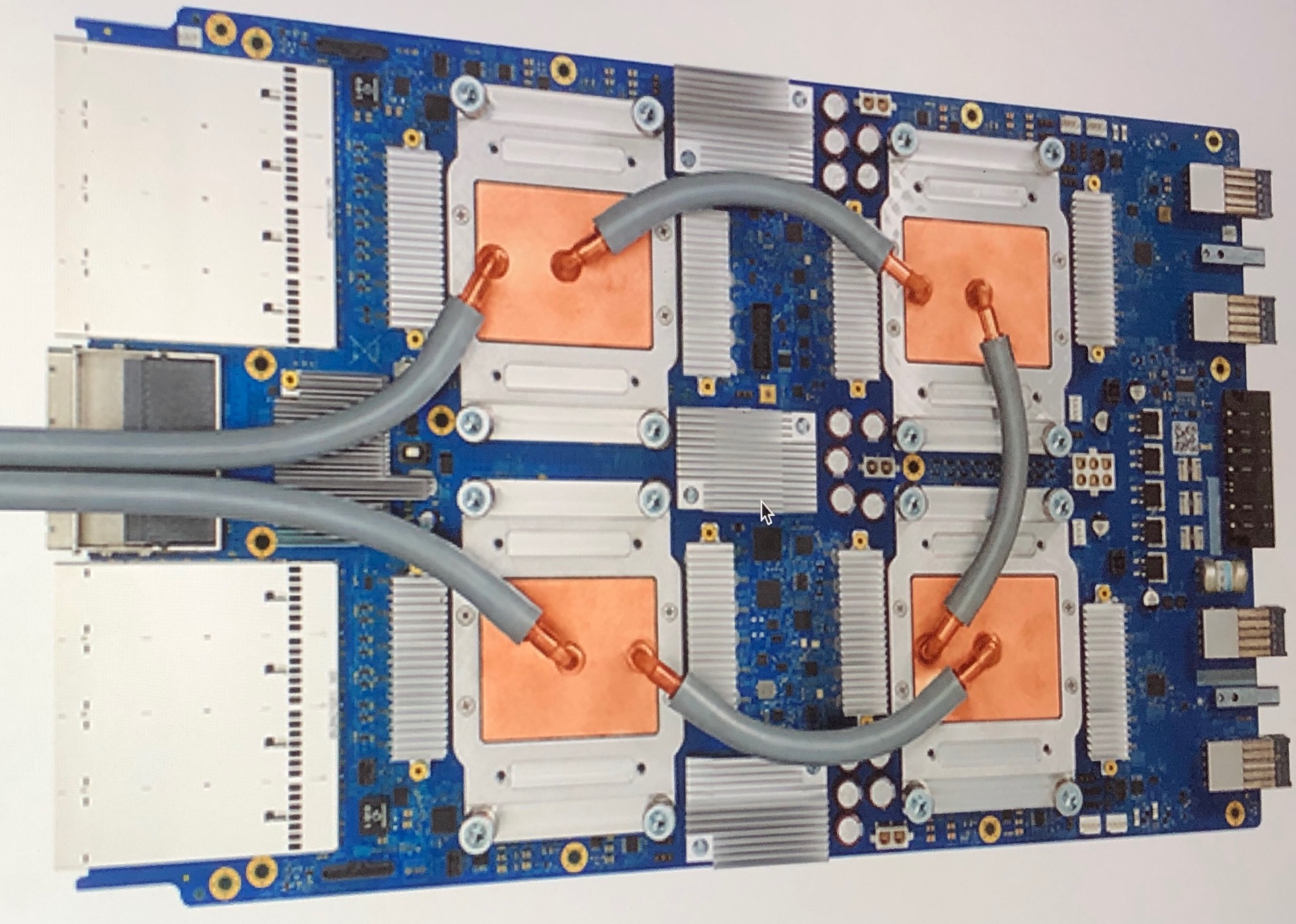
Google is expanding its eighth-generation TPU line with two chips: the 8tx for confidential inference in regulated institutions, and the 8i Max, with twice the compute per rack. The specifications come from the company, with no availability date or pricing.
Contents
On November 9, 2026, Google announced two new chips in its eighth-generation TPU line: the TPU 8tx, built for confidential inference, and the TPU 8i Max, aimed at large models and very long context windows. They join the 8t (training) and 8i (inference), which the company showed at Cloud Next in April 2026.
TPU 8i Max: twice the silicon per rack
According to SiliconANGLE, the 8i Max has twice the compute, SRAM and HBM memory of the 8i. That lets the same rack space hold twice as much silicon, which is meant to reduce data center floor space and power draw per unit of compute.
Google says the chip was designed for larger models and ultra-long context windows, alongside its work on long-context support in Gemini. More on-chip memory means less data moving between processors, which SiliconANGLE says lowers latency and energy use. For scale, a million tokens is roughly 750,000 words, while smaller models typically handle 128,000-256,000 tokens.
TPU 8tx: hardware-level confidentiality
The TPU 8tx targets regulated enterprises and governments that want to run proprietary or frontier models and autonomous agents next to sensitive data. The chip is built on the 8t and works with custom hosts running AMD processors, and a secure enclave built into the hardware layer is meant to isolate data and model weights.
Google describes it as pairing training-grade compute with fast inference. On a single confidential system, customers can fine-tune models on private data, distill large models into smaller ones and train agents with reinforcement learning, without moving data between clusters, which the company says reduces the risk of leaks.
What we don't know
SiliconANGLE's report gives no pricing, availability dates or named customers. The figures are relative multipliers against the 8i rather than independent benchmarks, and all claims come from Google.
For Polish companies and public institutions, the direction matters: hardware-level confidential processing is meant to address the needs of regulated enterprises and public administration. Whether the 8tx actually makes that easier will depend on technical details and availability in Google Cloud regions.