News
Kepler Computing Unveils Memory Tech to Ease HBM Shortage
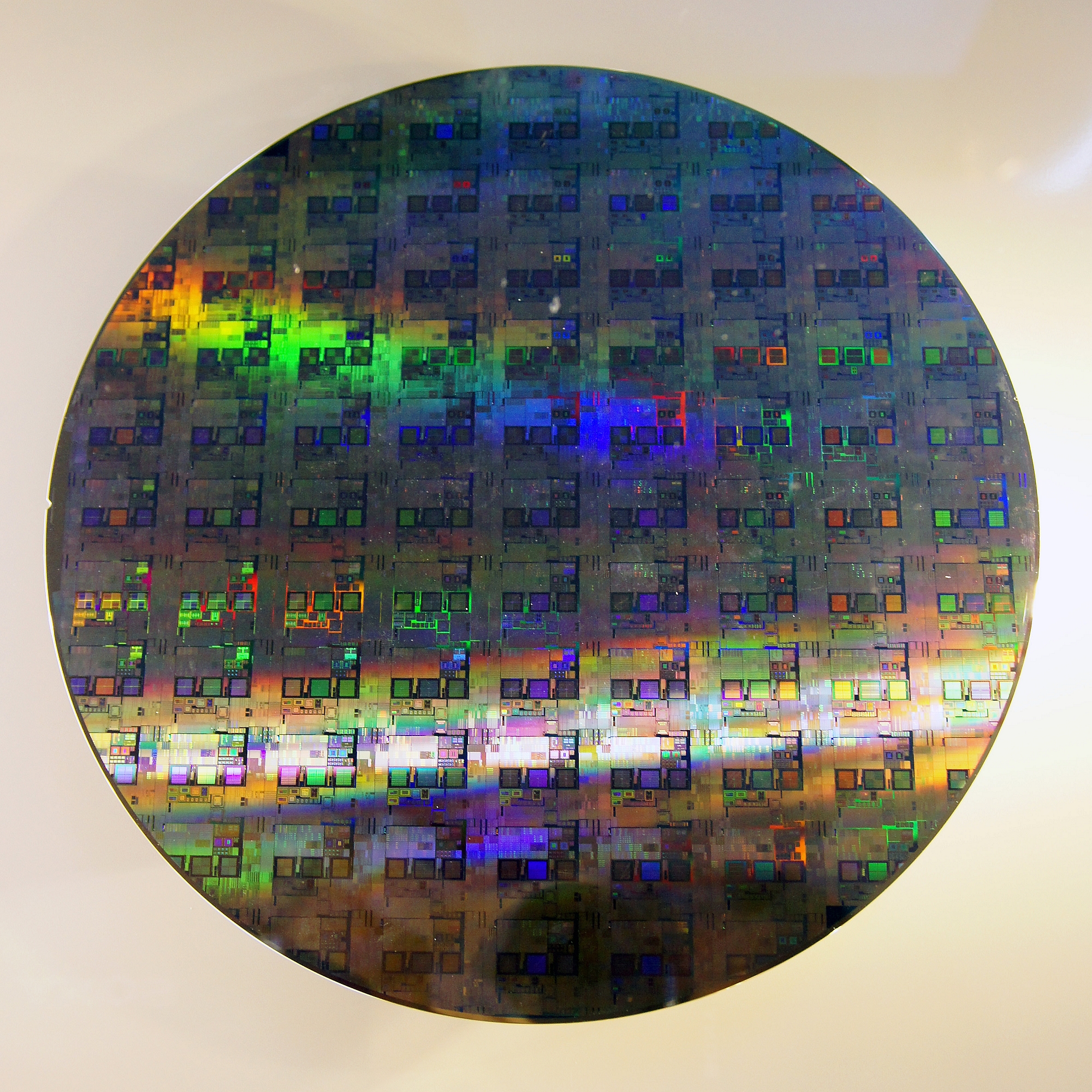
American startup Kepler Computing has emerged from eight years of stealth with a ferroelectric memory technology built on existing fab lines, aiming to ease the global HBM chip shortage driven by the AI boom.
Contents
After eight years operating in stealth, American startup Kepler Computing has revealed a memory technology designed to help ease the global shortage of HBM chips driven by demand for AI accelerators. The company says its solution can be manufactured on existing fab lines, without building new plants from scratch.
Eight Years in Stealth
Kepler Computing was founded in 2018, but only now have its five co-founders decided to speak publicly about the project. Among them are CEO Debo Olaosebikan, previously the founder of startup Gigster, and CTO Sasi Manipatruni, who at Intel led the FEINMAN research center on next-generation logic and invented the MESO device. The other co-founders previously worked on Intel's 3D Foveros technology and on computational lithography for 14-nanometer processes.
Rather than designing memory from scratch in a new fab, the team set a different goal: use existing semiconductor production lines and push their physical limits as far as possible. The key is a ferroelectric composite material based on hafnium-zirconium oxide, which increases SRAM memory density and lowers the voltage needed to write and read data.
Our goal is to take the fabs and architectures that already exist and push them to the limits of physics - Debo Olaosebikan, CEO of Kepler Computing
Thirty-Five Failed Attempts
The path to the current version of the technology was not simple. Kepler's engineers tested 35 different combinations of composite materials before finding one that performed stably at industrial scale. The company built a pilot fab in eight months, a process that typically takes up to two years, and tested more than 2,000 silicon wafers on it, mainly in Singapore and in Vermont, USA.
The approach involves stacking ferroelectric memory layers directly on top of logic chips using three-dimensional heterogeneous integration, instead of manufacturing separate memory stacks and joining them to the processor in a separate packaging step. The company says its compute-in-memory architecture allows matrix multiplication up to 15-20 times faster than conventional SRAM and DRAM chips, while consuming an order of magnitude less energy. Peer-reviewed research on manufacturing this structure within existing CMOS processes was published in April 2026.
A Shortage Driving the Race
The context for Kepler Computing's announcement is clear: the AI infrastructure boom has driven a sharp rise in demand for high-bandwidth memory. DRAM prices doubled in the first quarter of 2026, and HBM production capacity is sold out at least two years in advance, through 2027-2028. Manufacturing a single HBM chip consumes nearly three times more wafer capacity than standard DRAM, further tightening the production capacity deficit at leading manufacturers.
Against this backdrop, the US administration decided to back the project financially. The Department of Commerce announced a letter of intent to award Kepler Computing up to $245 million from the CHIPS Act program, earmarked for research and development of high-performance memory for artificial intelligence. This is part of a broader $874 million pool distributed among seven companies working on gaps in AI infrastructure.
When It Will Actually Reach the Market
The company says the first wafer samples of HBM chips using the new technology will reach customers as early as 2026. Expanded production in Singapore is set to launch in 2027, with US production following in 2028. Kepler already has a dedicated fab with 300-millimeter wafer capacity and is working on allocating production capacity for 2028-2030.
Industry experts are treating the announcement with caution. Moving from a working prototype to mass production of millions of chips while maintaining consistent quality is an entirely different scale of challenge than building a pilot line. One representative of GlobalFoundries, a Kepler investor, assessed that the technological breakthrough has already been achieved, but that the challenge now is sustaining high yields while processing thousands of wafers and producing millions of components.
For Polish companies and consumers, the significance of projects like this is indirect but real. DRAM and RAM module prices in computers and servers are rising alongside the global shortage, translating into higher costs for IT hardware and AI-powered cloud services. If alternative approaches like Kepler's actually reach the market at industrial scale, this could ease pricing pressure in the longer term, though the first effects would likely appear no sooner than a year or two from now.