News
Google Launches AI Push in India: Sec-Gemini v3 Security Agent and Leprosy Detection Models
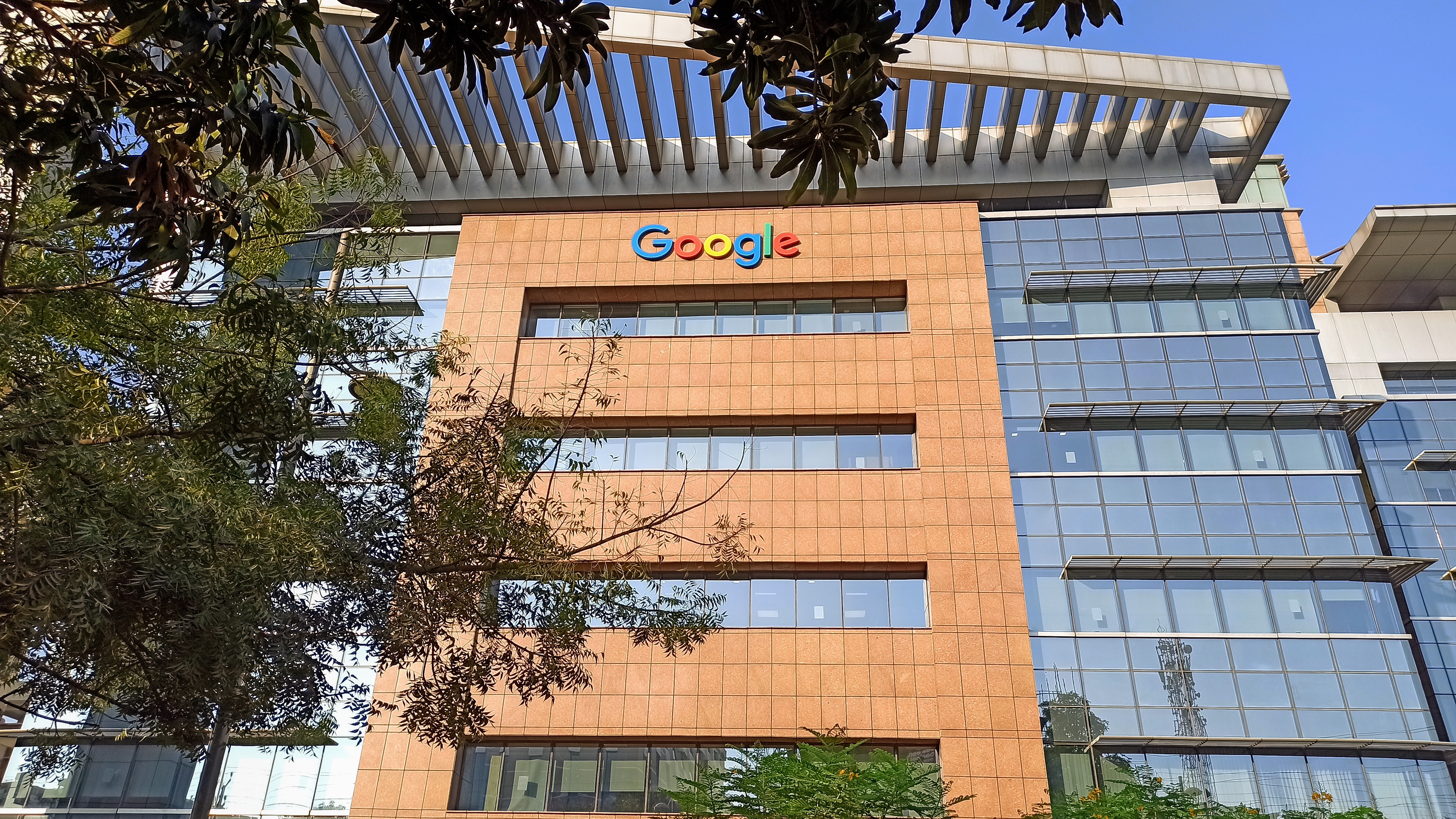
At Google I/O Connect India 2026 in Bengaluru, Google announced a series of AI deployments for India, from the Sec-Gemini v3 cybersecurity agent being tested by the government and Flipkart to MedGemma models for leprosy detection and an assistant for 10,000 schools.
Contents
At the Google I/O Connect India 2026 conference in Bengaluru, Google announced a package of new artificial intelligence deployments aimed at Indian companies, government agencies, schools and hospitals. Among the new releases was a specialized cybersecurity agent, Sec-Gemini v3, going out to trusted government and business testers, including the e-commerce platform Flipkart, along with new MedGemma medical models used for leprosy detection.
Sec-Gemini v3 is the most sensitive of the announced tools. Google describes it as an agent capable of rapidly analyzing security incidents, conducting digital forensics and analyzing malware. The system is meant to help security teams respond to threats tied to the abuse of autonomous AI agents, which Google flags as a growing problem as agentic AI spreads across businesses.
Cybersecurity for Government
The tool is currently going to a closed group of trusted testers, both government institutions and private companies - among them Flipkart, one of India's largest e-commerce platforms. At the same time, Google made the Gemini 3.5 Flash model available to Indian businesses and startups through the Gemini Enterprise Agent Platform, with a guarantee that data is processed exclusively within the country's borders. This is a response to growing expectations around digital sovereignty, similar to the requirements Europe places on cloud and AI model providers.
Health and Local Languages
In healthcare, the All India Institute of Medical Sciences (AIIMS) is developing new models from the MedGemma family designed to detect and manage leprosy treatment and to support reproductive and sexual health. This expands on earlier MedGemma deployments in dermatology and patient triage in emergency departments. The National Health Authority, meanwhile, used Google's Gemma 4 model and Medical Data Toolkit in expanding Aarogya Setu 2.0, the nationwide app for maintaining electronic health records.
Google is also developing language tools tailored to India's specifics. Project Vaani released openly licensed speech and image datasets covering 109 Indian languages, and the Gemini Live voice assistant now supports more than 25 languages and dialects of the subcontinent, including Sanskrit, Bhojpuri and Maithili - languages rarely supported by commercial voice systems.
Education and Future AI Builders
Google DeepMind brought its AI Research Foundations program to India, a free 56-hour course teaching how to build and fine-tune large language models and conduct AI research. The program has already drawn more than 38,000 sign-ups worldwide, and participants receive Google Cloud skill badges and certificates. Partners in the initiative include the Indian Institute of Science in Bengaluru and the industry body NASSCOM, with funding from the Google.org AI Opportunity Fund for the Asia-Pacific region.
Schools, meanwhile, are getting ATL Saathi, a Gemini-based desktop application built in partnership with the government's Atal Innovation Mission program. The assistant is designed to help teachers run classes and prepare experiments within the Atal Tinkering Labs network. It will reach 100 schools in 2026, with an eventual goal of 10,000 institutions nationwide.
Builders in India are already deploying AI faster than almost anywhere else - Preeti Lobana, Vice President and Managing Director, Google India
The Global AI Race
The scale of the announcements shows how large tech companies are tailoring their AI strategies by market, combining infrastructure investment with local guarantees around data and language. For European, including Polish, observers of the AI sovereignty debate, this is a concrete example of what a model combining commercial deployment with in-country data processing guarantees looks like in practice - a topic that is only just taking shape in the European Union as regulation and local computing infrastructure develop.
Google did not disclose the total financial value of the package announced in Bengaluru, in contrast to earlier, multibillion-dollar announcements of infrastructure investment in India. The company said only that further stages of the rollout, particularly the expansion of ATL Saathi to thousands of schools and further development of the MedGemma models, would be announced progressively in the coming months. Sources: Deepening our commitment to India's AI ambition (https://blog.google/intl/en-in/company-news/deepening-our-commitment-to-indias-ai-ambition/), Google I/O Connect India 2026 accelerates AI adoption across India (https://mediabrief.com/google-i-o-connect-india-2026-accelerates-ai-adoption-across-india/)

