News
Google DeepMind Alumni Build Software to Control Nuclear Fusion
Federico Felici and Jonas Buchli, who taught AI systems to control experimental tokamaks, founded the Lausanne-based startup Fusionality and raised 3 million Swiss francs in a pre-seed round.
Contents
Two former Google DeepMind researchers who spent years teaching algorithms to control experimental fusion reactors have launched their own company. Fusionality, based in Lausanne, Switzerland, wants to sell ready-made plasma control software to dozens of private companies building commercial fusion reactors.
From tokamak to startup
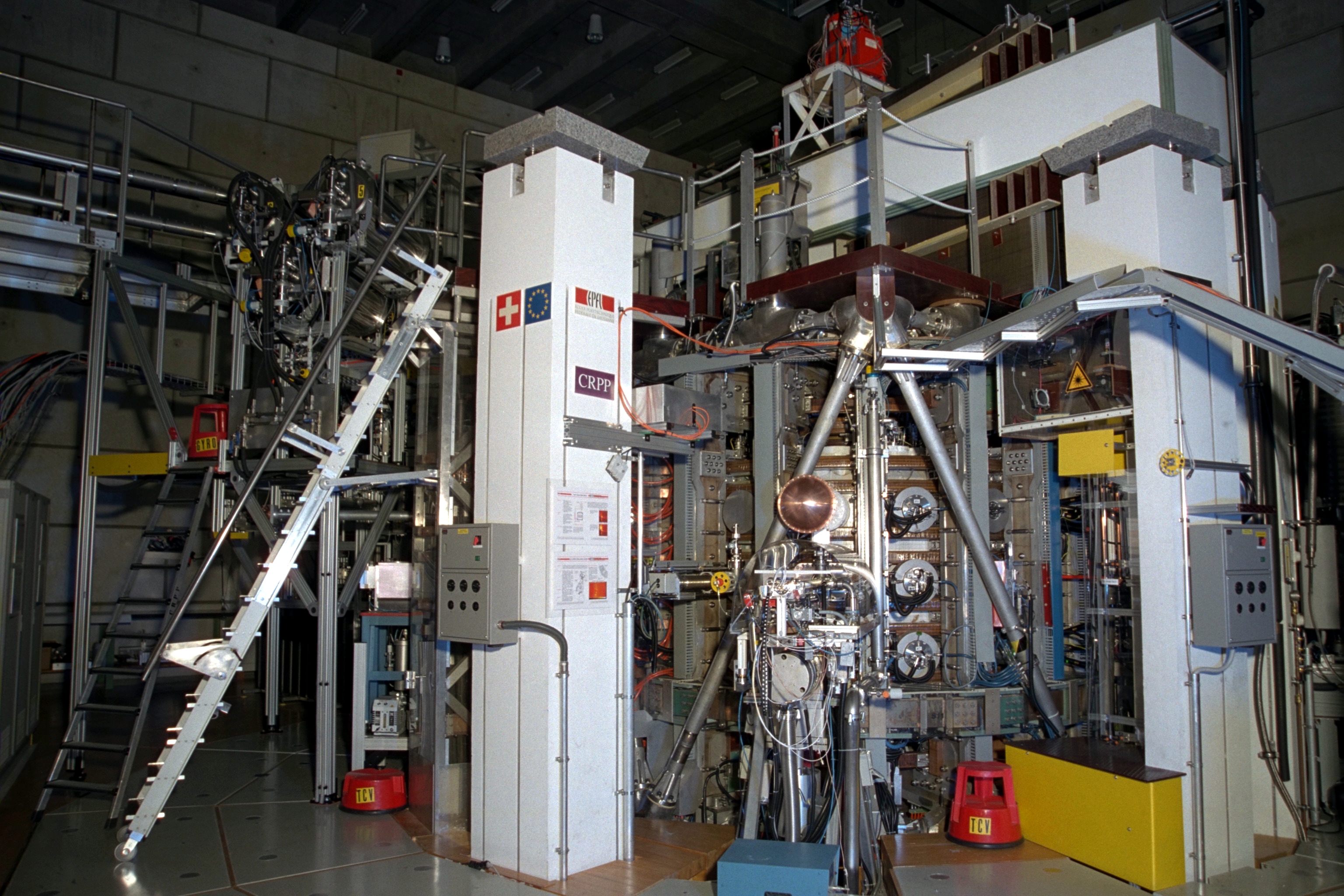
Felici and Buchli met while teaching artificial intelligence to control the experimental TCV tokamak at the Swiss Plasma Center at EPFL. Felici, trained as a control engineer with a PhD in plasma physics, worked on the TCV tokamak before spending two and a half years at Google DeepMind developing simulations and machine learning interfaces for fusion devices. Buchli, an electrical engineer from ETH Zurich, led robotics and reinforcement learning teams at DeepMind.
The two founded Fusionality in 2026, carrying experience from an academic lab and a large tech company into a narrow but growing market niche. The company doesn't design its own reactors, it builds a software layer that other fusion startups can use and adapt to their own designs.
What Fusionality actually does
Fusionality's product is a set of control systems and simulation environments for managing plasma inside a reactor. The company is currently focused on magnetic confinement designs, the classic approach that uses electromagnets to keep superheated plasma contained, the same approach underlying most of today's commercial tokamak and stellarator projects.
80 percent of every control system is really exactly the same - Federico Felici, CEO of Fusionality
That observation is at the heart of the company's business model. Instead of every fusion startup building its own control software stack from scratch, Fusionality wants to provide a shared core that clients can fine-tune to their specific reactor geometry and experiment schedule.
The role of artificial intelligence
Despite both founders' machine learning backgrounds, Felici tempers expectations about how far AI should reach into reactor control.
I wouldn't be someone who advocates for AI taking over control of an entire fusion reactor - Federico Felici, CEO of Fusionality
In his view, AI should complement and optimize select parts of the control system, such as predicting plasma instabilities in real time, rather than replacing proven classical control algorithms as a whole. That approach differs from the rhetoric of parts of the AI industry, which is quick to announce autonomous systems controlling critical infrastructure.
Fusion market context
Fusionality's round is part of a sharp rise in investment in fusion energy. According to the Fusion Industry Association, fusion companies raised a record $4.48 billion in the twelve months to July 2026, and the sector's total funding since inception has topped $11.5 billion. The leader remains the US-based Commonwealth Fusion Systems, with $3.94 billion raised, including a billion-dollar round closed in July 2026.
Against that backdrop, Fusionality is still a small player, having just closed a pre-seed round rather than another mega-round. Its edge is meant to come not from building its own reactor but from supplying software infrastructure to a growing list of competing fusion projects, some of which have spent years wrestling with the same plasma control engineering problem.
What it means for the AI industry
Fusionality's story adds to a growing list of startups founded by former Google DeepMind employees who are moving beyond building language models and into engineering applications of machine learning in hard sciences, plasma physics, robotics, and biology. It's also an example of the flow of expertise running in the opposite direction from how it's usually described in the media: not AI entering the energy sector through power-hungry data centers, but AI experts building tools for the energy sector that may one day power those same data centers.
For readers following the AI market, this is a signal that expertise carried over from major research labs is increasingly landing in narrow, technical industrial niches, not just in the next wave of generative consumer products. Nuclear fusion, still far from commercial large-scale power production, is becoming one of the areas where experience in machine learning and physical simulation has direct engineering applications.