News
Google DeepMind Uses AI to Reconstruct Pelé's Legendary 1959 Goal That Was Never Filmed
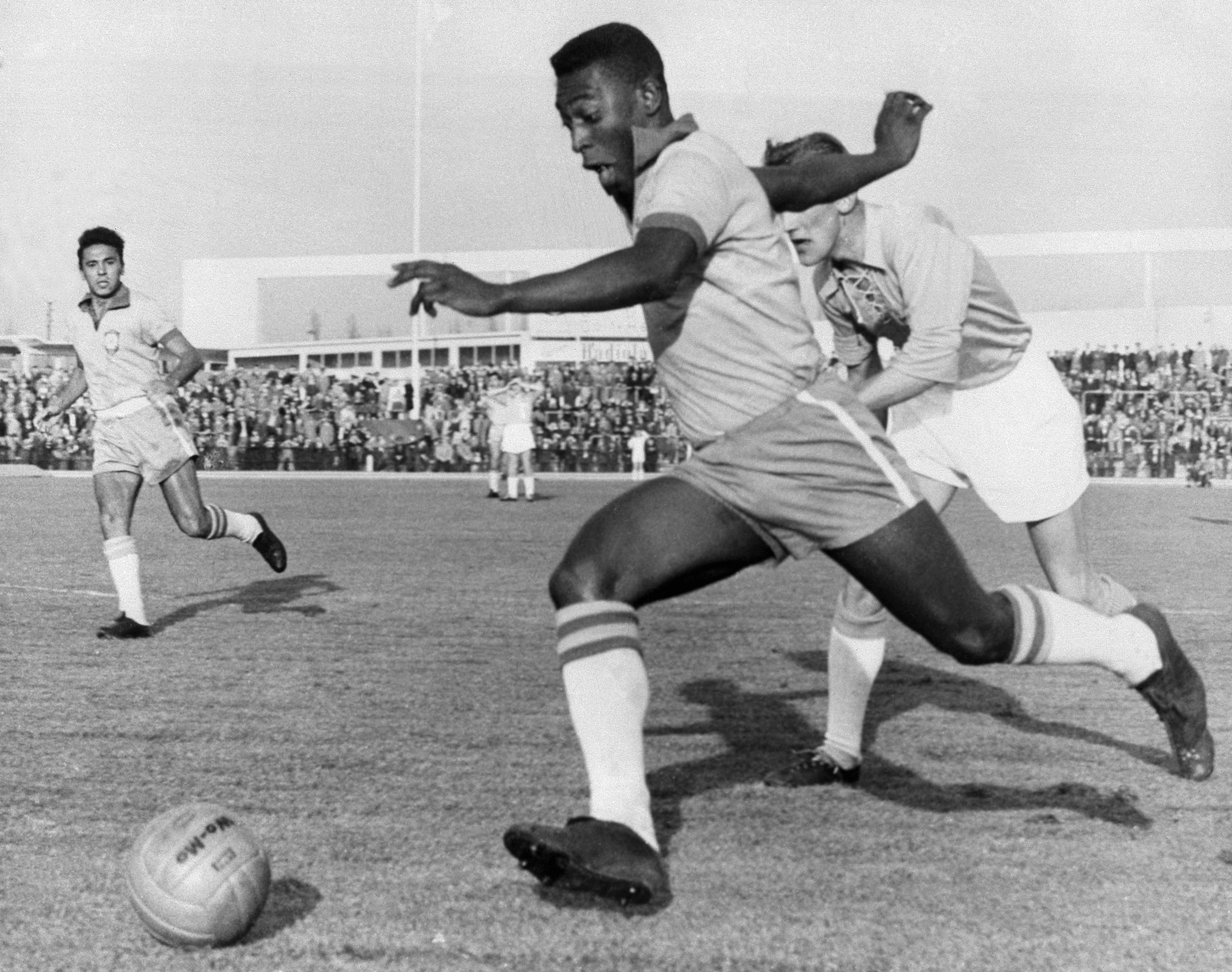
Google DeepMind, working with Pelé's family and historians, used its Veo 3 and Gemini Omni models to recreate his famous 1959 goal that was never captured on camera. The reconstruction is now on display at the Pelé Museum in Santos.
Contents
The goal Pelé called the most beautiful of his career existed for more than sixty years only in eyewitness accounts. Now Google DeepMind has shown what that moment looked like on screen, rebuilding it from scratch with artificial intelligence based on fan testimony, archival photos and 3D models of the stadium.
The match took place on August 2, 1959, when Santos faced Clube Atlético Juventus at the stadium on Rua Javari in São Paulo. According to eyewitness accounts, Pelé beat several defenders in succession with a series of sombreros, flicking the ball over his opponents' heads, then dummied past the goalkeeper with a knee touch and headed the ball into an empty net. No cameraman captured the play, and the only record that survived was the accounts of fans and the local press.
How the reconstruction was built
The Google DeepMind team began with work more typical of sports historians than AI engineers. They gathered nearly two thousand documents and more than 3,600 archival photographs, and conducted interviews with eyewitnesses of the match, including Juventus fans Angelo Agarelli and Vicente Romano Netto, and photographer Raphael Herrera, who documented the stadium in 1959.
Based on that material, the team rebuilt a scaled model of the Rua Javari stadium, accounting for its architecture, lighting and stand layout from more than six decades ago. The project also involved historian Anita Lucchesi of Rio de Janeiro State University and Pelé's daughter Flávia Kurtz, who oversaw the reconstruction's fidelity to the family's memories.
Performance Control technology
A key part of the production was filming a real, live action sequence at the same stadium, with a stunt performer dressed in period-accurate kit and gear. The motion and 3D geometry from that performance served as input for Performance Control, a technology built on the Veo 3 video model that transfers an actor's precise movement onto a generated character, in this case the likeness of a young Pelé.
Gemini Omni handled isolating the footage from the background, generating 3D meshes of the surroundings, and matching the style to the realities of the late 1950s, from the weather to the look of the stands. The Nano Banana Pro tool was also used to refine the effects. The whole piece then went through a traditional post-production process, including ball compositing, adding film grain, color correction and a filmout process that gives the image the look of 1950s cinema.
The family's reaction and the project's significance
For Pelé's family, the reconstruction carried an emotional weight beyond the technology involved. The player died in 2022, and the absence of any footage of this particular play was, as the family recalled, a source of regret for him throughout his life.
He would have been so proud to see all this. He always said it was a shame that goal was never filmed. So being able to relive it, with all this technology, is amazing - Flávia Kurtz, Pelé's daughter
The project was carried out in collaboration with the Pelé Brand, the platform that manages the player's legacy under the leadership of NR Sports, and Google's creative team, which worked on the production with lead Gabe Ferreira. The film was unveiled at the Pelé Museum in Santos, where it has become part of the permanent exhibition on the player's career.
What this means for generative video
The reconstruction points to the direction Google is taking with its video models, combining generative AI with rigorous archival work and traditional visual effects rather than relying solely on text prompting. Performance Control, which uses a real stunt performer's movement as the skeleton for the animation, is meant to address a problem generative video still struggles with: faithfully rendering complex sports choreography without anatomical distortion.
For the sports and media archiving industry, this is a signal that similar tools could in the future be used to recreate other historical moments that were never filmed, provided there is access to sufficiently rich source documentation and the involvement of witnesses or families who can verify the reconstruction's accuracy. Google's project is not presented as a historical document in the strict sense, but as a reconstruction based on the best available knowledge.