News
Google DeepMind Recreates Pelé's Legendary Goal That Was Never Filmed
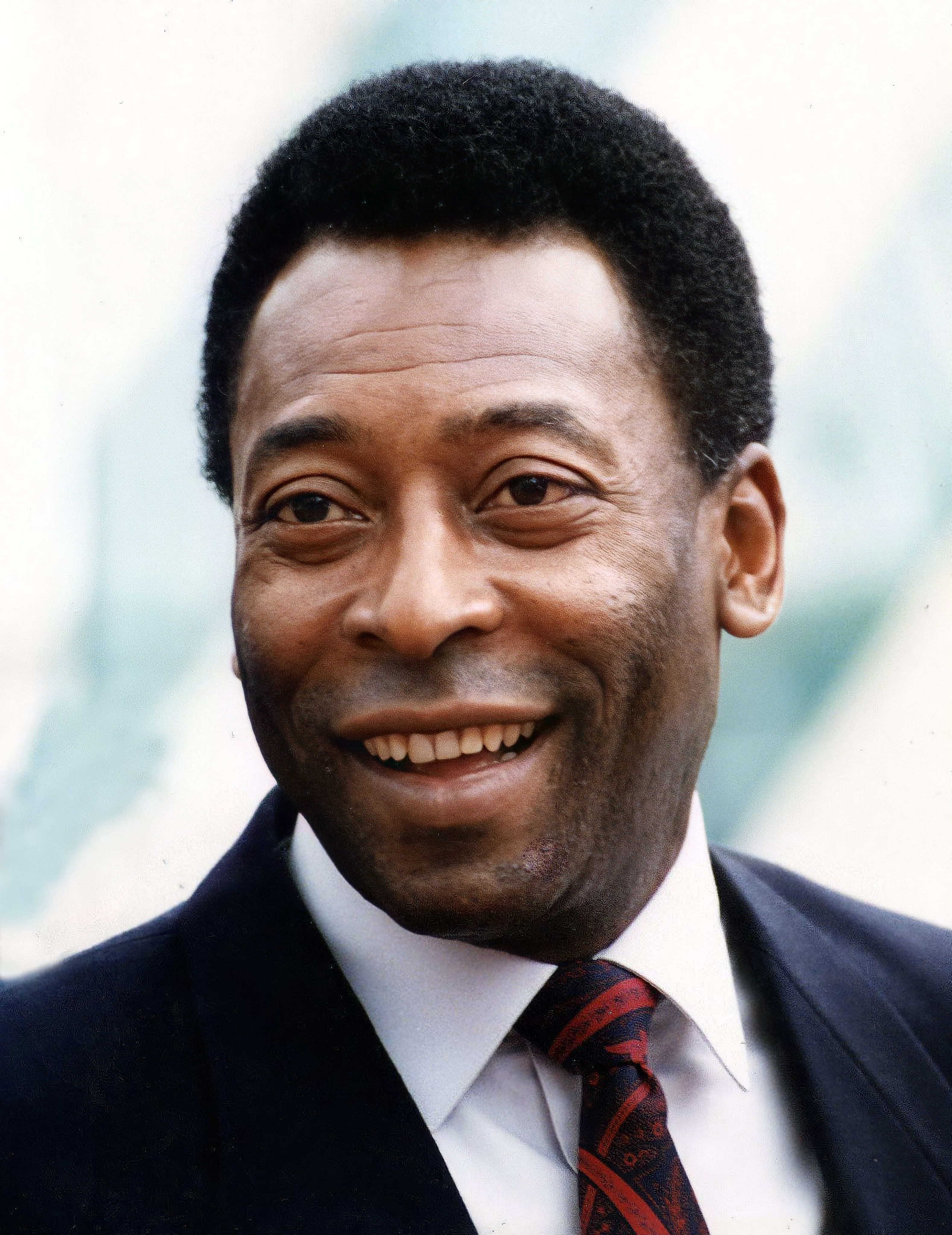
Google DeepMind, working with the brand that manages Pelé's legacy, released a video recreating his legendary 1959 goal, previously known only from eyewitness accounts and a single photograph. The Veo 3, Gemini Omni, and Nano Banana Pro models were used to reconstruct the player's movement and likeness.
Contents
A goal that for more than sixty years existed only in the memory of witnesses and a single photograph has now been reconstructed with the help of artificial intelligence. Google DeepMind, working with the brand that manages Pelé's legacy, published a short film on July 14 recreating a legendary play from 1959, in which the Brazilian forward reportedly flicked the ball over three defenders in a row before heading it into the net without the ball ever touching his foot.
A Goal Without Footage
The play in question took place at the old Conde Rodolfo Crespi stadium on Rua Javari in the Mooca district of São Paulo. According to eyewitness accounts, Pelé dribbled past three defenders with successive touches that lifted the ball over their heads, then chipped it over a goalkeeper nicknamed 'Mão de Onça' and headed it into the net before it hit the ground. At the time, Brazilian league matches were not yet recorded on video, so the play survived only through press accounts, fans' memories, and a single photograph.
How the Film Was Made
Google DeepMind's team did not simply generate the scene from a text description. On the same field on Rua Javari, a modern-day stunt performer in period costume, using a heavy leather ball from that era, actually carried out a sequence of movements resembling the play. AI models extracted the motion and body geometry from that footage and then 'dressed' it with a digital rendering of the young Pelé, blending the result with traditional visual effects.
The video itself was generated using the Veo 3 model, applying an approach described as motion control based on reference footage. Gemini Omni handled multimodal processing, combining text, image, and video data, while the Nano Banana and Nano Banana Pro models refined the image layer, including facial detail, period costume, and period-accurate lighting.
Built on Archives, Not Hallucinations
The creators emphasize that the material rests on solid historical work rather than free interpretation by the model. A team led by historian Anita Lucchesi of the State University of Rio de Janeiro (UERJ), working with the Arka agency, gathered around 3,600 archival photographs and nearly 2,000 other source materials: architectural plans of the old stadium, family albums, contemporary press accounts, interviews with witnesses to the event, and objects belonging to Pelé himself, including his boots from 1959.
These materials were used to reconstruct not just the player's movement but the surrounding scene as well, including the look of the stands, the pitch, and the clothing worn by fans and opposing players. Google says every element of the scene, from the type of ball to the layout of the field, was checked against available historical sources before it went into production.
He would have been so proud to see this. He always said it was a shame that goal was never filmed - Flávia Kurtz, Pelé's daughter
AI as a Tool for Preserving History
The project fits into a broader trend of using generative AI not to create fiction, but to reconstruct events that actually happened yet were never documented with the tools available at the time. For Google, it also serves as a showcase for what the Veo and Gemini models can do beyond typical commercial or advertising uses, in a project carrying clear emotional and cultural weight.
The film went online alongside an exhibit at the Pelé Museum in Santos, where visitors can view the material in the context of memorabilia from the player, including the boots from 1959 mentioned above. Google described the project on its official blog, noting the collaboration with Pelé's family and NR Sports, the company that manages his image rights.
Questions About the Limits of Reconstruction
Productions like this also raise questions that will keep coming up as more projects involving the likenesses of deceased public figures appear: where faithful, source-based historical reconstruction ends and free creative invention begins. In Pelé's case, his family gave approval for the use of his likeness and oversaw the project, which sets this production apart from earlier high-profile disputes over digitally recreating actors without the consent of their heirs or the people themselves.
For a Polish audience, the project is above all a technological curiosity, but it also points to where Veo-class video models are heading: increasingly combining real reference footage with generation, rather than producing images purely from text descriptions, which reduces the kinds of distortions and errors typical of pure text-to-video generation.