News
Google's internal chaos hands the AI coding race to Anthropic and OpenAI
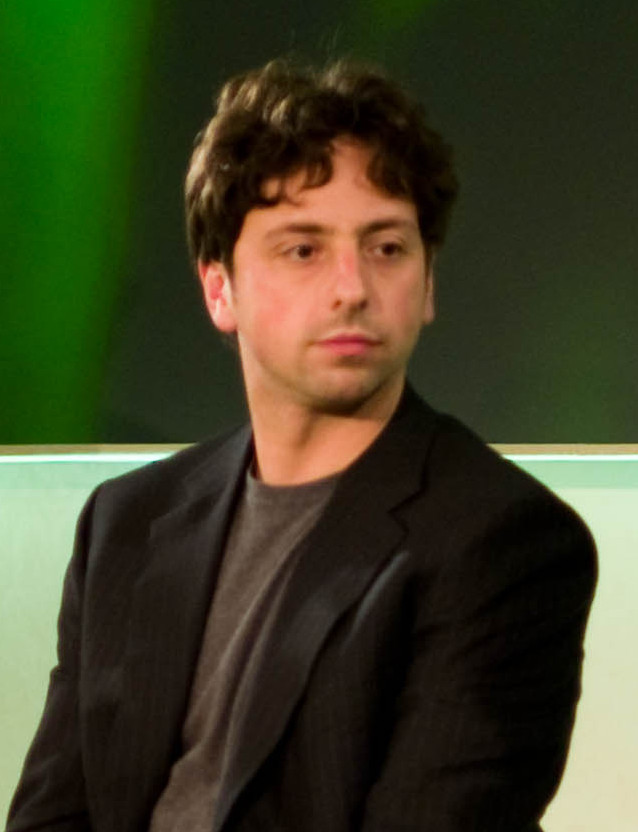
The Los Angeles Times reports that fragmented teams, a fight over compute capacity, and researcher departures are weakening Google's position in the race to build AI coding tools against Anthropic and OpenAI.
Contents
Google is losing ground in the race for AI-powered coding tools, despite having some of the best models on the market. An analysis by the Los Angeles Times, based partly on reporting from Bloomberg, depicts a company torn apart by competing internal teams, a fight over compute capacity, and the departure of key researchers to Anthropic and OpenAI.
At the heart of the problem is the fact that coding became the main driver of enterprise AI tool adoption in 2026, and Google is essentially not a leader in that conversation. Meanwhile, it is Anthropic with Claude Code and OpenAI with Codex that are setting the pace, winning over developers who want one coherent tool rather than a set of scattered experiments.
Six products, one brand
According to accounts cited by the Los Angeles Times, the coding capabilities of Google's Gemini models are spread across six different Google products, each with its own branding and its own team responsible for development. DeepMind, Google Cloud, the Core division, Labs, and Android are all working on AI coding tools independently of one another, without a single decision-making body to set priorities.
In practice, this fragmentation means teams compete internally for the same resources instead of concentrating effort on a single flagship product capable of competing with Claude Code or Codex. Some Google engineers openly admit that in their day-to-day work they prefer using Anthropic's Claude Code over the company's own internal tools, even though security policies restrict the use of competitors' tools.
The fight over compute
The tensions inside Google are not limited to branding. Managers are struggling to reconcile competing demands for compute capacity, sought both by external Google Cloud customers, including Anthropic itself as a major Google Cloud client, and by internal research projects.
It was reportedly this very dispute over compute resources that directly drove Noam Shazeer, co-lead of Gemini, to leave for OpenAI. Shortly before he announced his decision on X, the compute capacity allocated to one of his projects was redirected to a DeepMind team in London. Shazeer had returned to Google in 2024 as part of a deal in which the company paid a reported $2.7 billion for the technology behind his startup, Character.
To win this final sprint, we urgently need to close the gap in executing agentic tasks and make our models the primary authors of the final code - Sergey Brin, Google co-founder, in an internal memo to the team responsible for AI coding
Strike team reorganization
In response to the departures and the widening gap with competitors, Google is reorganizing a team known internally as the coding strike team, set up roughly two months ago with the mandate to speed up development of tools that can rival Claude and Codex. The reorganization is being overseen directly by Sergey Brin and Koray Kavukcuoglu, chief technology officer of Google DeepMind.
The team is now expanding its scope to include so-called midtraining, the stage between a model's initial pretraining on large datasets and the final fine-tuning that teaches it to follow specific instructions. This signals that Google wants to build its coding advantage deeper, at the level of model training itself, rather than just in the interfaces and tools built around it.
Market reacts to departures
Joining Shazeer is John Jumper, the 2024 Nobel Prize winner in Chemistry for his work on AlphaFold, who is moving from Google DeepMind to Anthropic. The departure of two such recognizable names in a short span of time weighed on Alphabet's valuation, with the stock falling more than 5 percent after news broke of further researcher transfers to competitors.
Analysts cited in reports on the matter describe the talent drain from Google DeepMind to OpenAI and Anthropic as a serious signal of shifts in the AI industry's labor market. The pace at which Google ships new model versions, roughly four months between releases, remains slower than that of its competitors, who in the same period have managed to release several updates to their flagship coding models.
For Polish companies and development teams using AI tools, the situation in practice means Claude Code and Codex are further cementing their position as the market's reference points, while Google's offering remains fragmented and harder to choose confidently. If the strike team reorganization succeeds, the coming months could bring a consolidation of Gemini's tools under a single brand, echoing the move Microsoft previously made with Copilot.
