News
Jodie Foster Suggests Brad Pitt's Hit "F1" May Have Been Made With AI
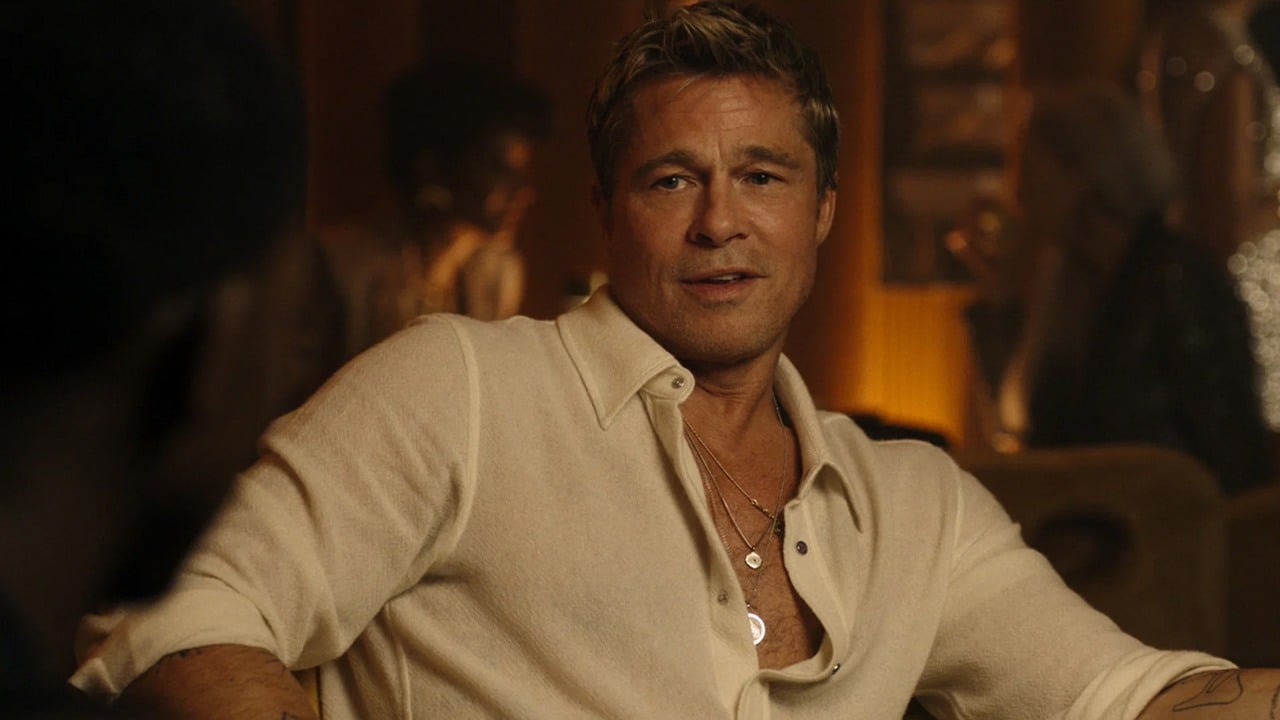
During a panel at the Aspen Ideas Festival, the actress and director said outright that the structure and dialogue of the hit film "F1" look like they were written by a computer. Foster also warned against replacing actors with digital copies without compensation.
Contents
Jodie Foster didn't mince words. During the panel "Who Owns the Future of Hollywood" at this year's Aspen Ideas Festival, the Oscar-winning actress and director said that Brad Pitt's hit movie "F1" looks as though its script was written by artificial intelligence, with the actors delivering lines exactly the way an algorithm would program them.
Foster made clear she wasn't being malicious. The film made a fortune and audiences embraced it enthusiastically. But it's precisely that commercial success, combined with its predictable plot construction, that made "F1" an example for her of how closely Hollywood filmmaking has come to resemble patterns a language model could just as easily generate.
I don't mean this in a mean way, how could I? this movie made millions and millions of dollars, but look at a movie like F1. I just think that F1 was made by AI - Jodie Foster, actress and director
A Textbook Structure
According to Foster, the problem isn't the special effects or the cinematography, it's the storytelling itself. The plot of "F1" follows the exact pattern taught in screenwriting courses: clearly mapped turning points, predictable character arcs, dialogue timed to the second to match a scene's emotional beat. It's this very predictability that led her to compare the film to the work of a machine.
The structure was exactly what you're taught in film school. The actors say the lines exactly the way a computer would write them, trying to hit whatever would be the most appropriate thing to say in the moment - Jodie Foster, actress and director
Actors and Digital Doubles
The second part of Foster's remarks addressed the acting profession directly. She pointed out that face-swapping technology already available on mobile phones is advancing far faster and more precisely inside production studios. In her view, the key question isn't whether an actor can be digitally replicated, but who gets paid for it.
Foster tied this directly to the role of Hollywood unions, which have been regularly negotiating the rules around AI use in production ever since the writers' and actors' strikes. In her view, the solution isn't banning the technology but building in a compensation mechanism: if an actor's digital double appears in a production twenty times, the actor should get paid twenty times.
AI as a Tool, Not Just a Threat
Foster isn't opposed to technology in film production. She noted that AI tools work well for previz, the pre-production process of sketching out scenes before the actual filming, where they save time and budget without affecting the finished film's artistic shape. The distinction she draws matters for the broader industry debate: not every use of AI in production amounts to replacing creators.
She also noted that in the long run, AI development could serve creators, provided the industry keeps control over it. In her view, if the industry could consistently stay ahead in shaping how the technology develops, it could help make things that reflect human sensibility rather than replace it.
The Wider Hollywood Debate
Foster's comments fit into a broader current of unease in the entertainment industry over generative AI, also visible in recent critical remarks from other artists about the use of artificial intelligence in music. In film, though, the issue touches a different dimension of the dispute: not whether AI is generating content, but whether human creative work is starting to unconsciously imitate patterns that AI can reproduce just as well.
For Poland's film and advertising production market, where previz and generative tools increasingly show up in pre-production work, Foster's remarks are a reminder that the debate over compensation for the use of a creator's likeness and voice is no longer confined to Hollywood. Similar disputes over actors' image rights and dubbing are also playing out among Polish acting and journalism circles.
Apple Studios, the producer of "F1," has not publicly responded to Foster's comments. Joseph Kosinski, the film's director, previously known for "Top Gun: Maverick," has also not commented on the matter. The Aspen Ideas Festival discussion focused more on the industry as a whole than on any single title, with "F1" serving Foster merely as a reference point.