News
Lidl Poland Tests AI Cameras to Catch Self-Checkout Fraud
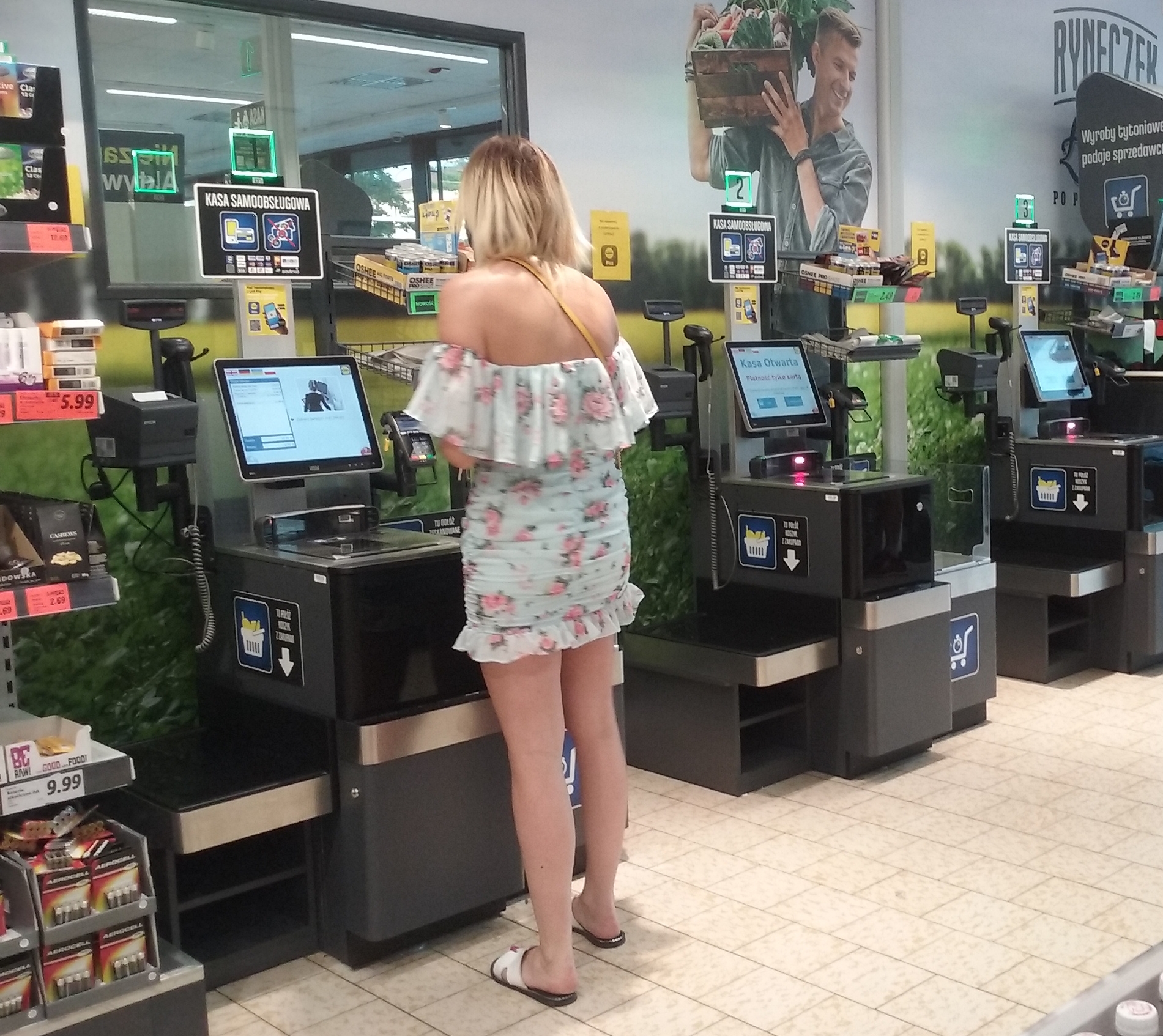
Lidl Poland is piloting an AI camera system that recognizes items placed on self-checkout scales and flags attempts to scan cheaper products than what's actually being weighed. The trial launched alongside the opening of the chain's 1,000th store in Katowice.
Contents
Lidl Poland has begun testing cameras equipped with artificial intelligence above its self-checkout registers. The system is designed to recognize in real time the products placed on the scale and catch instances where a customer tries to cheat the checkout by selecting a cheaper item on the screen than what is actually being weighed.
How Product Recognition Works
The cameras installed above the self-checkout registers use a vision model that recognizes products placed on the scale, primarily fruits and vegetables sold by weight. The system compares what is actually on the scale with what the customer selected on the checkout screen.
When the data doesn't match, for example when a customer places bananas on the scale but selects a cheaper product from the same category on the screen, the checkout flags the discrepancy and requires an employee to intervene. This is meant to curb the most common methods of cheating self-checkout systems.
The system will see that something isn't right, flag it, and then an employee steps in - Ryszard Machoj, member of the Lidl Poland management board for sales
The Scale of the Self-Checkout Problem
Self-checkout registers have generated losses for retail chains for years due to two recurring schemes. The first is so-called skip-scanning, deliberately skipping the scan of some products and placing them in the bag without registering them in the system.
The second scheme is the banana method, which involves scanning a more expensive product as a cheaper item from the same category, most often with vegetables and fruit sold by weight. According to the cited University of Leicester study, customers fail to scan properly as much as 4 percent of all products passing through self-checkouts this way.
A Cautious Rollout
Lidl stresses that full functionality of the system has not yet been activated at all tested locations. The chain plans a gradual rollout to avoid disrupting customer service during the busiest shopping hours.
Tests are currently being conducted at a select number of the chain's newest stores, equipped with the most advanced technological infrastructure. The Katowice Nikiszowiec store, as Lidl's 1,000th location in Poland, served as the first full-scale pilot site, with 12 registers covered by AI monitoring.
What It Means for Customers
For honest customers, the change should be practically invisible, since the system only reacts to detected mismatches between the weight and the selected product. For the retail chain, it's another step toward curbing the losses that have accompanied the spread of self-checkout registers in discount stores and supermarkets for years.
Similar vision-based systems have been rolled out by retail chains in Western Europe and the United States for several years, with some later scaling back full self-checkout in favor of hybrid models with more staff involved. For now, Lidl says it's betting on technology that supports the current checkout model rather than replacing it.
How the system develops in Poland will depend on the results of the pilot in the coming months. The chain has not yet released a timeline or a target number of stores where the AI cameras will be permanently installed.