News
MIT AI Agents Build Virtual Training Grounds for Robots
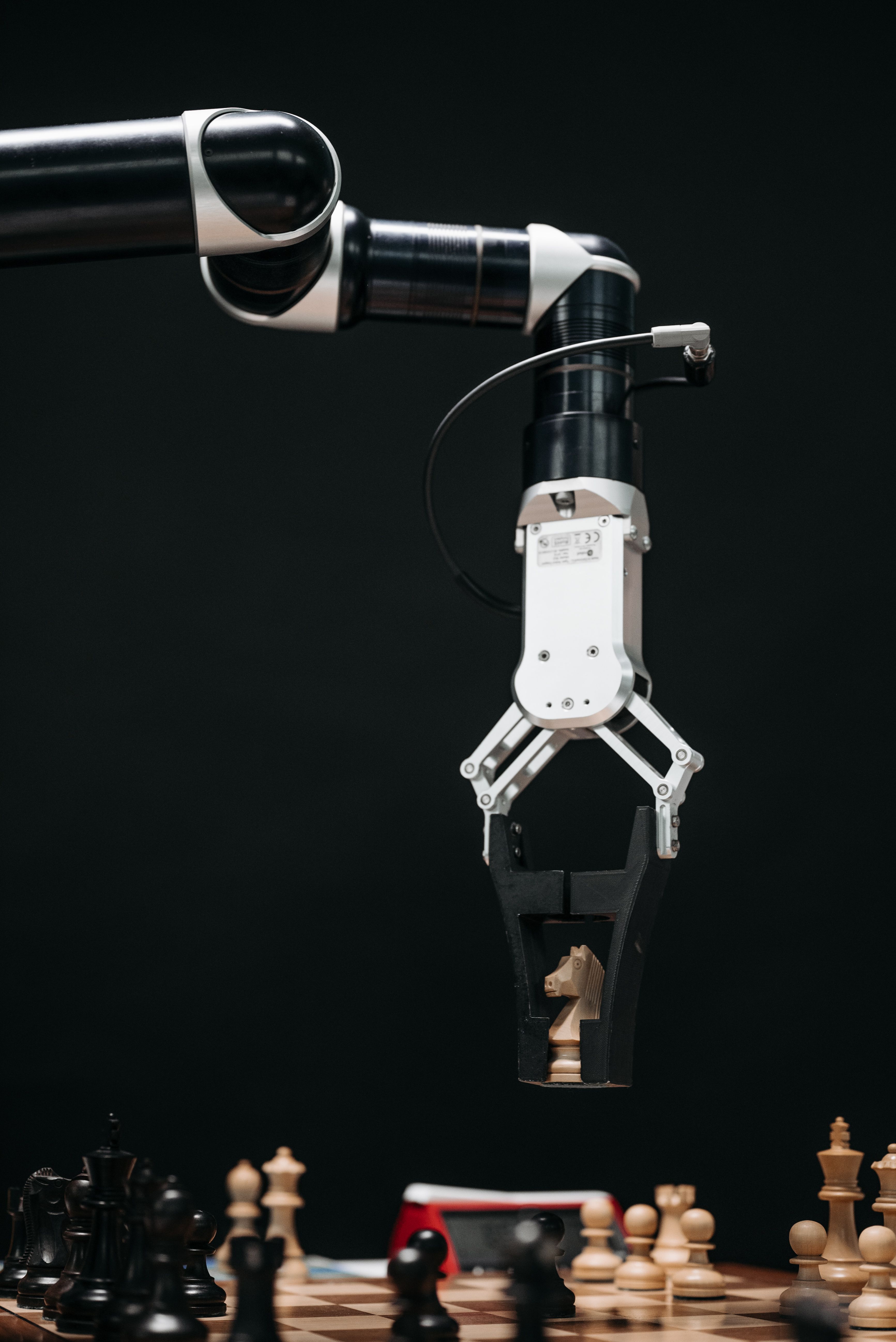
MIT CSAIL researchers have developed SceneSmith, a system in which three collaborating AI agents generate realistic 3D scenes for training robots. The system has already created more than 1,300 scenes rated as more realistic than previous methods in over 90 percent of comparisons.
Contents
A team at MIT CSAIL has unveiled a system called SceneSmith, in which three AI agents jointly design virtual rooms for training robots. Instead of manually building digital environments, the researchers handed the task to vision-language models, allowing them to generate more than a thousand scenes in a fraction of the time a human would need.
The idea rests on a simple premise: robots learn more effectively and cheaply in simulation than in the real world, but building convincing virtual scenes has until now required tedious, manual work from designers. SceneSmith aims to change that by automating the entire process, from room layout down to the finest details.
How the three agents work
The system splits the work among three specialized agents built on the GPT-5.2 model. The agent designated as the designer generates successive scene elements, the critic agent verifies their realism and consistency, and the orchestrator agent coordinates the whole collaboration and enforces the order of steps.
The process unfolds in stages, mirroring how a human interior designer would work. First the floor layout is created, then furniture is added, followed by wall and ceiling elements, and finally the small objects the robot is meant to manipulate, such as cabinets or doors.
One natural idea is to use simulation as a training ground - Russ Tedrake, MIT CSAIL
Realistic scenes at scale
The key problem with earlier scene generators was sparse content. The rooms they produced looked artificial and contained too few objects, so robots trained in those environments performed poorly in real, cluttered rooms. SceneSmith generates scenes with up to six times as many objects as previous approaches.
In tests involving more than 200 users, scenes generated by the system were rated as more realistic than those from competing methods in over 90 percent of comparisons. Just as significant, the automatic quality assessment performed by the critic agent itself matched human ratings in 99 percent of cases, suggesting the system can monitor the quality of its own work without constant human oversight.
We've found that the system can construct 3D scenes the way a human designer would - Nicholas Pfaff, MIT CSAIL
From putting away a mug to sorting fruit
Scenes generated by SceneSmith were used to train robots on simple but representative household tasks: putting a mug in the sink, arranging fruit on a plate, or moving a can from a shelf to a table. These are exactly the kinds of tasks that pose the biggest challenge for home robotics, since they require handling unpredictable, cluttered surroundings rather than a sterile lab.
Training in simulation lets engineers test thousands of task variations without risking damage to hardware and without needing the robot physically present. That makes it possible to iterate faster on control algorithms before they reach testing on an actual machine.
What it means for robotics
The lack of sufficiently diverse and realistic training data has long been one of the main barriers to developing robots capable of working in homes and warehouses. MIT's approach fits into a broader trend of using AI agents not just to generate text or code, but to build the infrastructure needed by other learning systems, including Polish robotics projects that are also testing autonomous systems in warehouse settings.
For companies developing robotics, this potentially means a cheaper and faster way to gather training data, without having to build physical room mockups or manually model each scene individually. It could lower the barrier to entry for smaller teams that lack a large budget for testing infrastructure.