News
Humanoid Robot Spending to Grow 28 Percent Annually Through 2035
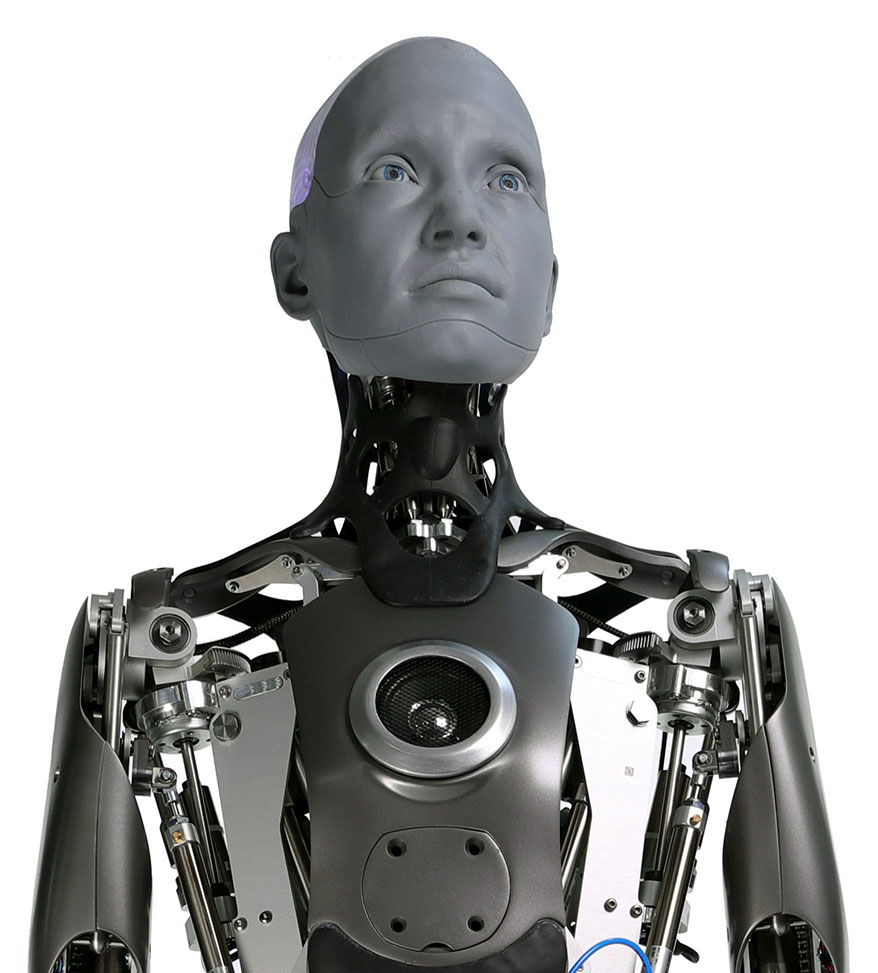
Research firm MarketsandMarkets forecasts the humanoid robot market will grow from $5.41 billion in 2026 to $50.27 billion in 2035, a compound annual growth rate of 28.1 percent.
Contents
The humanoid robot market is entering a decade of ninefold growth. According to a new forecast from research firm MarketsandMarkets, spending on this type of machine will rise from $5.41 billion in 2026 to $50.27 billion in 2035, a compound annual growth rate of 28.1 percent.
Where the numbers come from
The data comes from a report by MarketsandMarkets, a research firm specializing in market analysis for the technology and industrial sectors. The information was reported by CRN Polska, which also cited Juniper Research estimates on the deployment of AI-controlled robots in factories and warehouses.
The forecast covers classic bipedal robots as well as wheeled designs and stationary models limited to the upper body. Analysts note that despite differences in construction, all these categories share a common design goal: replacing or supporting humans in tasks that require manipulating objects and moving through spaces built with the human body in mind.
Where the money will go
According to MarketsandMarkets, the strongest demand for humanoid robots will come from eight sectors: industrial manufacturing, warehousing and distribution, healthcare, education, hospitality, entertainment and retail. In practice this means applications such as assembly support, quality control, load transport, object manipulation, patient care and customer service in frontline staff roles.
Most of the investment is expected to go toward bipedal robots. The report's authors attribute this to their ability to move through stairs, corridors and other infrastructure elements designed exclusively for humans, something wheeled or stationary designs cannot offer.
Hardware ahead of software
The report emphasizes that throughout the entire forecast period, through 2035, spending on physical hardware will outweigh investment in software and services. The key components accounting for most of the costs are actuators, electric motors, cameras, gearboxes, encoders, accelerometers and various sensors and controllers.
This spending pattern reflects the capital intensity of building humanoid robots themselves. Unlike AI software, which can be scaled at near-zero cost once a model has been trained, every physical robot unit requires its own set of expensive mechanical and sensory components.
Physical AI accelerates
Alongside the forecast for the humanoid robot market itself, CRN Polska also cites Juniper Research data on the broader phenomenon known as physical AI, meaning AI systems that control machines operating in the real world, not just in the computing cloud. According to these estimates, the number of such deployments in manufacturing and logistics is set to grow to 400,000 globally by 2030, a 3,500 percent increase over 2026.
This suggests that the humanoid robot boom is part of a broader trend of moving AI models out of screens and chatbots and into physical machines that perform physical labor. Companies such as Figure, Unitree, Agility Robotics and Apptronik have been ramping up production for months and signing contracts with industrial manufacturers around the world.
What this means for businesses
For companies in manufacturing, logistics and retail, the forecast means that automation decisions made today will have less and less to do with traditional industrial robots assigned to a single workstation, and more to do with versatile machines capable of performing various tasks in the same environment as employees.
However, the high share of hardware costs means entry into this technology will remain expensive for the next decade. Companies planning investments in humanoid robots should expect that prices will not fall as quickly as they have for software, and that return on investment will depend heavily on the scale of deployment and the availability of technical service.