News
Sixteen Nobel Laureates Warn Economies Must Prepare for AI Disruption
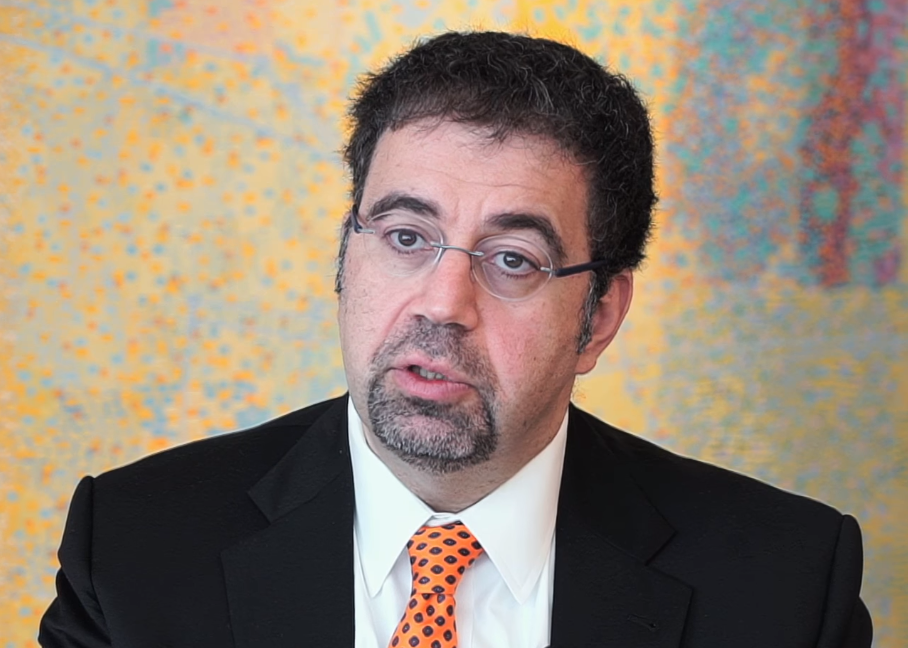
More than 200 economists, including 16 Nobel Prize laureates, have signed a joint statement warning that artificial intelligence could trigger an economic transformation greater than the industrial revolution within a decade, but compressed into a much shorter timeframe.
Contents
A group of more than two hundred leading economists and AI researchers, including sixteen Nobel Prize laureates, published a joint statement on Monday warning about the pace at which AI could transform the global economy. The document, titled 'We Must Act Now,' calls on governments, universities, and technology companies to immediately prepare policies and institutions before the effects of the transformation become irreversible.
The initiative was launched by Erik Brynjolfsson, director of the Stanford Digital Economy Lab, who has spent years studying automation's impact on the labor market. He was joined by Ajay Agrawal of the Rotman School of Management at the University of Toronto, Anton Korinek of the University of Virginia, now on leave at Anthropic, and Tom Cunningham of the research organization METR. Together they gathered signatures not only from academics but also from industry figures, including the chief economists of OpenAI and Anthropic.
What the Statement Says
The authors write bluntly that the capabilities of AI systems are advancing faster than our understanding of their economic consequences. Within the next decade, the technology could become 'radically more powerful,' triggering an economic transformation larger than the industrial revolution, but compressed into a far shorter period. Unlike earlier waves of technological change, societies may not have decades to adapt.
Steam, electricity and computers gave societies decades to adapt. AI may give us only a few years - Erik Brynjolfsson, Stanford Digital Economy Lab
The signatories stress that the direction of change is not yet set. AI could raise living standards worldwide, but it could just as easily drive a rapid concentration of wealth in the hands of a few. Which scenario plays out depends on the decisions made now, not on the technology itself.
The Numbers Behind the Warning
The statistics cited in the document are not abstract. Employment among young workers aged 22-25 in occupations most exposed to AI-driven automation is already shrinking by more than 4 percent a year. The authors also point to the so-called Canaries Dashboard, a labor-market monitoring tool covering 4.6 million workers across more than 730 occupations, designed to catch early signals of AI displacing human workers.
Anton Korinek, one of the organizers, described the current situation bluntly: economists and policymakers are operating in the dark, without solid tools to predict what will happen in the coming months.
We're driving through fog, and it's extremely hard to predict what happens next - Anton Korinek, University of Virginia
Disputes Over Methodology
Not every commentator embraced the statement uncritically. Torsten Slok, chief economist at Apollo Global Management, pointed to a fundamental methodological problem: there are currently five competing ways of measuring so-called occupational exposure to AI, and their results often conflict. Purely theoretical measures systematically overstate the scale of the threat because they ignore the real pace of technology adoption and its profitability for individual companies.
The document itself, just 88 words of actual text, deliberately avoids naming specific laws, institutions, or regulatory mechanisms. Instead, it calls for three things: deeper research into the economic effects of AI, policies and institutions that ensure AI complements human abilities rather than replacing them, and coordinated action among governments, universities, and technology companies.
Relevance for Poland
For Polish readers, the appeal fits into a recent series of reports on the exposure of the domestic labor market to AI-driven automation, pointing to millions of jobs at risk in Poland over the coming decade. The difference this time is that the warning comes not from a single research institution, but from a broad coalition of academic economists, including Nobel laureates, alongside representatives of the very companies building AI, such as OpenAI and Anthropic.
Brynjolfsson summed up the signatories' intent in a single sentence meant to serve as a starting point for further public debate.
We must act now to steer AI so that it complements people rather than simply imitating them, and so that it generates prosperity for the many rather than just the few - Erik Brynjolfsson, Stanford Digital Economy Lab
The authors say the statement is meant to open a broader debate, not close it. The next step, they say, is to develop shared labor-market monitoring tools and issue regular updates from the Canaries Dashboard, which are meant to show whether the signatories' predictions are holding up or diverging from economic reality.