News
Nearly half of EU AI startups target industry, Poland eyes an opportunity
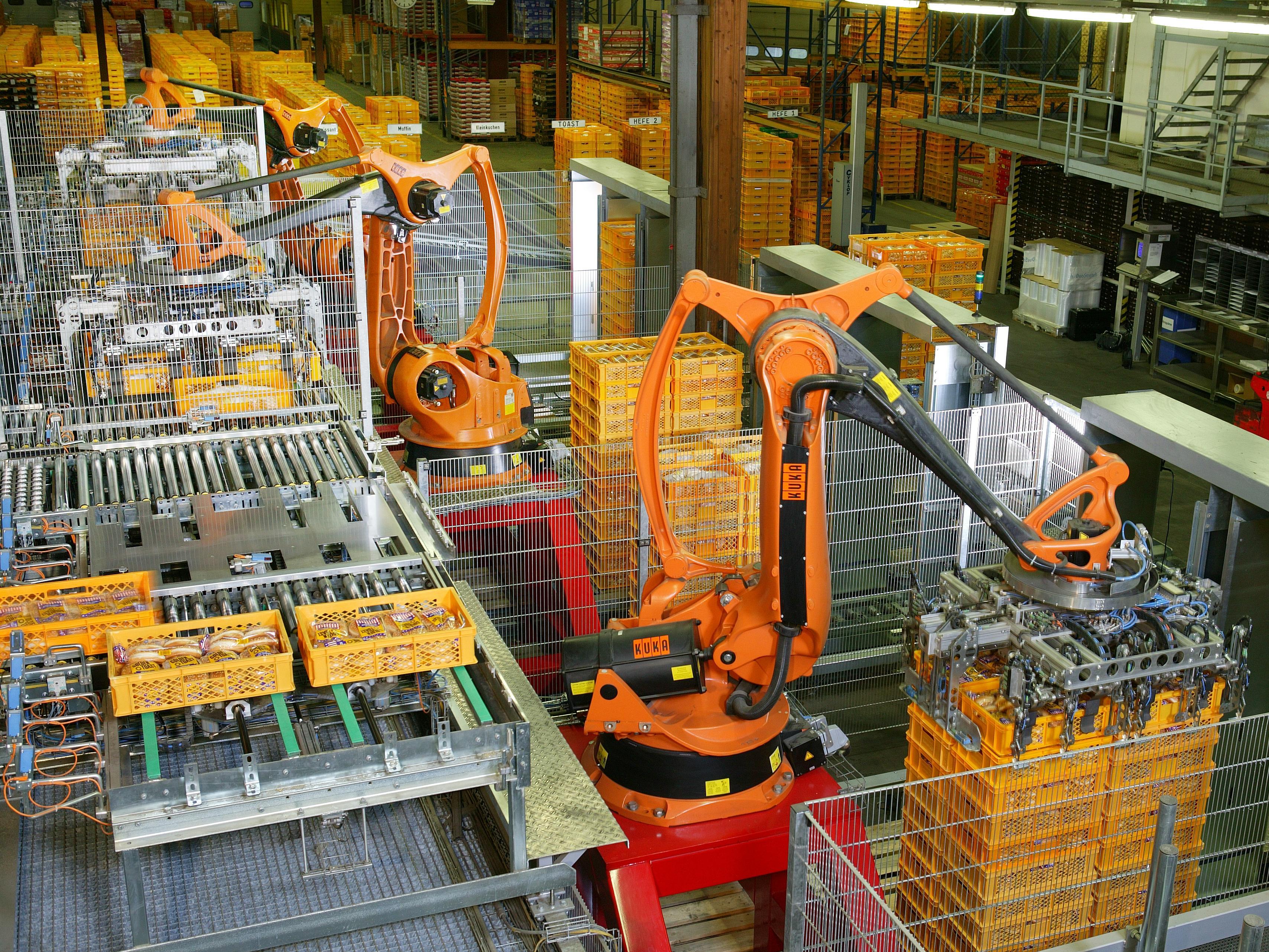
According to the "European AI Competitiveness" report, 45 percent of European AI startups are building solutions for manufacturing and supply chains, more than in the US. Experts say Poland, with its large industrial base and still-low automation levels, could benefit from this trend if it closes gaps in data and infrastructure.
Contents
Europe lost the race to build its own equivalent of ChatGPT, but it has found another niche where it holds a real numerical edge over the United States. According to the report "European AI Competitiveness: Beyond Frontier Models," 45 percent of EU artificial intelligence startups are developing solutions for industry and supply chains, compared with 39 percent in the US. Experts cited by Forsal.pl argue this is also an opportunity for Poland.
A niche instead of a model race
The report's authors point out that Europe has no chance of catching up with the US and China in building large language models that require enormous investment in computing power and training data. Instead, the continent is betting on an area where it has natural strengths: a large industrial base, engineering expertise, and access to the vast amounts of data generated every day by manufacturing plants.
A concrete example of this approach is a project carried out for Enel Green Power in Italy, where analytics and machine learning were deployed across 33 hydroelectric power plants to monitor turbines, pumps, motors, and generators. The system detects anomalies earlier than traditional methods and allows failures to be predicted before they cause costly downtime.
Poland's automation gap
For Poland, industry carries particular economic weight, accounting for more than one-fifth of the country's gross value added. At the same time, the level of automation in Polish plants remains low: 90 percent of manufacturing companies have a significant share of unautomated processes, and only 14 percent rate their automation level as high.
Predictive maintenance, meaning forecasting machine failures before they happen, is used by 28 percent of companies in Poland. The industrial internet of things is used by 18 percent of firms, and robots and cobots have been deployed by just 14 percent of organizations. This shows that before algorithms can start optimizing production, many plants first need to organize their data, connect disparate systems, and modernize their infrastructure.
For most companies, AI will not be the first stage of transformation - Michał Żelichowski, Director of Business Development and Product Management, PSI Polska
Despite this gap, sentiment among Polish companies is cautiously optimistic. 35 percent of businesses plan to increase their AI investment over the next two years, and 12 percent expect spending to grow by more than 20 percent. This signals that industrial AI is starting to be treated as an investment rather than just a trendy addition to a digital strategy.
Money from Brussels
The scale of the EU's ambitions in this area is reflected in the budget figures. The European Commission has launched the Invest AI program, worth 200 billion euros, intended to fund, among other things, the development of computing infrastructure and AI deployment across key sectors of the economy. Separately, the EIC Accelerator has a 2026 budget of 634 million euros, aimed directly at startups and small and medium-sized enterprises.
Łukasz Radosz, an R&D tax relief expert at Euro-Funding Polska, notes that programs of this kind matter a great deal for companies still searching for a path from idea to a finished product on the market.
Programs like the EIC Accelerator help commercialize promising solutions - Łukasz Radosz, R&D tax relief expert, Global PMO, Euro-Funding Polska
What this means for Polish companies
Piotr Szkoda, business director of ABB's Automation unit in Poland (Automatyka ABB), stresses that in industrial AI what matters is not just the algorithm itself but combining it with engineering knowledge and operational experience gained on the factory floor. This sets the segment apart from language models, where the advantage comes primarily from data scale and computing power.
Industrial AI is an area where competitive advantage comes from combining engineering knowledge with operational experience - Piotr Szkoda, business director of ABB's Automation unit in Poland
For Poland, this means that its position in this race may be decided not by the number of trained models but by its ability to collect and share data from factories, connect IT systems with machines on the factory floor, and train engineers who understand both industrial processes and machine learning.
The advantages experts cite on Poland's side include a diversified base of industrial sectors, years of experience closing technological gaps with Western Europe, and access to large volumes of data generated by domestic manufacturing plants. Without investment in infrastructure and data quality, however, this advantage will remain purely theoretical.