News
Go Champion Shin Jin-seo Defeats AI KataGo in Handicap Match
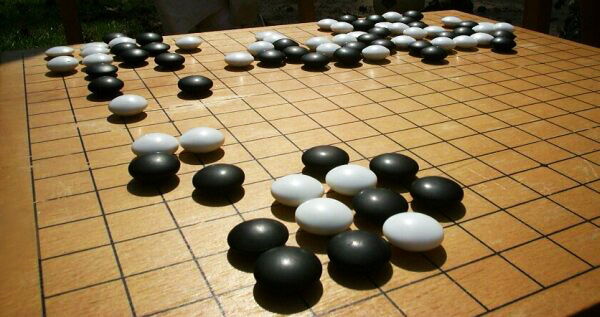
World number one Go player Shin Jin-seo won a 2:1 series against KataGo, one of the strongest AI Go engines, in a match played with a two-stone handicap. The win came a decade after AlphaGo's landmark victory over Lee Sedol and sent ripples through the Go world.
Contents
A decade after AlphaGo shattered belief in human superiority at Go, world number one Shin Jin-seo has defeated the KataGo program in an official exhibition match. The 2:1 victory doesn't mean humans have caught up with machines, since the Korean player competed with a handicap, but it still sent ripples through the Go world.
How the match unfolded
Shin Jin-seo, a 26-year-old Korean player from Busan, has held the number one spot in the Korea Baduk Association rankings continuously since January 2020. He lost the first game against KataGo. In the second and third, he turned the tide, and won the decisive clash, which lasted about three hours, by an 11.5-point margin after 221 moves. The tournament was called the Ssen Math-Hankyung Kishin Match, organized by the Hankyung Media Group in cooperation with the Korea Baduk Association.
The handicap that changes everything
A key element of the match's setup was the two-stone handicap, giving Shin roughly an 18-point advantage before KataGo's first move. It's precisely this condition that means the result can't be treated as proof that humans now match the strongest Go programs playing on equal terms. Without a handicap, the gap between top AI engines and the best human players remains enormous.
I considered this an extremely difficult challenge even before the match, which is why I asked for favorable conditions. Still, I think it made a difference - Shin Jin-seo
A decade since AlphaGo
The reference point for the whole event remains March 2016, when Google DeepMind's AlphaGo defeated South Korean grandmaster Lee Sedol 4:1. That match is considered a symbolic moment when artificial intelligence proved it could surpass humans at a game regarded as one of the most strategically complex. Lee Sedol ended his professional career in 2019, explaining the decision precisely by machines' dominance over the best players. Since then, successive generations of engines, including KataGo, have widened that gap even further, analyzing tens of thousands of variations within a dozen or so seconds.
Not the first such case
This isn't the first time a human has beaten an advanced Go engine. In 2023, American player Kellin Pelrine won 14 of 15 games against KataGo, using a strategy developed by a program that tested the neural network's weaknesses by playing more than a million games in search of gaps. That victory, however, relied on exploiting a specific flaw in the algorithm rather than an advantage in ordinary play. Shin's case is different, since it wasn't based on an exploit but on a formal handicap agreed before the match as an organizational condition. Both stories show the same thing, though: under full symmetry of conditions, the advantage still lies decisively with the machine.
How AI changed the way the game is played
Shin's win coincides with a broader discussion about how engines like KataGo have transformed the game of Go itself at the professional level. According to a 2022 Korea Baduk League study, Shin chooses moves matching AI recommendations 37.5 percent of the time, compared with an average of 28.5 percent among all professionals, making him one of the players most reliant on machine suggestions in training. The phenomenon is controversial: Lee Sedol has previously admitted that copying moves from a computer's suggestion strips the game of its character as an art, though he also noted that AI helps players achieve games close to technical perfection.
For the Go world, Shin's victory is above all a symbolic reminder that human creativity and individual playing style still matter, even in an era when training without AI support has become rare. Shin himself stressed that success came only once he moved away from simply imitating the machine's moves and instead built games in his own style. For observers of AI development, the result doesn't undermine the real advantage engines like KataGo hold in games without a handicap, but it shows that carefully designed conditions for human-versus-machine competition can still produce an unexpected outcome, ten years after AlphaGo was supposed to settle this question once and for all.