News
Poland's Nomagic Tests Robot Brain Model in Warehouses, Cuts Failures in Half
Warsaw startup Nomagic has deployed a vision-language-action model with its first customers that cuts human interventions on warehouse robots by roughly half. The new AI lab is led by Markus Wulfmeier, formerly a researcher on Google DeepMind's Gemini Robotics team.
Contents
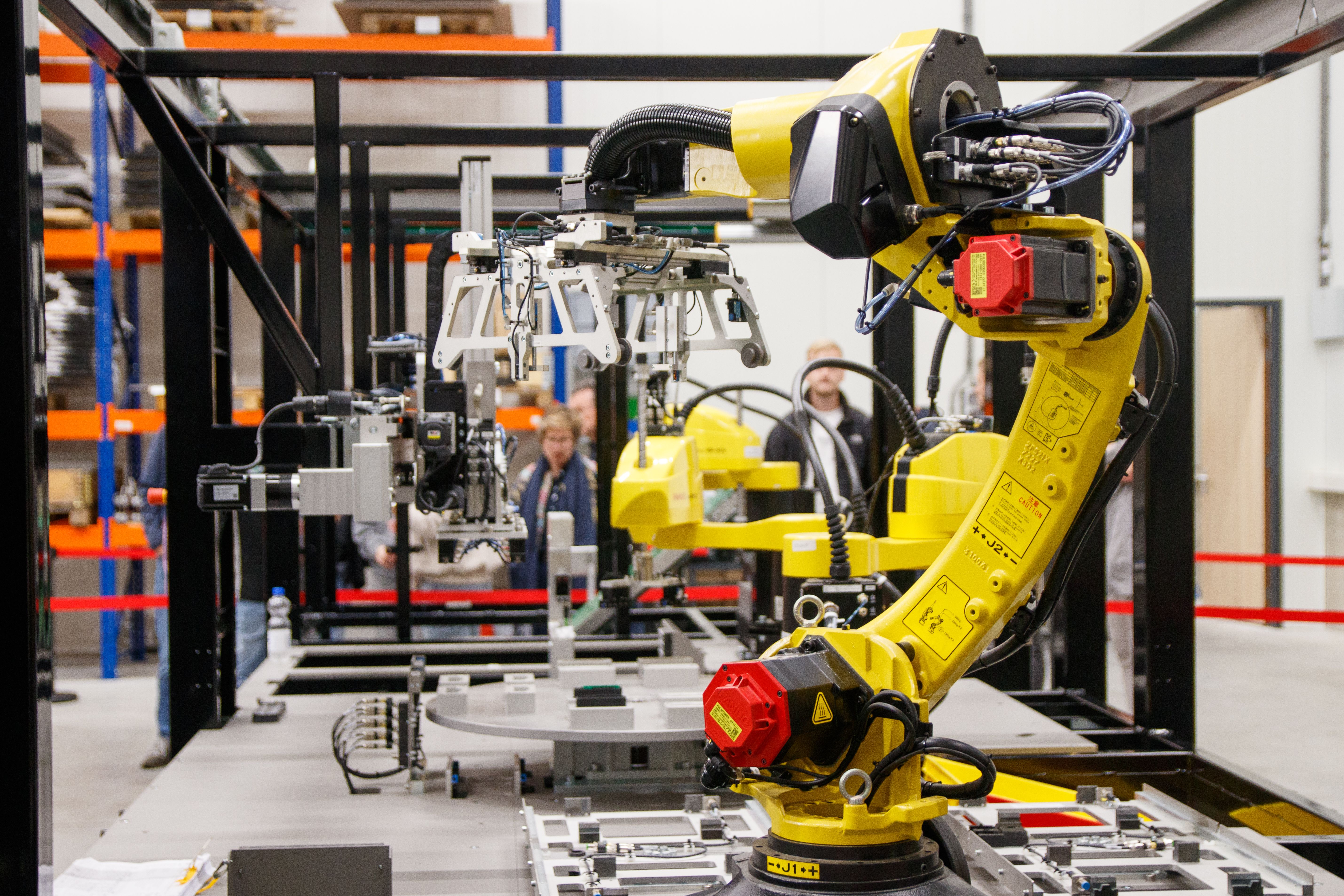
Warsaw-based Nomagic, known for its warehouse packing and order-picking robots, has touted early success with a new artificial intelligence model that acts as a universal robot brain. The company says it is among the first to deploy such a model in real production operations rather than just lab tests.
Nomagic has been operating since 2017, founded by Kacper Nowicki, Marek Cygan and Tristan d'Orgeval. The company has spent years developing robots for order picking and packing in warehouses, and in 2026 it opened a dedicated research lab tasked with building AI models that serve as the brain for warehouse robots.
A Model That Sees, Understands and Acts
The VLA model developed by Wulfmeier's team combines three capabilities at once: it perceives objects in the robot's surroundings, understands instructions given in natural language, and takes concrete physical action based on them. This approach, familiar from embodied-robotics research, has rarely made it outside the research labs of big tech companies until now.
Nomagic's team focused primarily on the most common edge cases, the situations where robots had previously gotten stuck most often and needed human help. Concentrating the work on exactly these scenarios cut the number of interventions in half, which translates into real savings in labor time and operating costs across a large warehouse.
A Different Strategy Than Rivals
Wulfmeier stresses that Nomagic is deliberately going against the dominant trend in the embodied-robotics industry, where most companies try to build the most general-purpose model possible right away, hoping to fine-tune specific applications later.
Most of our community is racing to build the most general robot brain possible. We're betting that you have to learn through real-world deployment - Markus Wulfmeier, chief scientist, Nomagic
Tristan d'Orgeval, co-founder and chief strategy officer of Nomagic, adds that the company has built its models starting from concrete, real warehouse operations from the outset, rather than the other way around.
Safety Over Generality
Nomagic CEO Kacper Nowicki points out that in the physical world of warehouses, the bar is set higher than in many other AI applications. The VLA model itself doesn't yet reach the reliability level needed to work unsupervised, so Nomagic built an additional safety layer based on classic robotics software that catches the model's errors and enforces safe behavior across the whole system.
In the physical world the standard is high: 99.9 percent isn't a marketing number, it's the price of admission to being allowed in the building - Kacper Nowicki, CEO and co-founder, Nomagic
This approach let the company deploy the new model with real customers even though the algorithm itself still needs the backing of classic safety mechanisms. This pragmatic combination of a modern vision-language model with traditional robotics software sets Nomagic apart from companies betting solely on a purely neural approach.
Results at the First Customers
The first partner to deploy the new model is Brack.Alltron, Switzerland's second-largest e-commerce platform. Roland Brack, the company's founder and owner, notes that this new generation of robots can now genuinely understand the environment it works in, rather than just executing rigidly programmed movement sequences. That lets the company run autonomous shifts at night and on Sundays, handling peak sales periods without putting extra strain on staff.
At another partner, Zalando, Nomagic's robots are already picking two million packages a month, showing the scale at which Polish technology operates in one of Europe's biggest e-commerce markets. The company also recently picked up the International Intralogistics and Forklift Truck of the Year 2026 award for its Shoebox Picker device, which handles the notoriously tricky task of grabbing shoeboxes without the lids sliding off.
Nomagic's success fits into a broader trend of moving vision-language-action models out of big tech companies' research labs and into concrete, commercial industrial deployments. For Poland's AI scene, it's a sign that a homegrown startup can compete with global robotics labs not through budget scale but through the speed of learning from real rather than simulated data.
Sources: Nomagic AI lab led by former Google DeepMind researcher claims success with 'AI brain' for robots (fortune.com)