News
Nvidia Invests $3.5 Billion in MediaTek, Defending Its Position in the AI Chip Race
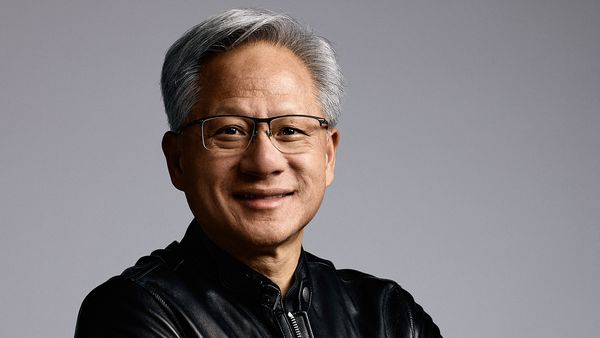
Nvidia bought $3.5 billion in MediaTek convertible bonds and expanded their collaboration around the NVLink Fusion platform, responding to growing pressure from Amazon, Google, and Microsoft as they build their own AI chips.
Nvidia announced on Monday, August 31, 2026, a $3.5 billion investment in convertible bonds issued by Taiwan's MediaTek, deepening the two companies' long-running partnership in AI chips. The move responds to mounting pressure from Nvidia's biggest customers, including Amazon, Google, and Microsoft, which are building their own AI chips to reduce their dependence on the California company's graphics processors.
Nvidia's investment is part of a broader MediaTek bond issuance worth a total of $3.9 billion, in which Alphabet, Google's parent company, also took part. Nvidia purchased the majority of the bonds in this round, underscoring how much importance it places on keeping the Taiwanese manufacturer within its technology ecosystem.
The NVLink Fusion Platform
A key element of the deal is MediaTek's adoption of the NVLink Fusion platform, a technology that connects custom accelerator chips, known as XPUs, with Nvidia's data center infrastructure built on the MGX architecture. This lets customers designing their own AI chips plug them into the same server racks that run Nvidia processors, using ready-made, validated NVLink-C2C connections and NVHBM memory.
MediaTek's collaboration with Nvidia also covers chips for local computers in the RTX Spark and DGX Spark lines, as well as joint automotive platforms combining Nvidia's DRIVE AGX technology with MediaTek's expertise in designing automotive SoCs.
Pressure From the Big Clouds
The announcement comes as Amazon, Google, Microsoft, and Meta are investing billions of dollars in their own AI chips, Trainium and Inferentia, TPU, Maia, and MTIA respectively, to reduce their reliance on Nvidia's graphics processors and cut infrastructure costs. According to a June JPMorgan report, global shipments of custom ASIC and XPU chips, estimated at 12.5 million units, are expected to exceed shipments of traditional GPUs, projected at 10.9 million units, for the first time as early as 2027.
Artificial intelligence is transforming every computing platform, from the largest AI factories to personal computers and cars - Jensen Huang, founder and CEO of Nvidia
A Gatekeeper Strategy
Rather than competing with hyperscalers chip for chip, Nvidia is pursuing a different business model: regardless of whose chip ends up in the server rack, its interconnect technology is meant to remain the standard tying the whole infrastructure together. Analysts call this a gatekeeper strategy, in which the company earns money from fees for access to its interconnect network, even when the compute chip itself comes from a rival manufacturer.
Nvidia's investment strengthens a collaboration that spans AI cloud infrastructure, local AI computing, and automotive - Rick Tsai, vice chairman and CEO of MediaTek
Investor Doubts
Some analysts point to the risk of so-called circular financing, a situation in which Nvidia invests in partners who in turn buy its hardware or technology licenses, which can artificially inflate both sides' financial results. Similar accusations have surfaced before regarding other Nvidia investments in AI industry partners.
Still, the market reacted positively to the announcement, treating it as confirmation that Nvidia has no intention of ceding ground in the AI infrastructure segment, even as the processor market itself gradually splits among a growing number of custom chip suppliers.
For companies building or renting AI infrastructure in Europe, including Poland, this means the cost of accessing compute power will keep depending on how long Nvidia holds its position as the market's central technological hub, even as individual processors in data centers increasingly come from a variety of manufacturers.