News
Nvidia and Japan's Government Launch Physical AI Initiative
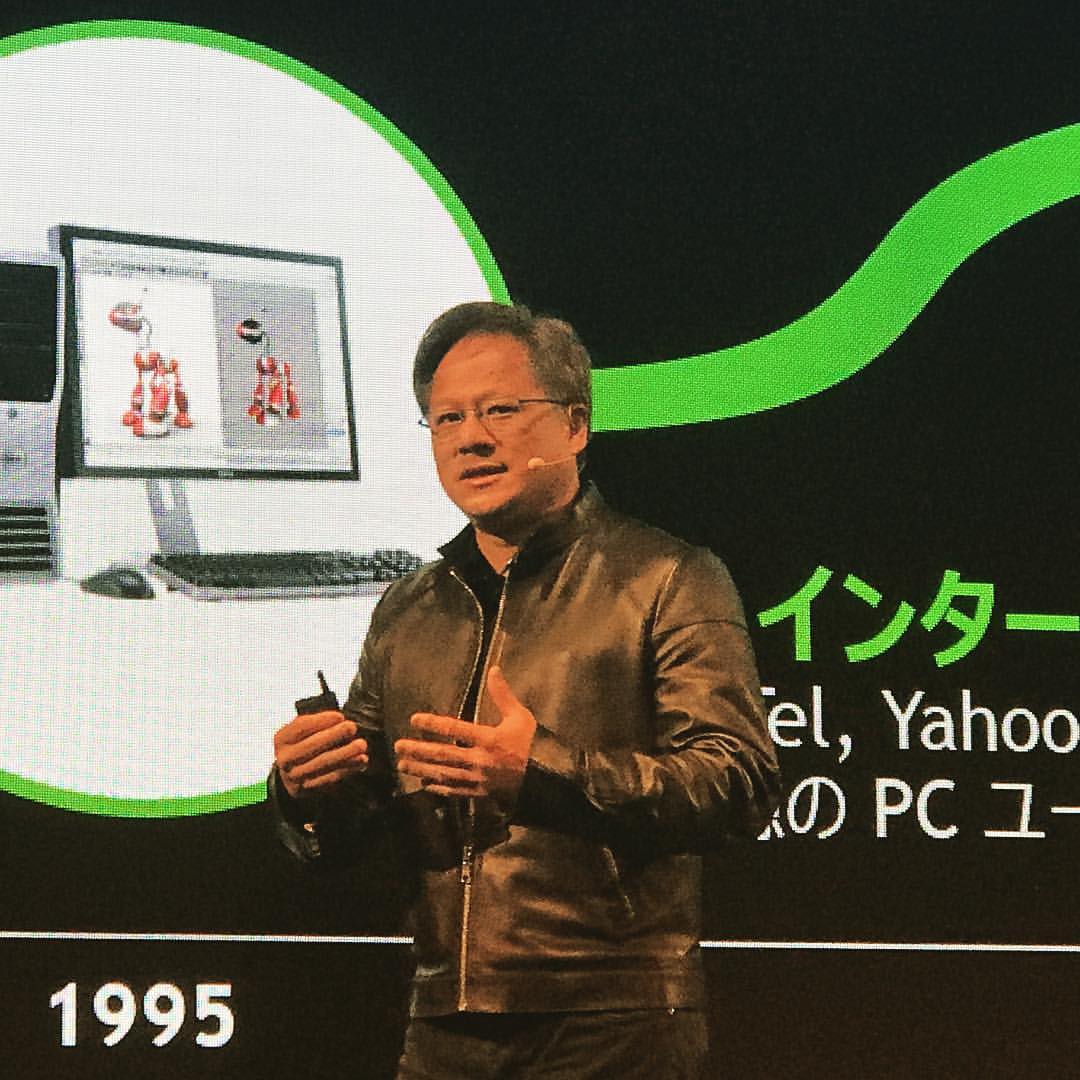
During a two-day visit to Tokyo, Nvidia CEO Jensen Huang announced a joint Physical AI initiative with the Japanese government along with a new Cosmos 3 Edge model for robots, signing agreements with Fujitsu, Toyota, Kawasaki Heavy Industries and more than a dozen other Japanese companies.
Contents
Jensen Huang spent July 15 and 16 in Tokyo, announcing the launch of the government's Physical AI Initiative together with Japan's Ministry of Economy, Trade and Industry (METI). The program aims to combine Japanese industrial know-how, factory data and Nvidia's technology to build open foundation models for AI agents, digital twins and robots.
The event coincided with a wave of criticism in Japanese media, which in June wrote about the so-called 'Japan passing' phenomenon, American tech CEOs skipping Japan on their Asia tours. Huang, who had previously bypassed the country on an earlier Asia trip, this time spent two days in Tokyo, visiting the Akihabara district among other stops and thanking Sega for supporting Nvidia in its early days.
What Was Announced
The centerpiece of the visit was the launch of the Physical AI Initiative alongside Minister Ryosei Akazawa. The program aims to draw on Japan's strengths in mechatronics, physical sciences and quantum research to build open AI models that operate in the physical world, not just process text or images.
Nvidia also showed off its new Cosmos 3 Edge model, built for robots and vision agents, designed to help machines perceive and move through their surroundings in real time. The company also unveiled two new supercomputers for Japanese science: RIKYU, with 1,600 Blackwell GPUs, and the hybrid ROQUO, which combines classical and quantum computing power with 540 Blackwell GPUs.
Deals With Japanese Industry
Huang had lunch with the CEOs of Fujitsu, Kawasaki Heavy Industries, FANUC and Yaskawa, companies that build robots and industrial systems used in factories worldwide. Nvidia also announced deepened cooperation with Toyota, Canon, Fujifilm, Omron and Hitachi, and hosted a dinner for the heads of key companies in Japan's semiconductor supply chain.
The list of partners also included the banking sector (Mizuho, SMBC Group, Rakuten Bank), pharmaceuticals (Astellas, Daiichi Sankyo, Takeda) and research institutions, including the RIKEN research institute and Keio University. For many of these companies, this marks a first step from pilot AI deployments toward integrating it into everyday production.
The next frontier of AI lies in the physical world, and this is a unique, once-in-a-generation opportunity for Japan. Japan invented modern manufacturing. Now it has the chance to reinvent it for the era of intelligent industry. - Jensen Huang, CEO of Nvidia
Aging Population, Labor Shortage
Behind the whole visit lay a demographic argument. Japan is one of the fastest-aging societies in the world and has for years struggled with an acute shortage of workers in factories, warehouses and elder care. Huang presented robots powered by physical AI as a tool to relieve current workers, not replace them.
AI and robotics can empower the workers you have and boost a country's productivity. - Jensen Huang, CEO of Nvidia
During a meeting with Fujitsu CEO Takahito Tokita, Huang emphasized that Japan's culture of precision and continuous improvement, known as kaizen, is a natural fit for deploying robots capable of thinking for themselves rather than just executing pre-programmed sequences of movements. Such machines are ultimately meant to work safely alongside people in factories, homes and hospitals.
Market Context
The visit fits into a broader plan by Prime Minister Sanae Takaichi's government, which has pledged to raise more than 370 trillion yen, or roughly $2.3 trillion, for technology investment by 2040. Analysts estimate that Japan's AI market alone will grow to $27.9 billion by 2029, opening the door to further investment from American companies.
For Nvidia, the agreements with Japanese industrial conglomerates mark another step in building demand for its chips and software beyond the data center market. The company has spent months repeating that physical AI and robotics are set to be the next major growth driver after the boom in language models, and Japan, with its engineering base in industrial robotics, is a natural partner for that strategy.
For Polish companies and investors watching the industrial sector, the signal echoes what has been coming out of South Korea and Germany for months: integrating AI into manufacturing and logistics is no longer an experiment but a component of national economic strategy. The scale of the deals announced in Tokyo, more than a dozen industrial conglomerates at once, shows the pace at which major industrial players are moving from pilots to full-scale deployment.