News
Orange Polska Installs AI Assistants at Warsaw Children's Hospital
Orange Polska has installed five interactive AI-assistant kiosks powered by Google's Gemini model at the Children's Memorial Health Institute in Warsaw, one of Europe's largest pediatric hospitals, to help patients and families find their way through its corridors.
Contents
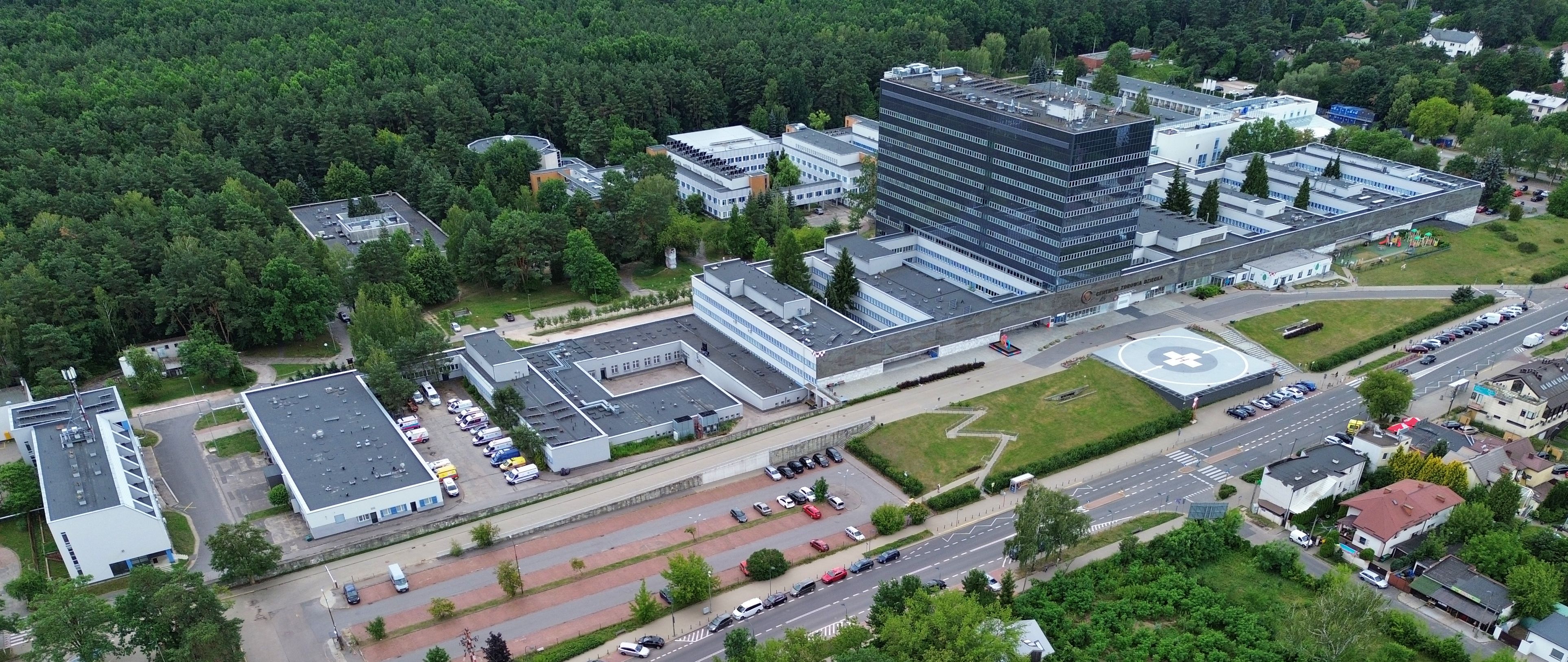
The Instytut Pomnik - Centrum Zdrowia Dziecka (Children's Memorial Health Institute) in Warsaw, one of the largest pediatric hospitals in Europe, has gained a new tool to help visitors navigate its sprawling complex of buildings. Orange Polska, together with Orange Innovation Poland, has rolled out a network of interactive AI assistants at the facility, designed to take some of the load off staff and cut down the time it takes to find the right ward.
Five stops across a sprawling complex
The institute, located in the Międzylesie district on the outskirts of Warsaw, is a building made up of numerous pavilions and corridors where even adult visitors regularly lose their way. Orange Polska has placed five touchscreens throughout the complex, including one in the main lobby right next to the landing pad used by emergency rescue helicopters carrying patients in critical condition. The screens combine voice, gesture, and graphical interfaces, synchronized so users can pick whichever mode suits them best.
The assistant responds in both Polish and English, a detail that matters at a hospital that also treats patients from abroad. The system offers an interactive 3D map of the buildings, a high-contrast mode for visually impaired users, and entertainment features aimed at young patients waiting for their appointments.
Gemini under the hood, funded by recovery plan
The assistant's language layer runs on Google's Gemini model, though its creators note the engine could be swapped out for another provider in the future without rebuilding the whole system. Funding for the project came from the Krajowy Plan Odbudowy (National Recovery Plan), the EU program supporting the digitalization of Polish public institutions after the pandemic. The exact amount invested has not been made public.
The rollout was carried out by Orange Innovation Poland, the operator's research and development unit, which had previously tested similar conversational tools in other sectors. This time the partner is a children's hospital, where the stakes differ from a standard customer service desk: the goal is to ease the stress of young patients and their caregivers, who often arrive at the facility under emotionally difficult circumstances.
Digital transformation should above all serve patients and their families. We want people visiting the Children's Memorial Health Institute to easily find the right place, quickly get the information they need, and for our youngest patients to forget, even for a moment, the stress of being in a hospital - Dr. Marek Migdał, director of the Instytut Pomnik - Centrum Zdrowia Dziecka
Personalization over a single template
Marcin Ratkiewicz, director of Orange Innovation Poland, stresses that personalizing the interface for different groups of users, from children to grandparents accompanying them, was a key part of the project. Synchronizing the voice, graphical, and gesture channels is meant to let the same kiosk handle very different needs in practice, without having to build separate versions of the system for each type of user.
We applied a number of innovative solutions in the AI Assistant. These include synchronized graphical, voice, and gesture-based interfaces. This lets us focus on personalization, so the assistant responds as well as possible to the needs of users from different backgrounds - Marcin Ratkiewicz, director of Orange Innovation Poland
What it means for other facilities
For Orange Polska, the deployment at the Children's Memorial Health Institute also serves as a showcase for the public institutions market, where the operator has long tried to sell digital services beyond telecommunications. Arkadiusz Wójcik, ICT director at Orange Polska, describes the project as proof that AI-based solutions work in large, organizationally complex facilities, not just in shops or call centers.
Polish public hospitals rarely invest in this kind of system out of their own budgets, so funding from the National Recovery Plan is a significant factor here. If the rollout proves successful, similar systems could reach other large medical facilities across the country grappling with the same problem of sprawling, hard-to-navigate building complexes.
For now, Orange and the institute have not released hard data on the system's effectiveness, such as the number of daily interactions or the share of patients using the kiosks instead of asking staff. Verifying the real impact on foot traffic and the load on information desks will only be possible after the system has been running for a longer period.